Categories
Buildings

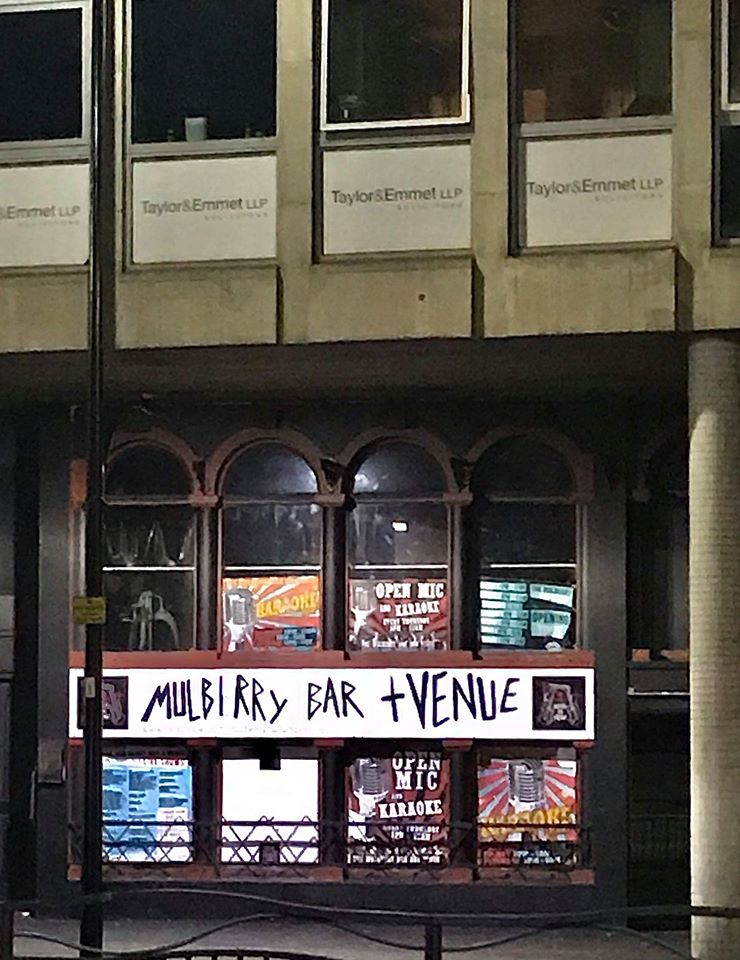
Mulberry Bar & Venue

The Mulberry Bar and Venue on Arundel Gate is making a few waves on the Sheffield music scene. It follows a few years of decline for the Mulberry Tavern, empty in the 1990s, later reopening as Affinity, a short-lived gay venue.

However, it’s the name of the pub that gives us a clue to the history of the site.

This 1970s reincarnation is named after the original Mulberry Tavern on Mulberry Street, behind Arundel Gate, reputed to have been Sheffield’s second-oldest pub after the Old Queen’s Head in Pond Street. In fact, photographs from the 1960s show it as being called The Ye Olde Mulberry Tavern.

According to Sheffield City Council, both Mulberry Street and the Mulberry Tavern were named after a tree that once stood here.

How long is it since mulberry trees grew in Mulberry Street, a very unlikely site for a tree of any sort?

There is no Mulberry Street on Gosling’s plan of 1736, but it duly appears on Fairbanks’ map of 1771. At the earlier date the area was made up of gardens between High Street to Alsop Fields, through which Norfolk Street was later constructed.

But we can bring the date a little earlier because, in 1757, John Wesley’s Methodists turned what had been a warehouse in Mulberry Street into a Preaching House.

The street had been made through gardens in which, no doubt, there were mulberry trees – a more popular fruit than it is today.
Categories
Buildings

Millennium Gallery

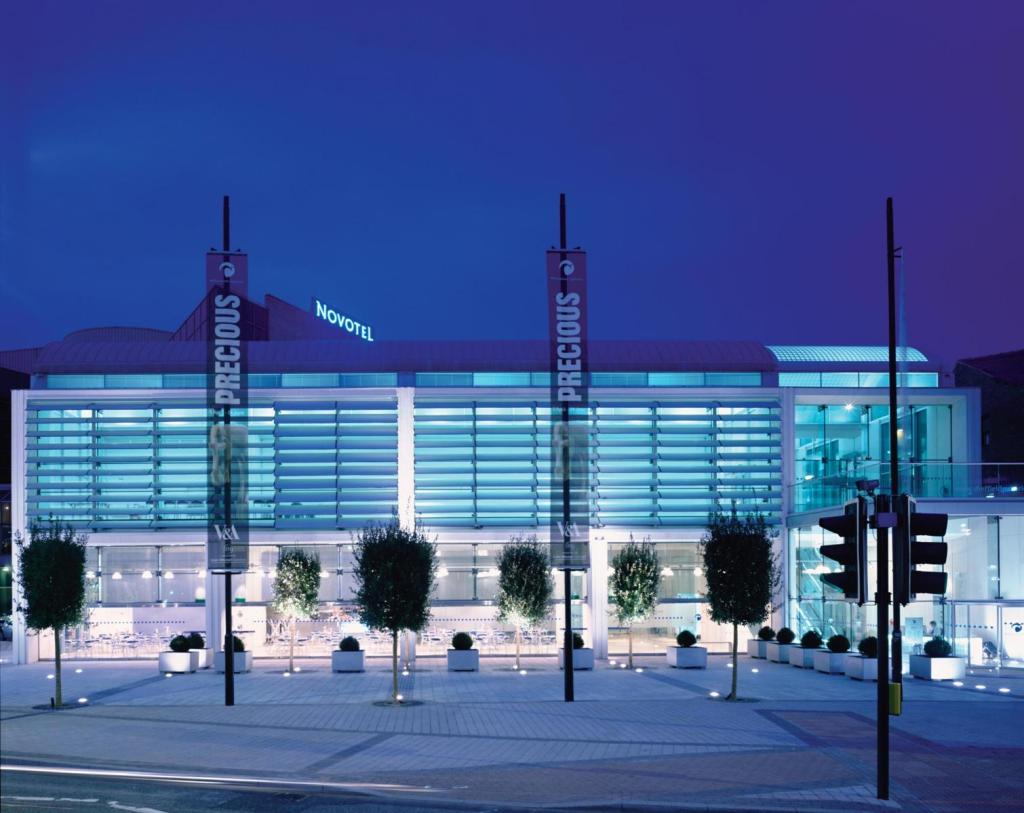
I wonder if the Millennium Gallery will become one of Sheffield’s iconic buildings.

Considering this is a modern-build, the white concrete construction appears to have settled comfortably into the hillside around Arundel Gate.

To understand the origins of the Millennium Gallery, we must go back to 1994 when the Heart of the City redevelopment scheme was initiated. Part of the masterplan involved building a new gallery, part of the new century celebrations, linked to a Winter Garden and the Peace Gardens above.

In 1995, a competition was held inviting architects to submit proposals, subsequently won by London-based Pringle Richards Sharratt. Although the Winter Garden might be easily recognisable, public response to the Millennium Gallery has remained positive.

When it was completed in 2001, the Millennium Gallery provided 1,800 square metres of exhibition space, including permanent displays of the Ruskin Collection and the city’s metalwork and silver collections.

The architects had to overcome the sloping topography of the site, creating galleries on the upper level over a service undercroft. Escalators lead to a first floor avenue, used as an indoor street to the Winter Garden, and access to five galleries on the left side.

Look up and you’ll see the barrel vaults of fine white pre-cast concrete, complete with columns and beams of the same material. Glass blocks in the avenue’s roof vaults and north wall provide diffused natural light.

The largest gallery, Sheffield’s largest exhibition space, is flexibly planned with moveable full-height screens that run parallel with the vaults. It is here that the Millennium Gallery has staged major touring exhibitions, such as those from the Victoria & Albert Museum and Tate Gallery.

The last of the galleries contains the Ruskin Collection, separated from the Winter Garden by a glazed wall, with glass panels by Keiko Mukaide, symbolising water and clouds.

John Ruskin established a collection of material he hoped would inspire Sheffield’s workforce at the St. George’s Museum, Walkley, in 1875. The collection of watercolours, drawings, prints, plaster casts, minerals, illustrated books, manuscripts and coins is owned by the Guild of St. George (and managed by Museums Sheffield) and has had several homes in the city.