Categories
Buildings

42-46 Fargate – where a Green Dragon once stood

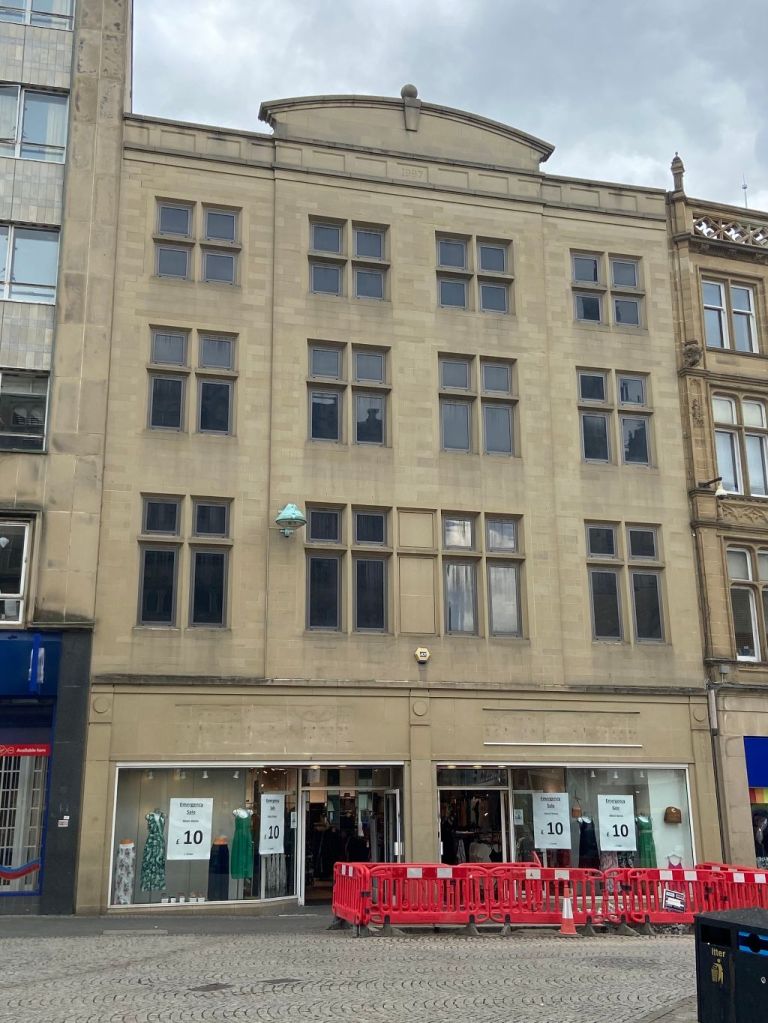
42-46 Fargate. Image: DJP/2022

I have a memory from the 1970s of an old building on Fargate being demolished, and seeing a huge gap, and then the construction of a new one. When looking at 42-46 Fargate, I found I was correct. But the memory also plays tricks. Because I have no recollection of the replacement building also being demolished in the 1990s and substituted with what we see today.

This story starts in 1868 when Robert Henry Ramsden opened a shop in Barker’s Pool as a hat and cap dealer. He had no business experience but established himself  with a reputation for the quality of his goods, and the reasonable prices at which he sold them.

He only allowed cash transactions, and avoided bookkeeping , and by not incurring loss by bad debts, he could afford to sell his goods at a lower rate of profit. He styled himself as ‘The Reasonable Hatter’ and later his advertisements declared that ‘Cash is King.’

He became very successful and opened other shops across Sheffield and Rotherham, and added boots and shoes, and other goods, to his stock.

When important improvements were taking place on Fargate, he purchased a large plot of land, on which was a portion of the old Green Dragon Hotel. Here, he built new shops in which to carry on a portion of his business with a ‘Grand and Sumptuous Hotel.’

The new Green Dragon Hotel was built in 1884, from designs by Thomas Jenkinson, architect, East Parade. Ramsden held the hotel in his name, but it was managed by his son Samuel.
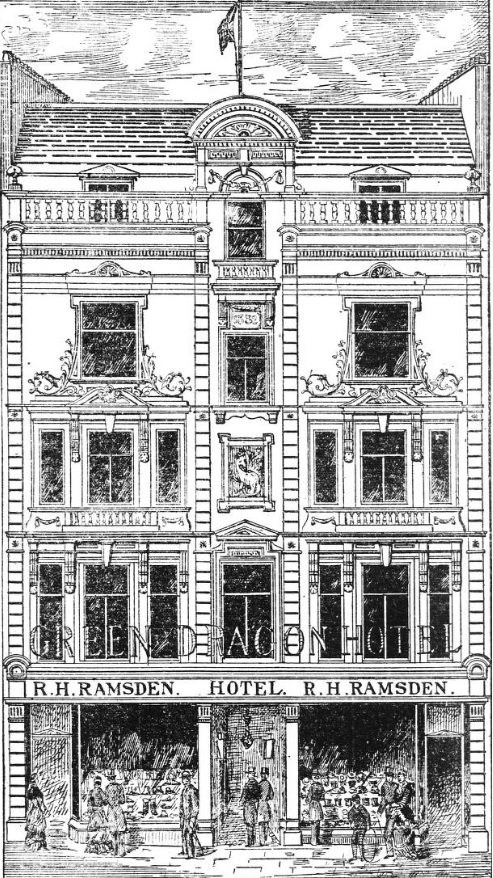
Green Dragon Hotel. Drawing from 1884. Image: BNA

Mr Ramsden’s hat shop was to the right, and the boot and shoe shop to the left, the windows of which extended some way down the passage in the centre, which led to the hotel.

All the floors were laid with encaustic tiles, at the entrance to the hotel being a dragon rampant, with the words ‘Green Dragon Hotel’ beneath. To the right in the passage was the luncheon bar, and to the left a second-class bar, at the end being the smoke room.

The walls and panelled ceilings of these rooms, as well as the passages, were covered with Lincrusta Waltona, with painted decorations. Around the rooms, mirrors were arranged, the seating being upholstered in maroon velvet and lit with massive brass gas chandeliers and brackets manufactured by John Horton and Sons, Sheffield.

The bar was to the right of the smoke room, and the kitchens beyond.

The billiard room, on the first floor, contained two Cox and Yeaman’s tables. A corridor on each side contained a cloakroom, as well as other rooms, leading to the grand dining hall which was 40ft long and 18ft wide, capable of serving 80 people. It was also lined with Lincrusta Waltona, of a handsome figured design with bronze enrichments, the panelled ceiling being painted and gilded. The fittings were mahogany, ebony, and gold, and the mirrors were lit with two massive 6-light brass chandeliers.
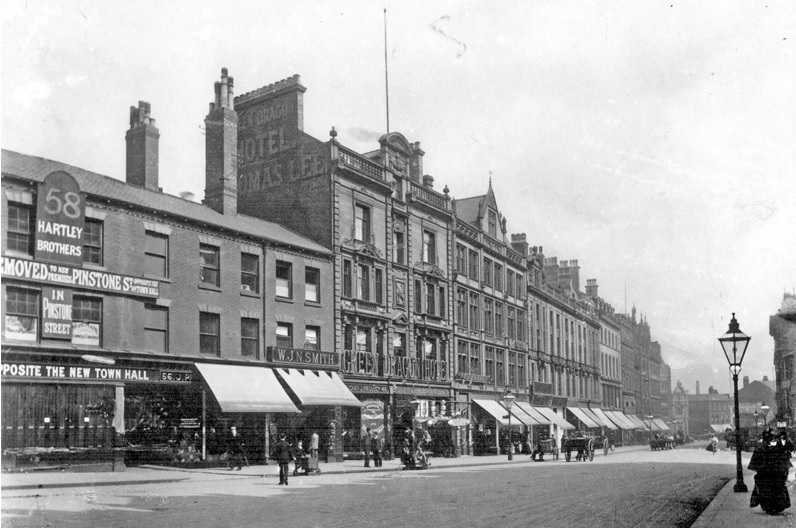
Fargate including No 58, former premises of Hartley Brothers, Exchange Gateway, No 56, J. Preston, Nos 54-46, William John N. Smith, Milliner, No 44, Green Dragon Hotel (later became Winchester House), No 40, Davy’s Buildings. Image: Picture Sheffield

On the floor above were club rooms, sitting rooms, bedrooms, store rooms, bathroom, housemaids’ rooms, and lavatories. In the basement were extensive cellars for the storage of wine and beer. A lift ran from the cellar to the top floor, and each room was equipped with electric bells and speaking tubes.

The walls of the hotel were such a thickness that air shafts ran from top to bottom, allowing ventilation for each room, and to conduct bad air into the drains, instead of being carried from the base of the building to the premises above.

All doors to the principal rooms were panelled with elegant cut plate glass with a dragon rampant device.

The hotel aimed to provide the public with refreshments of every description, from a 3d. sandwich or pie, to an elaborate eight or ten-course dinner; and from a glass of beer or bottle of mineral water, to the most costly wines of the best vintages.

Ramsden adopted the same business principle as his other businesses. This was the cash system, allowing him to offer the best at the lowest possible prices.

He died in 1922, aged 82, at 8 Herbert Road, Nether Edge, but his trustees relinquished the licence, and the building and contents of the hotel were auctioned in July 1925.

It was adapted to become Winchester House, the former hotel rooms becoming offices and studios.

The Winchester Restaurant was operated by the Little Tea Shop Company but failed in 1928. And there were several important names that had offices within, including John J. Jubb, accountants, and the Sheffield College of Voice Training.

They were joined in the 1930s by Yates and Henderson (Photographers), the Christadelphian Room, the Sheffield School of Operatic, Classical, and Ballroom Dancing, but its largest tenant became the Berlitz School of Languages, with its name displayed across the front of the building.
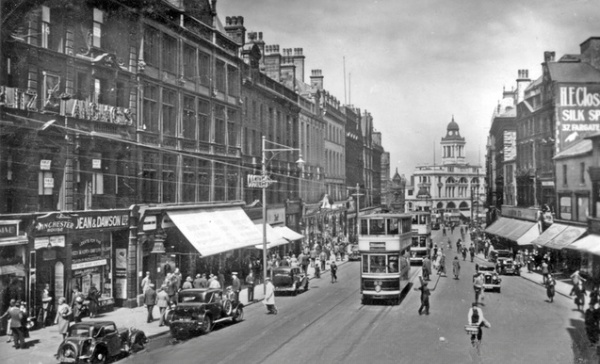
Fargate looking towards High Street and Kemsley House in 1937. Fargate including No 42/46, Winchester House and No 38/40, Arthur Davy and Sons, Provision Dealers, Davy’s Building (now WH Smith), left. Image: Picture Sheffield

During the 1950s and 1960s, Winchester House became offices for the Provincial Insurance Company, founded by Sir James Scott in Manchester in 1903.
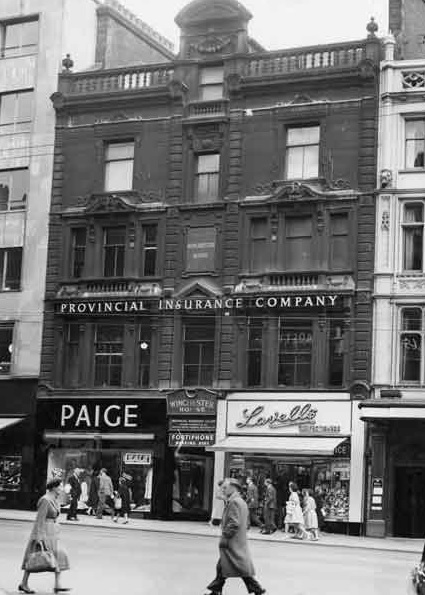
Provincial Insurance Company, Winchester House. c1960. Image: Picture Sheffield

The two shops at the front changed hands several times and some are worth mentioning, including Maison Sonia at No. 46 in the 1930s, later becoming Paige Gowns and Lovell’s Confectioners at No.48.

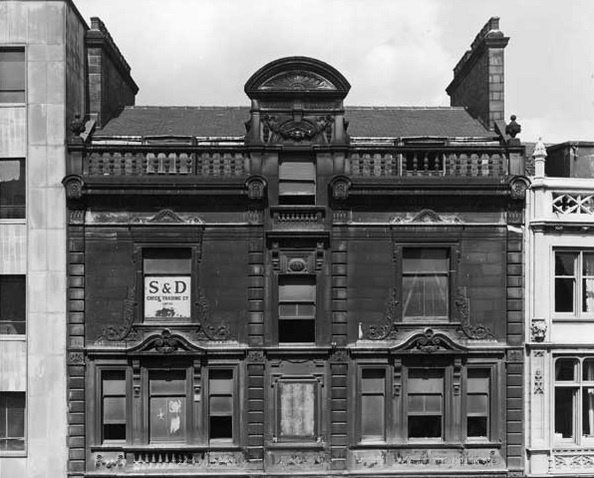
However, by the 1960s the building was in serious decline. Most of the offices were empty, with no inclination to find new tenants. Worst of all, the building had become dangerous, with masonry crumbling from above, and it was boarded up at ground level to prevent serious injury to passers-by.
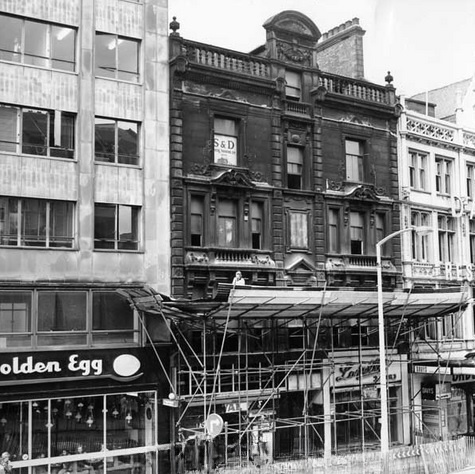
Fargate, the scaffolding on Winchester House being due to masonry falling off the building. Next door is the Golden Egg cafe and coffee shop, May 1971. Image: Picture Sheffield
Upper levels of Winchester House, 1971. Image: Picture Sheffield

Inevitably, it was demolished and replaced with a standard 1970s design. It contained a large shop at ground level, occupied by Dolcis, with modern offices above.

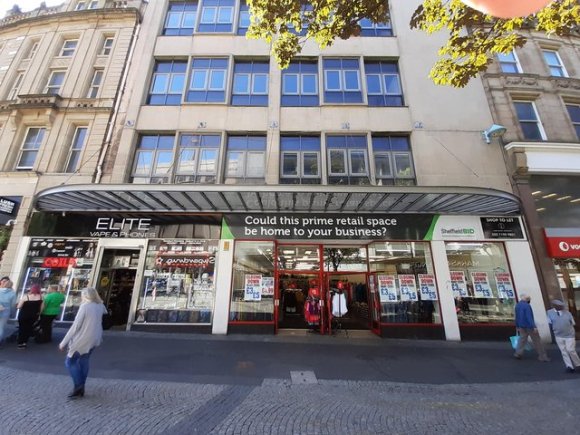
It never fitted in with adjacent Victorian architecture, and was itself demolished in 1996-97, replaced with the present building, and occupied by New Look until its closure.

Now, like the rest of Fargate, it is in limbo, occupied by a short-term let, but its offices are empty. It is for sale with an asking price of around £800K, with potential to extend the upper parts.

But while it waits the renaissance of Fargate, remember the site’s rich history, and of what came before.
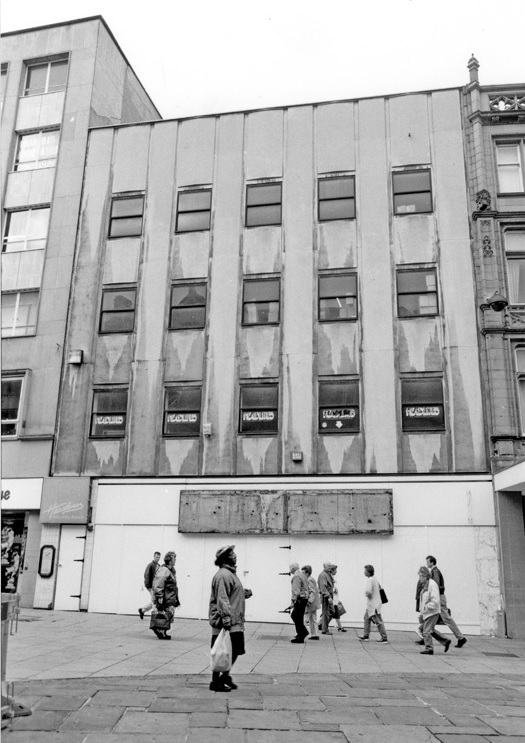
No. 42 Fargate, formerly Dolcis shoe shop awaiting demolition in 1996. Image: Picture Sheffield

©2022 David Poole. All Rights Reserved.
Categories
Buildings

The things you don’t get to see at 20-26 Fargate

I’ve always said that what interests me most about old buildings is not what you get to see, but what you don’t. It’s about those hidden rooms, above and below, that get forgotten over time.

The next time you walk down Fargate, look up, and wonder what happened in those rooms above shops. What secrets do they hold?

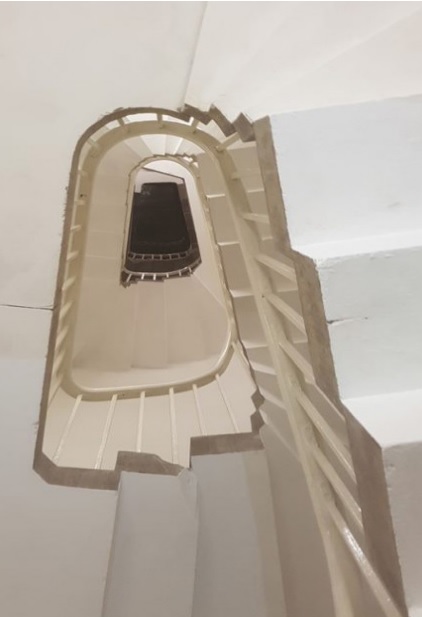
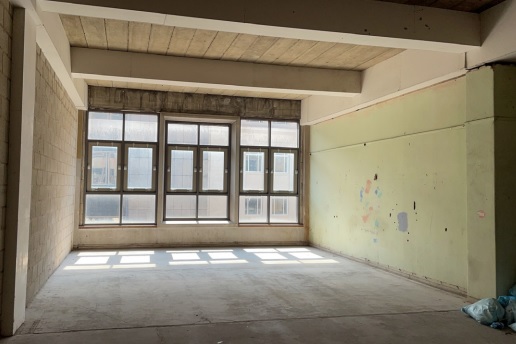
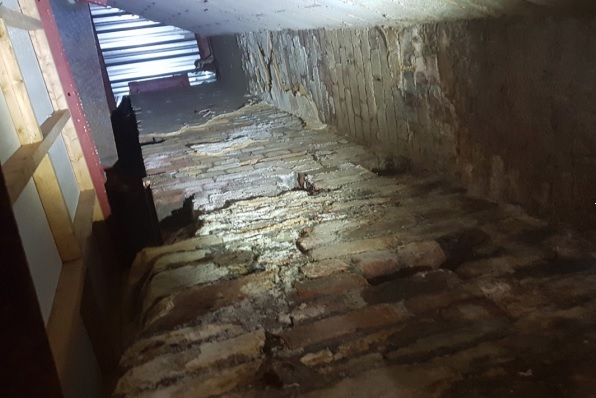
And so, I’m delighted that 20-26 Fargate, subject of an earlier post, has thrown up interesting photographs, including a disused lift shaft, going back to the Victorian times of Robert Foster and Sons, milliners and furniture sellers, and a quite unexpected staircase.

20-26 Fargate. Unused lift shaft. Image: HLP Architects
20-26 Fargate. Stone feature staircase to front of building. Image: HLP Architects
20-26 Fargate. Windows to front elevation. Image: HLP Architects
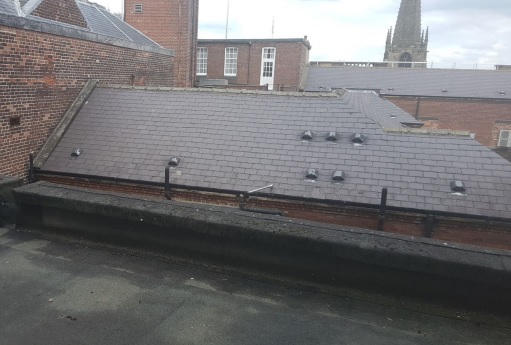
20-26 Fargate. Flat roof at third floor with views of the Cathedral. Image: HLP Architects
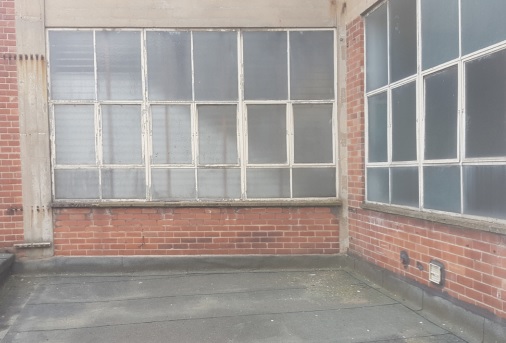
20-26 Fargate. Glazing to north (rear) elevations. Image: HLP Architects

© 2022 David Poole. All Rights Reserved.
Categories
Buildings

Events Central – a different path for 20-26 Fargate

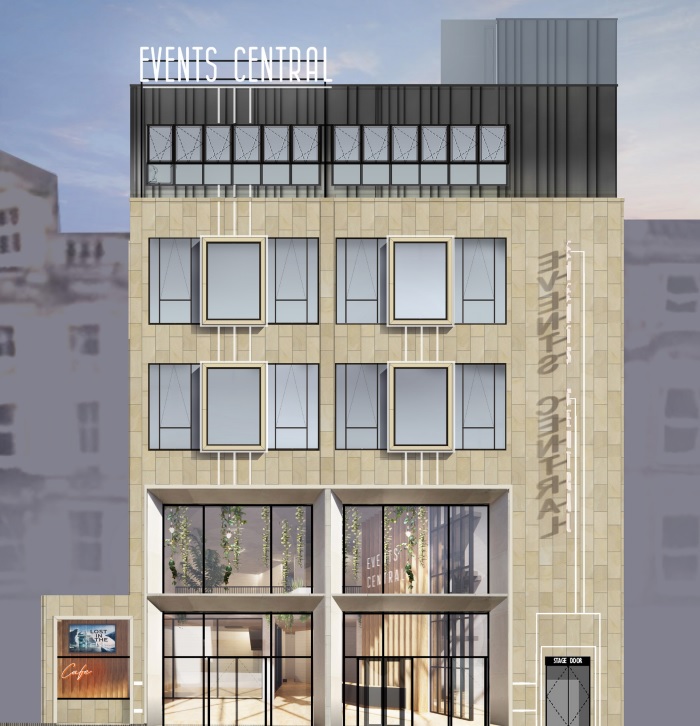
The proposed material palette has been developed to reflect the historical and cultural values of Fargate and the City Centre Conservation Area. The existing stonework will be retained where possible, with new stonework added at ground floor level adjacent to the new stage door entrance. A new stone surround is proposed to wrap around the new entrance and has been developed to respond to the Pre-Application feedback received. At fourth floor level it is proposed to re-clad the existing curtain walling in an anthracite coloured aluminium cladding system with vertical articulation to reflect the architectural language found in the existing building. Image: HLM Architects

Sheffield City Council has submitted a planning application for proposed alterations to 20-26 Fargate. The council bought the building in 2021with the intention of turning it into a cultural hub which supports and offers additional opportunities to use external events space.

The intention is to provide a part community, part commercial offering, which will function as a blueprint and catalyst for further regeneration of Fargate.

The council intends to repair, refurbish, and re-clad the existing building, retaining the existing structure where possible, and ensuring that alterations are kept to a minimum.

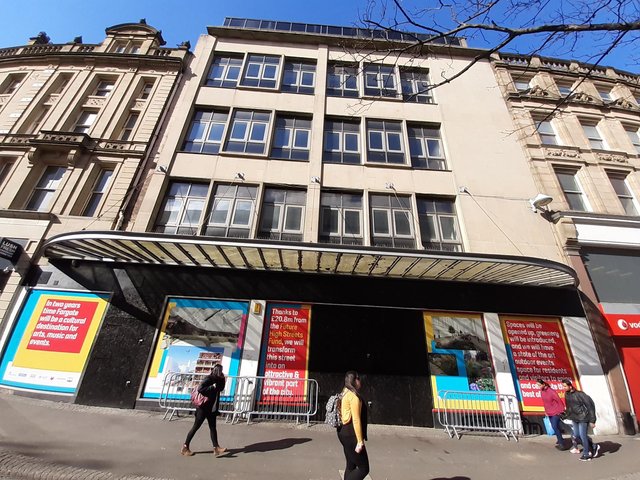
20-26 Fargate is located on Fargate in Sheffield’s city centre and forms part of the City Centre Conservation Area. Image: Sheffield Star

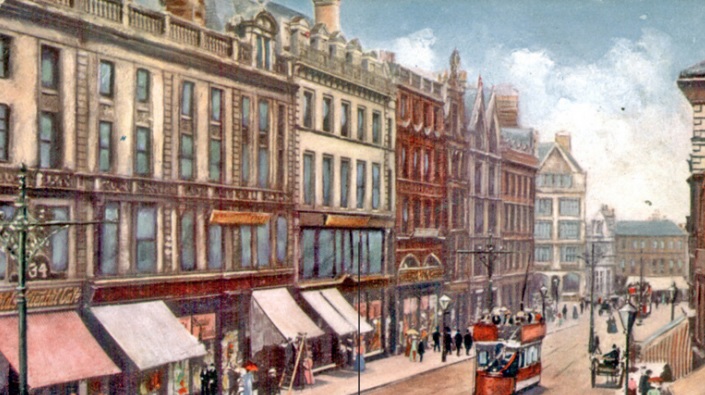
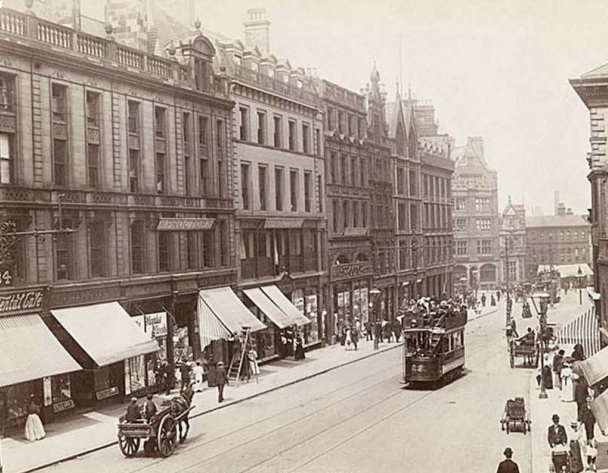
It was constructed in the late 1800s as Robert Proctor & Sons, a large drapery and furniture store running from 16-30 Fargate, adjacent to Coles Corner. It survived the 1940 Blitz, although suffered fire damage, and as a result was altered by the 1950s.

After Proctors left, the shop was used by various retailers including Chelsea Girl in the 1970s, and more recently Clinton Cards and KIKO (later Elite Vapes & Phones).

However, by the time the COVID pandemic hit in 2020 the building was standing empty.

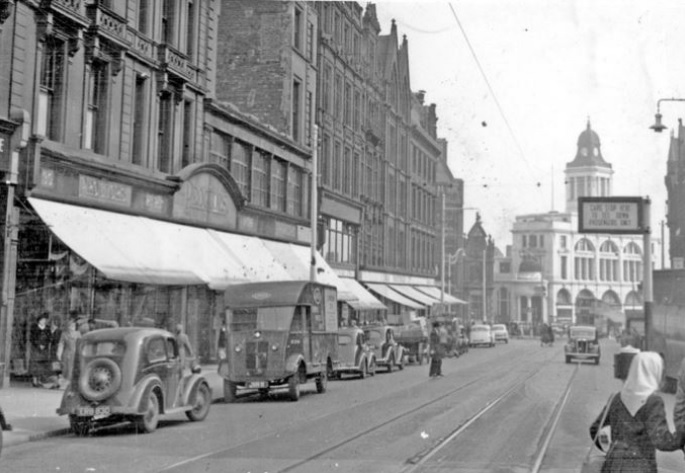
Fargate in 1905 looking towards premises including No. 34 Richard Field and Son Ltd., tea merchants and Fields Continental Cafe, Nos. 16-30 Robert Proctor and Son, drapers. Image: Picture Sheffield
Fargate including No 34, Richard Field and Son Ltd., Tea Merchants and Fields Continental Cafe and No 16-30, Robert Proctor and Son, Drapers. Image: Picture Sheffield
Fargate in 1953, Nos 16-30, Robert Proctor and Son, Drapers and Cole Brothers Department Store. Image: Picture Sheffield

20-26 Fargate is a five storey building (6 including the basement level) with a deep footprint that extends back towards Cutlers Hall. It sits mid-way along Fargate and stands taller than its immediate neighbours and benefits from glazing to the rear (north) facade, providing additional daylighting to the floor plates on levels 3 and 4, as well as views across to the cathedral.

A flat roof area presents the potential to bring daylight to the rear of the second floor also using roof lights. The architecture is of a mid-19th century construction with a stone tiled facade above. The fourth storey is set back from the main facade and was constructed later. The building is currently in need of significant refurbishment, to meet current building regulation requirements.

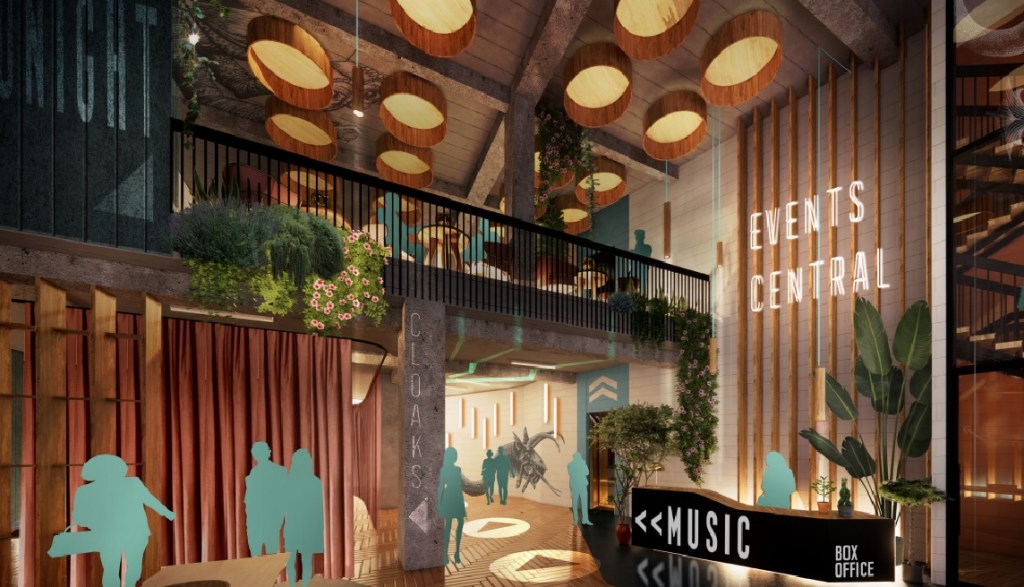
The main architectural intervention has been to introduce a double height glass entrance to provide active frontage along Fargate and to increase visibility into the building.

A new stone feature surround is proposed at ground and first floor level to retain the impression of a single feature entrance and to acknowledge the original historic façade that was later damaged and subsequently remodelled.

Proposed entrance space. Thin lines of LED lights offer a sustainable way to breathe new life into the existing building with minimal environmental impact. Image: HLM Architects
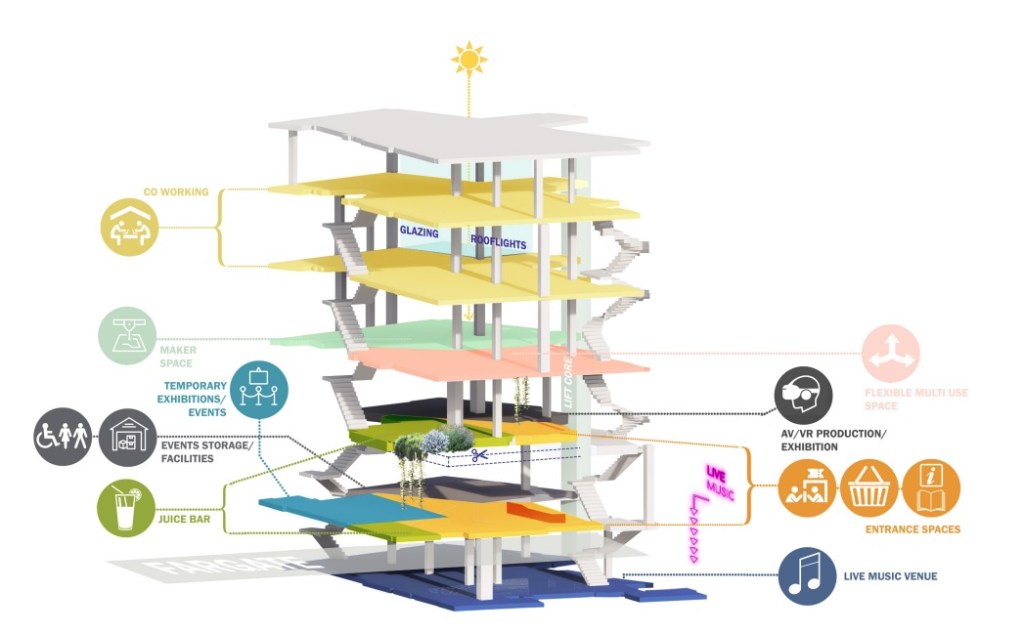
The proposal will include the renovation of the existing building with a glazed double height entrance space at the heart of the building that is formed of the reception area, temporary exhibition, bookshop and juice bar at ground floor level. The upper floor levels will house a makers space, flexible multi-use space and co-working space, while a new high-quality music venue is proposed at basement level. Image: HLM Architects

© 2022 David Poole. All Rights Reserved.