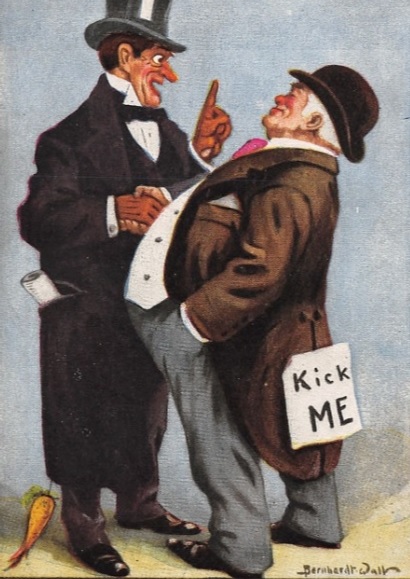
This story dates from 1 April 1898 when the manager of a shop in Sheffield, along with his assistants, decided to play a prank on Mary, the cook of the establishment, who was unable to read or write.
They wrote on a paper ‘April Fools’ Day’ and gave it to Mary, together with sixpence, and told her to go across to the chemist and get “sixpennyworth.”
The chemist’s assistant told her they were out of it, but she would get it at the shop higher up the street.
The second chemist asked her if she could read, and on being told no, told her what was written on the paper.
She took back the money and told the manager she could not get the stuff anywhere but gave them no idea that she had discovered the trick.
All went well during the day, the fellows enjoying the lark they had with Mary.
About half an hour before closing time, she came down to the manager, told him that supper was ready and the table laid, but begged to be excused as she had a headache, and allowed to go to bed.
In due course the men sat down to supper, and the cover was taken off the dish; but there was nothing but the paper they had given her in the morning with the words on it, ‘April Fools’ Day.’
A certain local businessman was both ridiculed and humbled. He had a lot of friends, all of whom liked him but for a fatal weakness of his. This weakness took the form of patronage.
He was always talking about “his friend, the Earl of Wharncliffe,” and no matter upon which point conversation turned, he would drag in a reference to the Earl.
Tired at last of his lofty talk, and fully confident that he was not even on nodding terms with the aristocrat, his friends decided to play a prank.
The businessman received a letter on the morning of April Fools’ Day, and the contents of it caused his heart to palpitate.
“It has come to the knowledge of the Earl of Wharncliffe that you have been publicly claiming his friendship, and spreading vague rumours about concerning his affairs, and he has instructed me to write to you demanding an instant apology. The Earl will be at home between the hours of ten and one tomorrow and will be ready to listen to an explanation.”
Never doubting the genuineness of the demand, the businessman rushed to Wortley Hall the next day, and with a great deal of difficulty obtained an interview with the bemused Earl.
What took place at that meeting was never divulged, but afterwards the businessman never again mentioned “his friend the Earl.”
We can’t let the passing of former Labour MP, Joe Ashton, that ‘bloke in the street,’ go unmentioned despite trying to keep this page clear from politics.
Whatever your allegiance, and whatever you might have thought about Joe Ashton, he was a Sheffield lad.
Born in 1933, he grew up in the slums of Attercliffe. Despite his modest beginnings, he passed the 11-plus and went to High Storrs Grammar School. He did National Service with the RAF and then became an engineer at Davy United.
He became involved in trade unionism and progressed into politics as a Sheffield city councillor. In 1968, he won a tough three-cornered by-election fight for the ‘Alamo of Bassetlaw,’ and held his seat until 2001.
Photograph by Picture Sheffield
Joe once wrote a weekly column for the Sheffield Star, went on to the Daily Star as the ‘Voice of the People’ and briefly wrote for the Sunday People. He was also a published novelist – Grass Roots charting the rude awakening of a young MP just elected to be the Mother of Parliament – and a staged playwright.
A Majority of One whipped across the Nottingham Playhouse auditorium in 1986, and astounded audiences and other Honourable Members with its no-dirty-tricks-censored account of how a government with a thin majority won votes on controversial issues.
Issues he took up as an MP included the delicacies or otherwise of Ministers calling MPs by their first names, the toll bridge on the A57, the use of tobacco sponsorship in sport (in 1972), paraffin prices, East Midlands rail cuts, conditions in a Worksop primary school, advertisements for the BBC (again in 1972) and fish fatalities in Clumber Park Lake.
He once accused Prime Minister Ted Heath of doing nothing about rising prices because he was a bachelor, complained that beer was getting so weak you’d soon be able to sell it to children and slammed the police for making bingo fans pay for a whole session before the first game started.
He followed his novel up with a memoir, Red Rose Blues (2000), and was awarded an OBE seven years later.
And, of course, he was a lifelong Sheffield Wednesday fan and director for nine years, often publicly criticising his colleagues and history proving he was quite correct with his comments.
Joe was married to his late wife Maggie for 57 years and leaves behind one daughter.
There was a time during the 1970s when a young man spent a few years at Sheffield’s Crucible Theatre, developing his talents before moving on to bigger things.
This review appeared in The Stage in October 1975: –
“There is no doubt about the entertainment value of Rex Doyle’s musical documentary The Great Sheffield Flood, given its premiere at the Crucible Studio. The songs by Rodney Natkiel cover a wide range of styles – from a pastiche patter song to romantic ballads to a more contemporary folk sound – and there is a bit of comedy, a bit of drama, and in Mel Smith’s production a great deal of pace to keep the pot boiling throughout.”
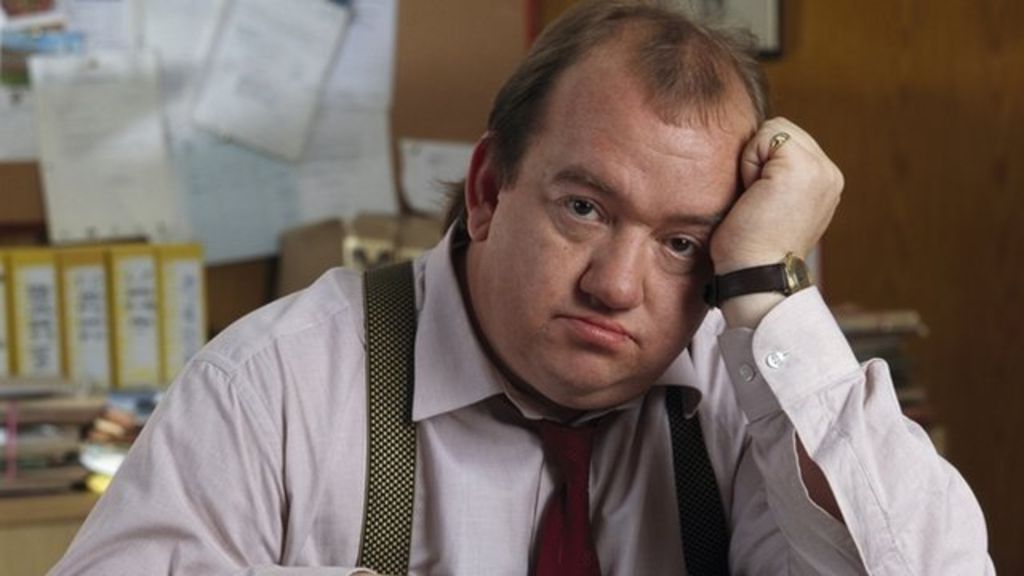
The Mel Smith in question was THE comedian Mel Smith (1952-2013), who, is now largely forgotten for his role as an associate director at the Crucible during the seventies.
The son of a Chiswick bookie, Smith was already directing plays at six years old, when he staged Little Plays for Little People with his friends. He read experimental psychology at New College, Oxford, choosing the university because he wanted to be involved with its Dramatic Society.
As a member of the Oxford University Dramatic Society, Smith honed his theatrical and comedy prowess with a production of The Tempest in Oxford and shows at the Edinburgh fringe. After graduation he worked in 1973 at the Royal Court theatre in London, as assistant director, and at the Bristol Old Vic, before arriving at the Sheffield Crucible in 1975.
And it seems he had some expertise with pantomime, contributing to Cinderella in 1976, and writing and directing Jack and the Beanstalk in 1977.
“This new version is without doubt the most original and witty pantomime I have seen this year,” wrote Paul Allen in The Stage. “This Jack is a would-be pop singer with a group that desperately needs new equipment; the good fairy, a New York Jew who turns herself into an agent to help him get the necessary cash; the villainous demon a punk rocker who was never really understood as a child.”
In 1979, he tackled musical theatre with Salad Days, written in 1954 by Julian Slade and Dorothy Reynolds.
“The audience has a collective sigh of relief they appear to be having at being confronted with a piece of theatre their rose-tinted memories tell them the way it used to be 25 years ago,” wrote The Stage, “Mel Smith’s production doesn’t quite send it up, but I doubt if anyone would have noticed if it did.”
And Salad Days was perhaps a sign of things to come.
“The production has toy props; doll’s house sets and the kind of costumes which look as though someone has stumbled on a fifties theatrical skip. The choreography is all jolly-hockey-sticks prancing, the music is sweet and decorative, and it is stuffed with gags.”
In September 1979, Paul Allen’s review of Alan Bennett’s Habeas Corpus, directed by Smith, was described as funny if not entirely successful.
“There is perhaps more weight and drive to Habeas Corpus than the production is prepared to allow; a readiness to slip into an over-jokey revue style doesn’t help Bennett’s acute verbal dexterity and it often obstructs the play’s speed of thought and action.”
I suspect Mel Smith’s kind of humour was ahead of its time, and he had other projects in mind.
Having performed with the Oxford Footlights at the Edinburgh fringe festival, he met John Lloyd who invited him to join Not the Nine O’Clock News with Rowan Atkinson, Pamela Stephenson, and Griff Rhys Jones, as well as Chris Langham in the first series. It ran from 1979 to 1982 and was conceived originally as a topical news-based satire, broadcast at 9pm weekly on BBC2 against the actual nine o’clock news over on BBC1.
Smith and Griff Rhys Jones continued from that TV sketch show to create Alas Smith and Jones. The pair later formed Talkback Productions which was responsible for dozens of comedies shows, including Da Ali G Show and I’m Alan Partridge. The company was sold to Pearson for £62million in 2000.
As an actor, Smith was most memorable on screen in The Princess Bride (1987) and Brain Donors (1992), and was ideally cast as Sir Toby Belch in Trevor Nunn’s 1996 film of Twelfth Night. On TV, he starred in Colin’s Sandwich (1988-1990), a sitcom about a British Rail worker with writing aspirations; Hustle (2006); and John Sullivan’s prequel to Only Fools and Horses, Rock and Chips (2010-2011).
Mel Smith died in 2013 of a heart attack, aged 60.
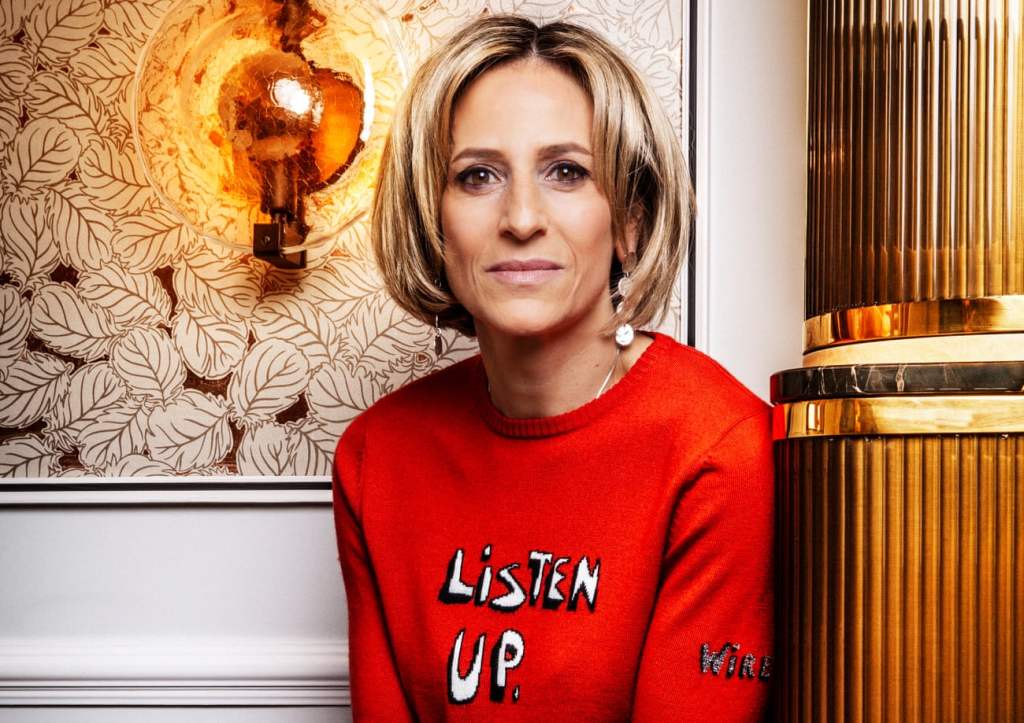
Continuing our series about people with Sheffield connections. Yet another product of King Edward VII School, Emily Maitlis, British-Canadian journalist, documentary maker and main presenter of BBC’s Newsnight alongside Kirsty Wark.
She was born in Hamilton, Ontario in 1970, but brought up in Sheffield after her father became a Professor of Inorganic Chemistry at the University of Sheffield. “Home in Sheffield was a place full of books where you talked about things, but where you were always shushed when the headlines came on.”
Her first Saturday job was at Ross & Foster hairdressers where she was paid £6 a week. The salon offered her a full time job, but her parents insisted she stay at school and went to read English at Queen’s College, Cambridge.
She worked for NBC Asia in Hong Kong before moving to Sky News as Business Correspondent and then to the BBC in 2001. She appeared regularly on BBC News and hosted the 2012 US Election Coverage alongside David Dimbleby.
Since presenting Newsnight she won Interview of the Year and Scoop of the Year at the 2020 RTS Television Awards for her interview with the Prince Andrew, Duke of York, and his ill-fated friendship with American sex offender Jeffrey Epstein.
In 2012 she was given an Honorary Doctorate at the University of Sheffield. “What made it even more special is the fact that it was my home-town – my parents were thrilled.”
Maitlis published a book ‘Airhead: The Imperfect Art of Making News’ in 2019, describing how television news is produced.
Sheffield has never been an aviation city, one of the biggest urban areas in Britain that failed to grasp the importance (or intrusion) of an airport.
However, within a decade of the first flight by the Wright Brothers in 1903, the first aeroplane arrived in Sheffield.
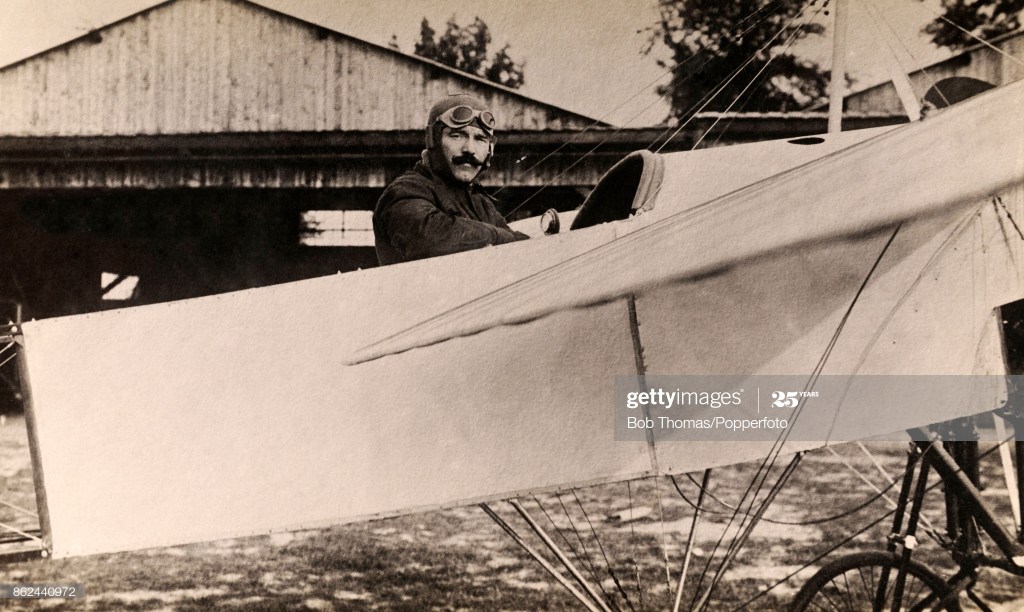
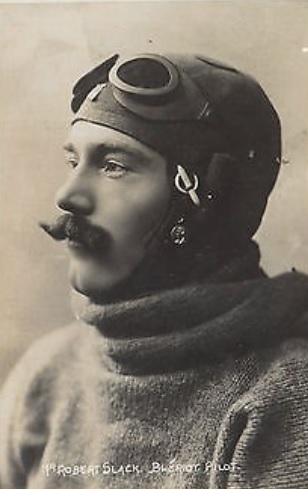
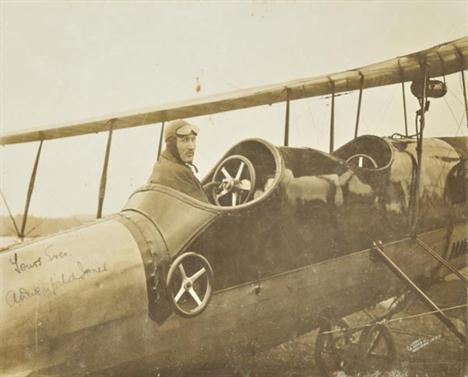
The pioneering aviator was Robert Bertram Slack (1886-1913), a native of Nottingham, who had previously worked in the cycle and motor trade.
He was the 157th person to be granted an aviator’s certificate by the Royal Aero Club in 1911, qualifying at the Bleriot School at Hendon Aerodrome.
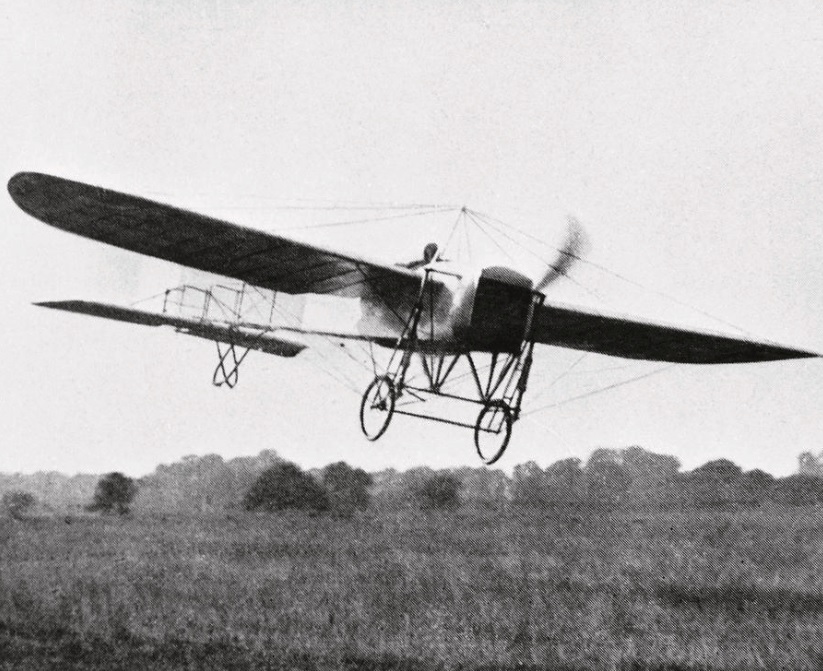
In 1912, he competed in the Irish Aero Club’s Dublin-Belfast Race and shortly afterwards was commissioned by the International Correspondence Schools (ICS) to tour around the country giving exhibition flights. The Bleriot monoplane was capable of speeds of 60m.p.h., its pilot’s seat presented to Slack by the aviator Henri Salmet as a mascot, the one in which Salmet sat while making a record high-flight of 9,500ft. Afterwards, the plane was to be bought for £850 by the ICS and presented to the War Office.
This was the reason for Slack’s visit to Sheffield in August 1912, although matters weren’t as simple as might have been expected and tells us that the weather played an important part in early aviation.
Slack started his 1,100 mile tour from Hendon Aerodrome seven weeks before, and had already visited Leicester, Nottingham, Birmingham, Manchester, Carlisle, Edinburgh , Newcastle and Harrogate.
It was from Harrogate that Slack was due to fly on Friday 2nd August 1912 eventually arriving at a makeshift aerodrome at the former Redmires Racecourse, the weekend camping ground of the Sheffield Artillery, and generously donated by Colonel Charles Clifford. (More about Redmires Racecourse in a future post).
Due to arrive at seven o’clock in the evening, a small crowd waited for over an hour anxious to see this new and exciting mode of transport. By 8.30pm, the crowd was getting restless and it was only after a telephone call that it was discovered a strong wind had made it impossible to take off from Harrogate.
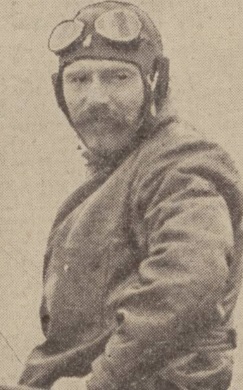
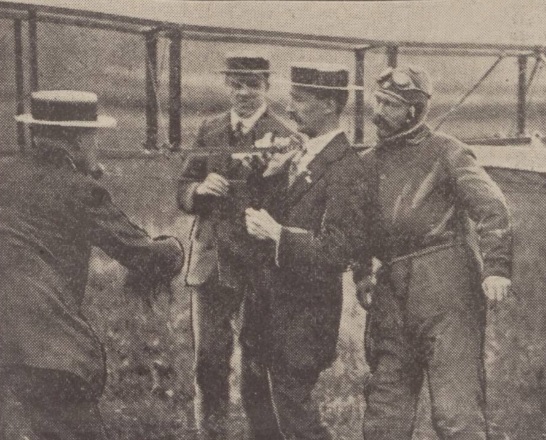
Robert Slack at Redmires by The British Newspaper Archive
Instead, Slack took off at 5.20am the following day, running into a succession of fog-banks, and, unable to see his way, was several times in imminent peril. After some exciting adventures amongst factory chimneys, trees, and hill sides in the neighbourhoods of Leeds, he wisely decided to land. Later, he had a touch of air-sickness, and again descended and landed at Norton Priory between Pontefract and Doncaster.
When he was airborne again, Slack flew over Doncaster, before eventually arriving at Redmires about five o’clock. Broad white sheets had been stretched across the grass as a guide to him in his descent.
“The shrill cry of a lynx-eyed small boy announced the approach of the overdue flying man. There was just a little speck in the sky above the range of hills overlooking the Rivelin Valley. It was travelling at terrific speed, and soon became distinguishable from the crows. It was at least three thousand feet up, but gradually descended a thousand feet or so. As he neared the landing-place, Mr Slack took a wide sweep round to face the wind for his descent. Then suddenly the machine seemed to rest a moment in the air, and in a graceful vol-plane came hovering down to earth. The aviator had cut off his petrol at two thousand feet. He alighted on the ground as gently as a bird.”
Slack had been in close touch with his mechanics, who followed a set course in a motor-car, so that at each descent he was able to summon them by telephone.
He had an enthusiastic reception from a large crowd who had gathered on the racecourse and in the roadway and had been awaiting the delayed aviator with remarkable patience for several hours. The crowd came swarming into the ground and loudly cheered the descent, which was admirably neat and precise.
“Mr Slack, a well-set, broad-shouldered man, with a bronzed, good-humoured face, took the plaudits of the enthusiastic crowd who pressed round him with smiling ease, and genially obeyed the behests of the members of the photographic clan. After seeing to the housing of his monoplane, he went by motor-car to the city, being again warmly cheered as he left the ground.”
Slack described his adventurous flight in a chat with a Sheffield Telegraph reporter: –
“It was a beautiful morning when I left Harrogate,” he said, “although somewhat misty. Just after passing Leeds, however, I entered one of the thickest fogs I have ever experienced. I could see nothing; the ground was quite invisible at 300 feet. Hoping it would clear, I went on for five or six miles, steering entirely by compass, for it was impossible to follow my map, as I could not see the landmarks. Instead of clearing, however, the fog got worse, so I was determined to come down to look for landmarks.
“But you do know what you strike in a fog like that, and I had several narrow escapes. It was the fright of my life. I just missed some factory chimneys and some trees, and then right in front of me rose a steep hill. I had to point my machine upwards very smartly in order to get over it. I thought it best to turn around, so I made my way northwards and succeeded in alighting without damage at Seacroft, although I did not find a very good landing place.
“I soon got in touch with my mechanic and stayed at Seacroft till half-past eleven. My mechanic advised me to go more east if I encountered any more fog, and I followed his advice, for I had no sooner got away than I ran into a lot more very thick fog. By turning in an easterly direction, however, I soon got out of it. I was feeling very rocky, however, for my breakfast was not agreeing with me, and the air was bad; there was scarcely a breath of wind, and the machine was doing all sorts of things. The engine, however, was running well.
“I thought it best to come down again and found a very good landing place at Norton Priory, between Doncaster and Pontefract. I left Norton at 4.26, so the run thence to Sheffield took me 21 minutes, a rate of about 70 miles an hour. I travelled from Norton to Sheffield at an altitude of 3,000 feet. It was alright until I got to the hills, when it became very foggy again. However, I got through alright.
“Fog,” added Slack, “is the worst thing the aviator has to meet, although rain is bad enough.”
There was to be no exhibition flying, but people could see the strange flying-machine at a small charge. The aeroplane was overhauled and set to rest in a tent organised by Colonel Clifford, while Slack headed to London to plan for a trip to the south-west.
Back in Sheffield, Slack and his Bleriot was due for an early morning take-off on Wednesday 7th August, but this was prevented due to heavy rain.
He had hoped to take off for Rugby on Thursday at 4am but Slack suffered a bilious attack, missing his opportunity, and a slight mist and strong wind meant he had to wait all day, even indulging in a game of skittles.
A large crowd gathered at Redmires but at about five o’clock when conditions were favourable a message was received that there was a thunderstorm at Rugby.
On Friday, the weather was once again hindered by strong winds, and just when it was thought that the flight would have to be cancelled again, the wind dropped, and Slack quickly jumped into the Bleriot and made a sudden take-off.
He quickly reached an altitude of 600ft and flew due west for half a mile before turning towards Dore and flying onwards to Chesterfield. With this, Slack disappeared into the distance and the crowds quickly dispersed.
The drama didn’t end here though, Slack got lost in a storm near Coventry and his onward flight to Rugby was interrupted when he was forced to land at Nuneaton.
Robert Slack finally ended his tour at Hendon Aerodrome, but he went on to grab victory in an air race with French aviator Eugene Gilbert from Paris to London, as well as being a competitor in an ‘Aerial Derby’ round London in September 1913.
Considering the dangers that Slack faced every time he flew his aeroplane; it was tragic that he met an untimely death in a car accident on Watling Street between St. Albans and London in December 1913.
The mysterious disappearance of a sixteen-year-old boy from the slums of Sheffield got the tongues wagging back in July 1925, and it revealed a story that might take some believing today.
Photograph by Picture Sheffield
Our story begins in February 1911 when a poor woman, called Mrs Minnie Robshaw, kept a little general store at 111 Scotland Street and answered an advertisement asking for a home for a two-year-old child, and, on a payment of £5, a boy was surrendered to her by a woman named Mrs Weatherburn, who kept a boarding house at 22 Catherine Street, Liverpool.
Mrs Weatherburn brought the baby, called William Paley Weatherburn, and handed over the child at Midland Station. Before going away she told Mrs Robshaw that when the baby was twenty-one, he would come into a lot of money.
Shortly after, the baby became ill, and Mrs Robshaw wrote to the mother, but her letter was returned, as the address was unknown.
Thirteen years went by and nothing was heard of the mother.
The first intimation that he was not their legal son came to Willie in a curious way.
A young girl appeared in Sheffield and persuaded the boy to go away with her. She said he was his half-sister. Mrs Robshaw didn’t know where the lad had gone, but after a two-month absence she received a letter from a place unknown: –
“Willie had had a nice holiday now, and we have to get him a new suit and boots, and he has been on a farm at Spotforth and had plenty of good support.”
The boy came back, and the only thing that Mrs Robshaw could learn from him was that he had been on a farm and had been well treated.
He told his foster-mother that he had been to Liverpool and had been across to New Brighton. They had put him on the train for Sheffield without any money and without a ticket.
It appears that Willie was quite happy with Mr and Mrs Robshaw and was said to be the life and soul of the house.
Willie had attended a council school until he was 14, and had then been apprenticed as a painter and decorator.
In July 1925, a friend of Willie’s went into the shop for a penny bar of chocolate. “Where is Willie?” he asked. “What do you want him for?” asked Mrs Robshaw. “A lady at the bottom of the street in a motor-car wants him and has offered me sixpence if I return with him,” answered the boy.
Mrs Robshaw became suspicious, and saying nothing to Willie, went out herself. She noticed that in the car was a well-dressed woman accompanied by a man in a smart brown suit. As she approached, the woman noticed her and immediately drove away. Mrs Robshaw, however, had the presence to take a note of the number plate – KC 8209 – the registration mark for Liverpool.
Photograph by Picture Sheffield
Mrs Robshaw returned to the shop, and a little later a man came in. She was positive that the man was the same one that was in the car. He asked for Willie, saying that he wanted to take him for a drive. Willie was not in the house and she did not consent to the request, finding out later that Willie had been seen to enter a car a few streets away.
According to neighbours, an expensive limousine car was seen in the vicinity shortly before Willie had gone missing, and a stylish young woman in a black silk cape had visited premises close to where Willie lived, and had exchanged her fashionable hat for one less likely to excite comment, and her smart cloak for an old shawl.
A neighbour also spoke of a pretty golden-haired girl, who had been at the wheel of the motor car, and a well-dressed man who had made certain inquiries about the boy.
After his disappearance, Mrs Robshaw received a letter from Willie which read: –
“Dear Mum and Dad, – I have gone away on my own account. It is for my own good. I will write to you from time to time, but will not come to live with you anymore. Don’t trouble about me, as I shall be brought up as a gentleman, and not have to work for my living. With love, Willie. xxx.”
The address of the letter was in Manchester, but it appeared that the street did not exist.
Now there was a silence and each day his foster-mother wondered if he would ever return.
“I am convinced that it was Mrs Weatherburn who was in the car,” said Mrs Robshaw. “When she brought the baby to me fourteen years ago she told me that many years ago her husband (Percy Weatherburn) went to America, where he had since died. Shortly after he went she took a position with an invalid lady, and it was shortly after this that the child was born.
“After her husband’s death she met a man in Liverpool who said he would marry her if she got rid of the baby. So she advertised for a home for it, and it was her advertisement that I answered.
“So Willie came to us, and we looked upon him as a son, and did everything we could for him. Then he was taken away from us by these fashionable people, and we have heard nothing from him since. I have learned that Mrs Weatherburn had married the man she met in Liverpool. He is, I believe on the Stock exchange there.
“The letter we had from him bore a Manchester address, but the postmark was Portsmouth.”
No time was spared involving the police, and a search was made for Willie which extended to Liverpool, Cleethorpes and Ormskirk, and only ended when the lad was discovered at Formby, the house of his real mother.
Photograph by Picture Sheffield
The head of the family said in an interview with a Liverpool newspaper, that he was the step-father of the boy. It was stated that the boy had been a long lost son – a statement which Mrs Robshaw flatly contradicted, in as much that the mother knew where the boy was all the time.
“There is no real mystery about this so-called kidnapping,” said his real mother. “We simply decided to have him at home. When I found him, I said, ‘Willie?’ He said, ‘Yes,’ and I then said, ‘I am your mother. Would you like to come home?’ And that is all.”
By now, the story of Willie Robshaw was attracting the attention of newspapers across the nation.
“A story which, were it to be filmed by a cinema producer, would probably establish his reputation as a master of melodrama. It shows how the long-lost son of a wealthy family was discovered, after a 14 year search, living in one of the poorest districts of Sheffield. Now he is home again, with money and everything he could wish for at his command,” reported the Belfast Telegraph.
In August, the story took another twist when Willie returned to Sheffield. He arrived quite unexpectedly late on a Monday night, his dark hair now dyed a golden colour, and was warmly welcomed back by Mr and Mrs Robshaw.
Willie refused to give an account of his exploits, or to discuss the manner of his leaving, other than he had been riding about West Coast places in a motor car, but told his foster parents that he had come back to them of his own free will.
This decision, he said, was reached when, in company with the people from Formby, he visited Manchester. Whilst they were in a hotel, he stated he had slipped away from them and came to Sheffield, where he had been busy attending to his pigeons.
Some corroboration to the story was afforded by Mrs Robshaw receiving a telegram from Formby inquiring if Willie was in Sheffield.
The boy’s mother, at her home in Formby, said the family were proceeding no further in the matter for recovering the boy.
“Apparently he prefers to live his life in Sheffield rather than to accept our offer of being a gentleman and living a gentleman’s life, and he has gone back to it,” she said. “We are not going to trouble anymore.”
Mr R.F. Payne, a well-known Sheffield solicitor, addressed a letter on behalf of Mr and Mrs Ernest Robshaw to the Formby people claiming from them £377 for his maintenance at the rate of ten shillings a week from February 1911, when the Robshaw’s adopted the lad, to July, when he had left to go to Formby. No reply was received.
The Liverpool Echo had also discovered the mystery behind the Liverpool connection.
Willie’s real mother was Lilly Weatherburn, who had married Mr Clement Waring and lived at Rowan Lea, Liverpool Road, at Formby. The “charming, fair-haired” girl who drove the car had been Willie’s sister, Lily Paylor Brown, who had married a well-to-do widower, Walter Brown, a tailor, in November 1924 – he was 64, she was 22 – but he had died in August 1925.
Willie had been home for a week when he left Sheffield for Liverpool again. Mr Robshaw visited the city to determine what was happening and he was told by the boy that he was perfectly happy and promised to write home in about a week.
Photograph by Picture Sheffield
His foster parents heard nothing from him and at Christmas 1925 Mr Robshaw returned to Liverpool and visited the house where he was told not to make anymore inquiries about his adopted son.
Hearing nothing from Willie, Mr Robshaw made another visit to Liverpool in March 1926 and was told that Willie had returned to Sheffield, and although extensive inquiries were made the lad wasn’t discovered.
And that is where the trail went cold. Whatever happened to Willie?
I suspect that somebody in Sheffield will know how this strange story ended.
The Queen’s Hotel, on Scotland Street, is one of those public houses that has seen a lot of changes over the years.
Scotland Street itself dates from the eighteenth and nineteenth centuries, built along a former boundary of an open field system. In the late 1700s and early 1800s, small factories, workshops and housing were built in the area, encouraged by an influx of Irish immigrants during the 1840s.
A public house stood here before. Built in 1791, known as the Queen’s Inn, later the Queen’s Hotel, and under the ownership of William Bradley & Co, and subsequently S.H. Wards, which bought it in 1876.
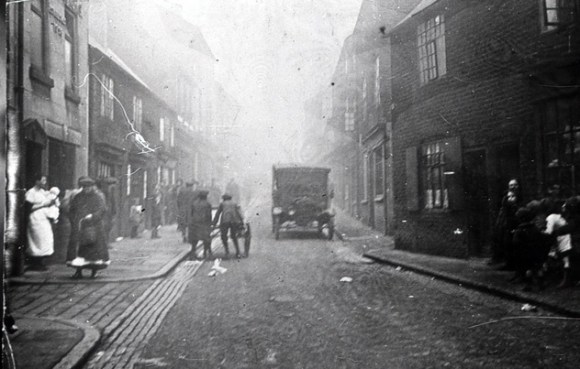
By the 1920s, the Scotland Street area contained some of the city’s worst slum housing, described as “hovels of the aristocracy” and “mansions of the poor.” It prompted Sheffield Corporation to demolish large swathes of terraced houses.
Photograph by Picture Sheffield
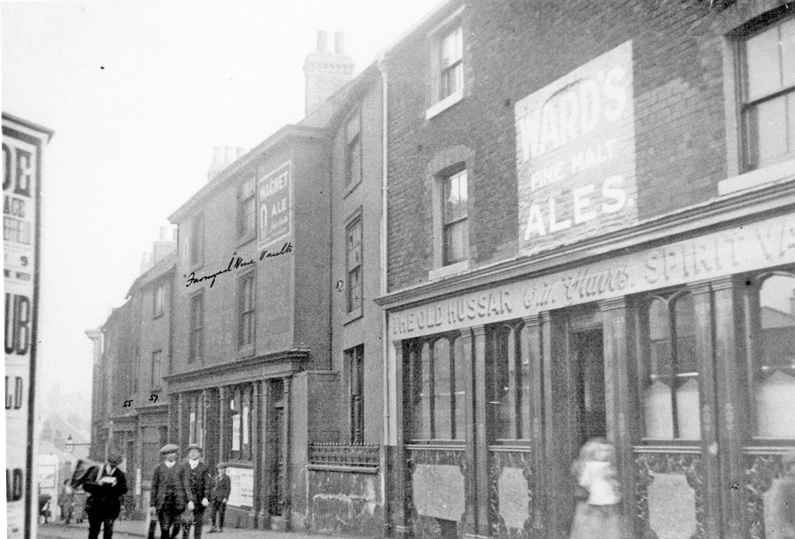
Sheffield Corporation set about widening Scotland Street, and in the process purchased land from S.H. Ward & Co, including the site of the nearby Old Hussar public house, and part of the site of the Queen’s Hotel, on condition that they paid the brewery £2,875 towards the cost of rebuilding the Queen’s Hotel.
The new pub, built with stark, simple, exterior lines, opened in December 1928 with guest rooms on the upper floors, a large function room on the first floor and two ground floor bars.
Photograph by Picture Sheffield
It could be said that the new Queen’s Head opened at the wrong time and experienced highs and lows ever since.
In 1934, over 50 shopkeepers from the Scotland Street, Meadow Street and surrounding area congregated inside the Queen’s Hotel, demanding that Sheffield Corporation reduce their rent and rates.
They argued that while a great many of their customers had been removed to new housing estates, their rent and rates had remained the same.
The shopkeepers had suffered bad trade for years because at least eighty per cent of the inhabitants had been either unemployed or on short time, and now they were losing their custom altogether. Now they had been left on the edge of a “desert.”
A long-term lack of investment, and a general state of decline, resulted in the area becoming down-at-heel by the middle of the twentieth century.
Many local factories closed, and the decline accelerated in the 1970s, as did the fortunes of the Queen’s Hotel, not helped by S.H. Wards being taken over by Sunderland-based Vaux Breweries in 1972. The brewery closed in 1999, two years after the Queen’s Hotel had closed its doors for good in April 1997.
Photograph by Sheffielder
As reported a few months ago, plans have been floating around to demolish the Queen’s Head and construct a new residential development comprising more than 220 apartments.
That day has now come, with Rise Homes, supported by DLP Planning and Hadfield Cawkwell Davidson, submitting an application to Sheffield City Council for the new development.
The derelict public house would be demolished as would the former Robert Neil & Co (Sheffield) Ltd building next door.
Photograph by Yorbex/Derelict Places
The new residential development would comprise three blocks of up to ten storeys, with a total of 229 apartments, with 145 one-bedroom and 84 two-bedroom units.
Visitors to the area will agree that this part of Scotland Street is now down-at-heel, within an area of transition, which is becoming characterised by more city centre living.
Planning applications were previously approved in 2005 and 2007 for residential developments that would have retained the pub. However, it has now been determined it is not viable to retain any element of the building.
With the demolition of the Queen’s Head likely to be granted it will be a sad end for the public house, especially when people are now heading back to live here once again.
Back to our famous Sheffield people. Daniel Meirion Walker, born 1977, at Crawley in Sussex. Better known to us as Dan Walker, TV presenter and an honorary Sheffielder.
At the age of 18 he attended the University of Sheffield where he gained a BA (Hons) degree in history and an MA degree in journalism studies. He did work experience at Hallam FM, later joining Key 103 in Manchester as a sports reporter.
Dan joined Granada TV for six months before joining BBC TV’s North West Tonight. After moving to London, he presented Football Focus and replaced Bill Turnbull as presenter of BBC Breakfast in 2016.
Married with three children, he moved back to Sheffield in 2012 and is a patron of Sheffield Children’s Hospital Charity.
“It’s a big city, but it doesn’t feel like it. I know it’s a cliché, but the people are lovely. They care about Sheffield and are very proud of it.”
Lasagne is his signature dish and swears the secret is a splash of ketchup and Henderson’s Relish.
“It’s a Sheffield thing. You can have it on anything. It smells a bit like pickled onion Monster Munch. I have it on everything: fried eggs, toast, pie and anything with meat in it.”
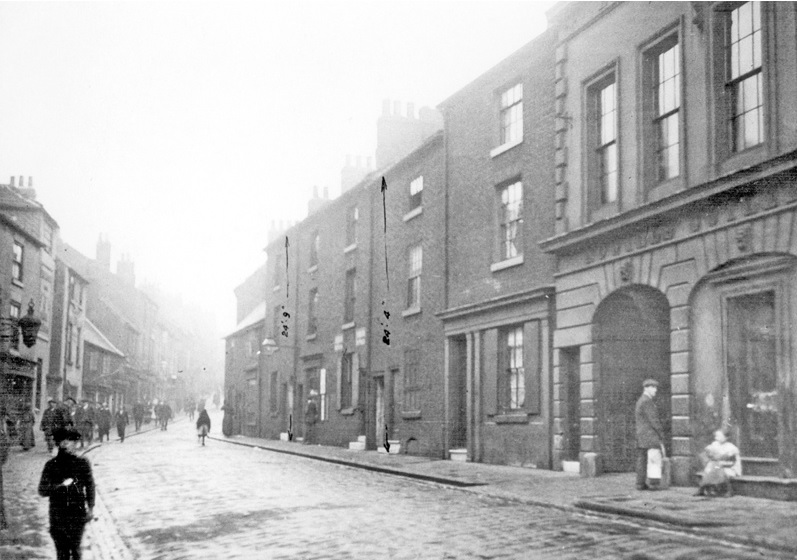
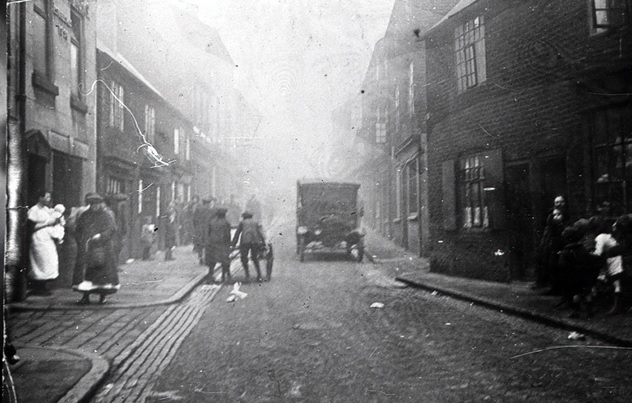
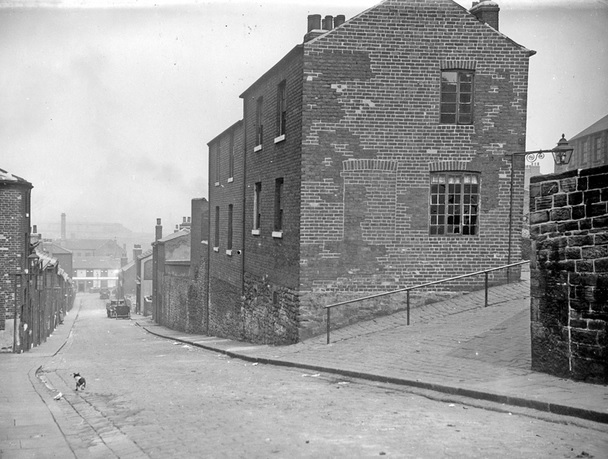
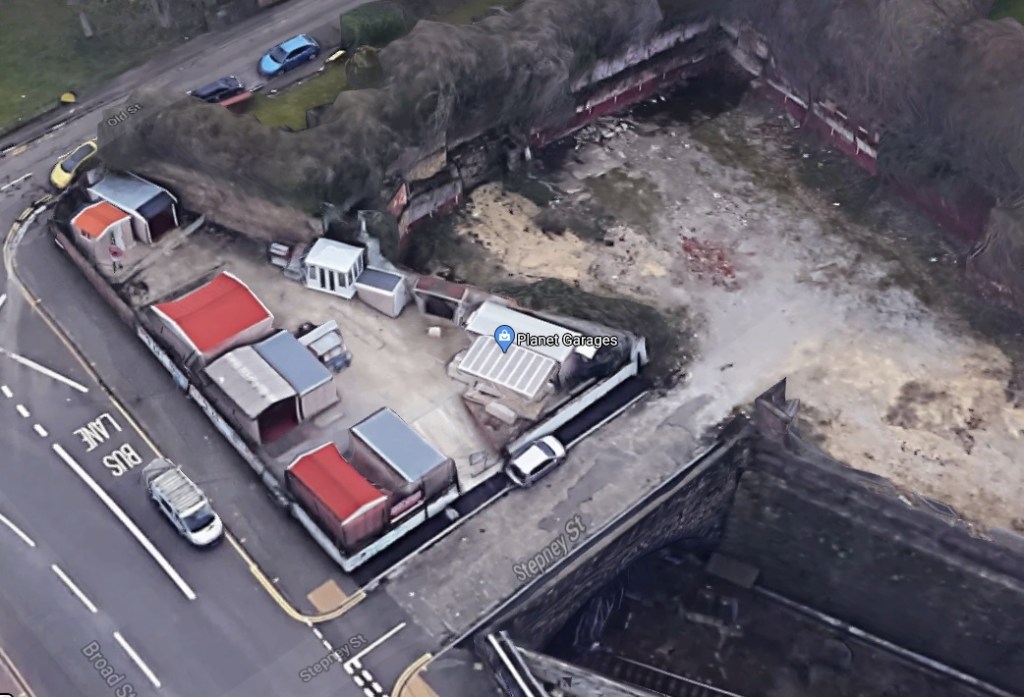
Stepney Street is a small road leading off Broad Street in the Park area of Sheffield.
Originally land owned by the Duke of Norfolk, it succumbed to cobbled-street slum housing, was shortened in length after redevelopment in the 1930s, and modern-day access restricted to a private car park and a garage business. Significantly, the railway line runs directly beneath it.
Housing on the street, along with those at Old Street, Bard Street, School Lane, Duke Street, Crown Alley, Crown Alley Lane, Bernard Street, Weigh Lane and Broad Street, were compulsorily purchased in 1934, demolished and redeveloped.
Photograph of Stepney Street, looking towards Broad Street, by Picture Sheffield
The surviving part of Stepney Street, with its cobbles, might become a residential area again, with a proposed new development of 100 apartments, a planning application submitted to Sheffield City Council by Six Developments, supported by architects’ practice Cadenza.
The gated building would be eight-storeys high featuring 100 private rental sector (PRS) apartments. A total of 95 one-bed flats would be provided, together with four studios and a single two-bedroom unit.
Watkin Jones previously secured planning permission for a development of 62-bed apartment building in December 2017, but this scheme was not brought forward. The developer had originally acquired the site to provide car parking for its Pinnacles Development.










 sheffielder.net