There was a time during the 1970s when a young man spent a few years at Sheffield’s Crucible Theatre, developing his talents before moving on to bigger things.
This review appeared in The Stage in October 1975: –
“There is no doubt about the entertainment value of Rex Doyle’s musical documentary The Great Sheffield Flood, given its premiere at the Crucible Studio. The songs by Rodney Natkiel cover a wide range of styles – from a pastiche patter song to romantic ballads to a more contemporary folk sound – and there is a bit of comedy, a bit of drama, and in Mel Smith’s production a great deal of pace to keep the pot boiling throughout.”
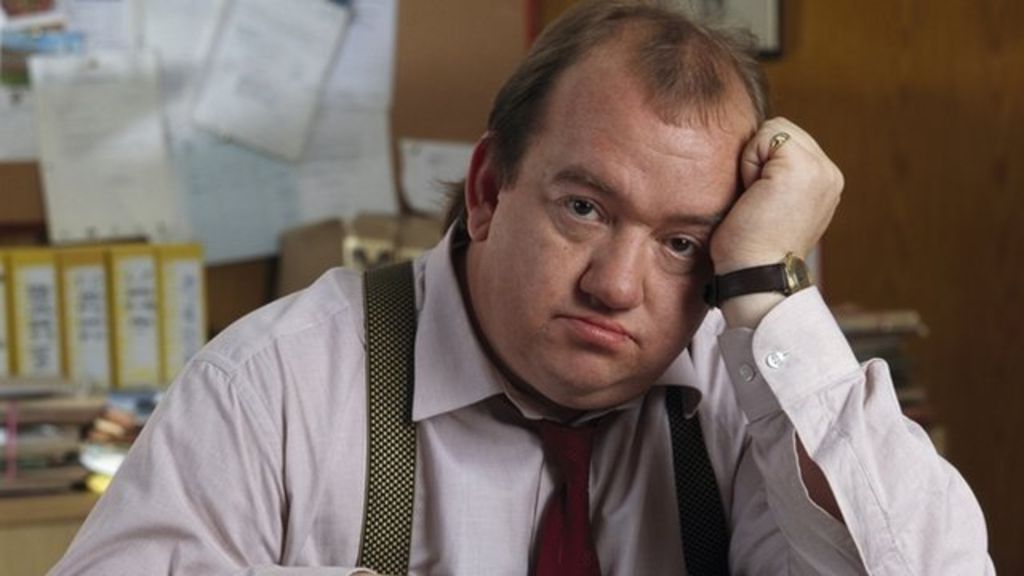
The Mel Smith in question was THE comedian Mel Smith (1952-2013), who, is now largely forgotten for his role as an associate director at the Crucible during the seventies.
The son of a Chiswick bookie, Smith was already directing plays at six years old, when he staged Little Plays for Little People with his friends. He read experimental psychology at New College, Oxford, choosing the university because he wanted to be involved with its Dramatic Society.
As a member of the Oxford University Dramatic Society, Smith honed his theatrical and comedy prowess with a production of The Tempest in Oxford and shows at the Edinburgh fringe. After graduation he worked in 1973 at the Royal Court theatre in London, as assistant director, and at the Bristol Old Vic, before arriving at the Sheffield Crucible in 1975.
And it seems he had some expertise with pantomime, contributing to Cinderella in 1976, and writing and directing Jack and the Beanstalk in 1977.
“This new version is without doubt the most original and witty pantomime I have seen this year,” wrote Paul Allen in The Stage. “This Jack is a would-be pop singer with a group that desperately needs new equipment; the good fairy, a New York Jew who turns herself into an agent to help him get the necessary cash; the villainous demon a punk rocker who was never really understood as a child.”
In 1979, he tackled musical theatre with Salad Days, written in 1954 by Julian Slade and Dorothy Reynolds.
“The audience has a collective sigh of relief they appear to be having at being confronted with a piece of theatre their rose-tinted memories tell them the way it used to be 25 years ago,” wrote The Stage, “Mel Smith’s production doesn’t quite send it up, but I doubt if anyone would have noticed if it did.”
And Salad Days was perhaps a sign of things to come.
“The production has toy props; doll’s house sets and the kind of costumes which look as though someone has stumbled on a fifties theatrical skip. The choreography is all jolly-hockey-sticks prancing, the music is sweet and decorative, and it is stuffed with gags.”
In September 1979, Paul Allen’s review of Alan Bennett’s Habeas Corpus, directed by Smith, was described as funny if not entirely successful.
“There is perhaps more weight and drive to Habeas Corpus than the production is prepared to allow; a readiness to slip into an over-jokey revue style doesn’t help Bennett’s acute verbal dexterity and it often obstructs the play’s speed of thought and action.”
I suspect Mel Smith’s kind of humour was ahead of its time, and he had other projects in mind.
Having performed with the Oxford Footlights at the Edinburgh fringe festival, he met John Lloyd who invited him to join Not the Nine O’Clock News with Rowan Atkinson, Pamela Stephenson, and Griff Rhys Jones, as well as Chris Langham in the first series. It ran from 1979 to 1982 and was conceived originally as a topical news-based satire, broadcast at 9pm weekly on BBC2 against the actual nine o’clock news over on BBC1.
Smith and Griff Rhys Jones continued from that TV sketch show to create Alas Smith and Jones. The pair later formed Talkback Productions which was responsible for dozens of comedies shows, including Da Ali G Show and I’m Alan Partridge. The company was sold to Pearson for £62million in 2000.
As an actor, Smith was most memorable on screen in The Princess Bride (1987) and Brain Donors (1992), and was ideally cast as Sir Toby Belch in Trevor Nunn’s 1996 film of Twelfth Night. On TV, he starred in Colin’s Sandwich (1988-1990), a sitcom about a British Rail worker with writing aspirations; Hustle (2006); and John Sullivan’s prequel to Only Fools and Horses, Rock and Chips (2010-2011).
Mel Smith died in 2013 of a heart attack, aged 60.
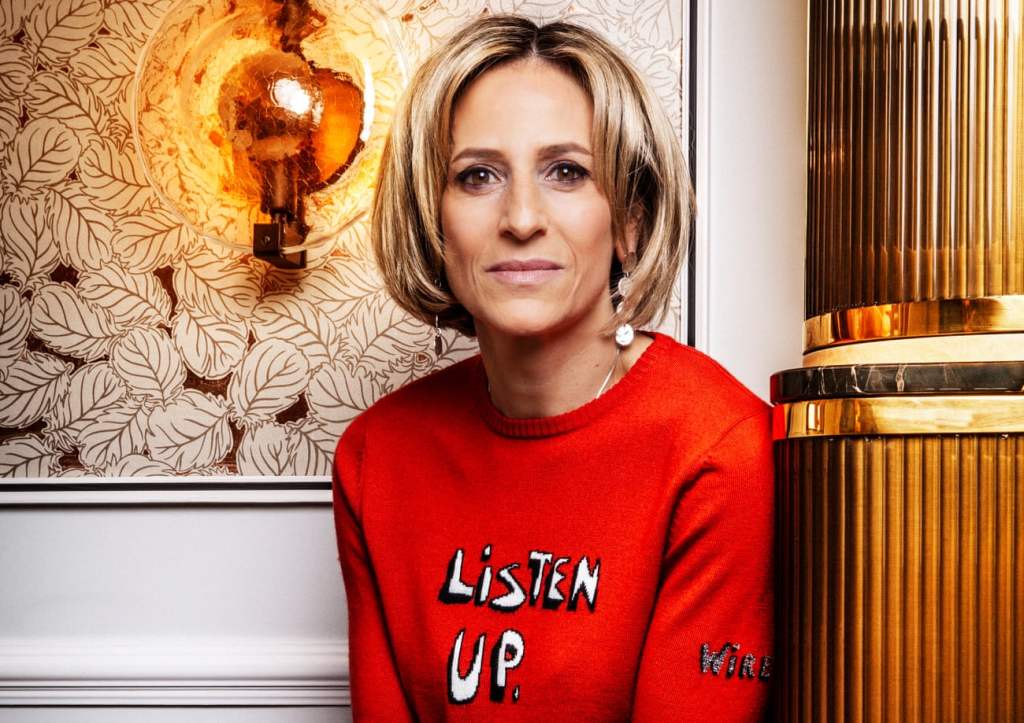
Continuing our series about people with Sheffield connections. Yet another product of King Edward VII School, Emily Maitlis, British-Canadian journalist, documentary maker and main presenter of BBC’s Newsnight alongside Kirsty Wark.
She was born in Hamilton, Ontario in 1970, but brought up in Sheffield after her father became a Professor of Inorganic Chemistry at the University of Sheffield. “Home in Sheffield was a place full of books where you talked about things, but where you were always shushed when the headlines came on.”
Her first Saturday job was at Ross & Foster hairdressers where she was paid £6 a week. The salon offered her a full time job, but her parents insisted she stay at school and went to read English at Queen’s College, Cambridge.
She worked for NBC Asia in Hong Kong before moving to Sky News as Business Correspondent and then to the BBC in 2001. She appeared regularly on BBC News and hosted the 2012 US Election Coverage alongside David Dimbleby.
Since presenting Newsnight she won Interview of the Year and Scoop of the Year at the 2020 RTS Television Awards for her interview with the Prince Andrew, Duke of York, and his ill-fated friendship with American sex offender Jeffrey Epstein.
In 2012 she was given an Honorary Doctorate at the University of Sheffield. “What made it even more special is the fact that it was my home-town – my parents were thrilled.”
Maitlis published a book ‘Airhead: The Imperfect Art of Making News’ in 2019, describing how television news is produced.
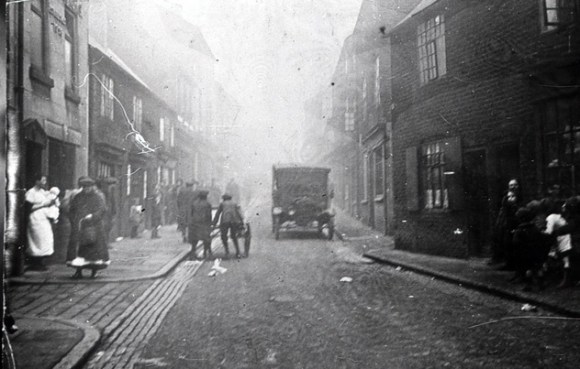
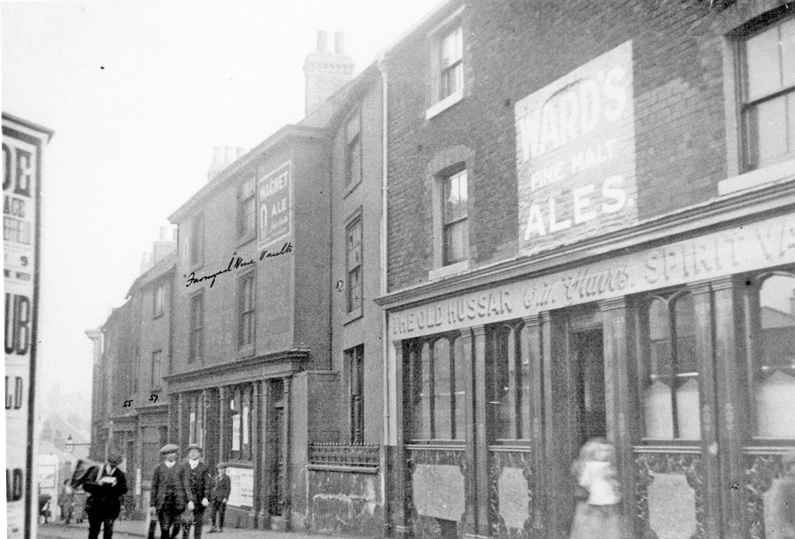
The mysterious disappearance of a sixteen-year-old boy from the slums of Sheffield got the tongues wagging back in July 1925, and it revealed a story that might take some believing today.
Photograph by Picture Sheffield
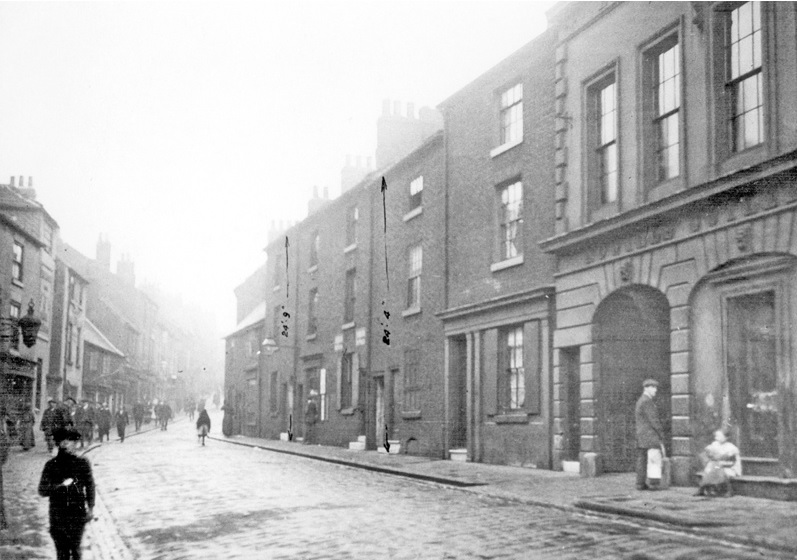
Our story begins in February 1911 when a poor woman, called Mrs Minnie Robshaw, kept a little general store at 111 Scotland Street and answered an advertisement asking for a home for a two-year-old child, and, on a payment of £5, a boy was surrendered to her by a woman named Mrs Weatherburn, who kept a boarding house at 22 Catherine Street, Liverpool.
Mrs Weatherburn brought the baby, called William Paley Weatherburn, and handed over the child at Midland Station. Before going away she told Mrs Robshaw that when the baby was twenty-one, he would come into a lot of money.
Shortly after, the baby became ill, and Mrs Robshaw wrote to the mother, but her letter was returned, as the address was unknown.
Thirteen years went by and nothing was heard of the mother.
The first intimation that he was not their legal son came to Willie in a curious way.
A young girl appeared in Sheffield and persuaded the boy to go away with her. She said he was his half-sister. Mrs Robshaw didn’t know where the lad had gone, but after a two-month absence she received a letter from a place unknown: –
“Willie had had a nice holiday now, and we have to get him a new suit and boots, and he has been on a farm at Spotforth and had plenty of good support.”
The boy came back, and the only thing that Mrs Robshaw could learn from him was that he had been on a farm and had been well treated.
He told his foster-mother that he had been to Liverpool and had been across to New Brighton. They had put him on the train for Sheffield without any money and without a ticket.
It appears that Willie was quite happy with Mr and Mrs Robshaw and was said to be the life and soul of the house.
Willie had attended a council school until he was 14, and had then been apprenticed as a painter and decorator.
In July 1925, a friend of Willie’s went into the shop for a penny bar of chocolate. “Where is Willie?” he asked. “What do you want him for?” asked Mrs Robshaw. “A lady at the bottom of the street in a motor-car wants him and has offered me sixpence if I return with him,” answered the boy.
Mrs Robshaw became suspicious, and saying nothing to Willie, went out herself. She noticed that in the car was a well-dressed woman accompanied by a man in a smart brown suit. As she approached, the woman noticed her and immediately drove away. Mrs Robshaw, however, had the presence to take a note of the number plate – KC 8209 – the registration mark for Liverpool.
Photograph by Picture Sheffield
Mrs Robshaw returned to the shop, and a little later a man came in. She was positive that the man was the same one that was in the car. He asked for Willie, saying that he wanted to take him for a drive. Willie was not in the house and she did not consent to the request, finding out later that Willie had been seen to enter a car a few streets away.
According to neighbours, an expensive limousine car was seen in the vicinity shortly before Willie had gone missing, and a stylish young woman in a black silk cape had visited premises close to where Willie lived, and had exchanged her fashionable hat for one less likely to excite comment, and her smart cloak for an old shawl.
A neighbour also spoke of a pretty golden-haired girl, who had been at the wheel of the motor car, and a well-dressed man who had made certain inquiries about the boy.
After his disappearance, Mrs Robshaw received a letter from Willie which read: –
“Dear Mum and Dad, – I have gone away on my own account. It is for my own good. I will write to you from time to time, but will not come to live with you anymore. Don’t trouble about me, as I shall be brought up as a gentleman, and not have to work for my living. With love, Willie. xxx.”
The address of the letter was in Manchester, but it appeared that the street did not exist.
Now there was a silence and each day his foster-mother wondered if he would ever return.
“I am convinced that it was Mrs Weatherburn who was in the car,” said Mrs Robshaw. “When she brought the baby to me fourteen years ago she told me that many years ago her husband (Percy Weatherburn) went to America, where he had since died. Shortly after he went she took a position with an invalid lady, and it was shortly after this that the child was born.
“After her husband’s death she met a man in Liverpool who said he would marry her if she got rid of the baby. So she advertised for a home for it, and it was her advertisement that I answered.
“So Willie came to us, and we looked upon him as a son, and did everything we could for him. Then he was taken away from us by these fashionable people, and we have heard nothing from him since. I have learned that Mrs Weatherburn had married the man she met in Liverpool. He is, I believe on the Stock exchange there.
“The letter we had from him bore a Manchester address, but the postmark was Portsmouth.”
No time was spared involving the police, and a search was made for Willie which extended to Liverpool, Cleethorpes and Ormskirk, and only ended when the lad was discovered at Formby, the house of his real mother.
Photograph by Picture Sheffield
The head of the family said in an interview with a Liverpool newspaper, that he was the step-father of the boy. It was stated that the boy had been a long lost son – a statement which Mrs Robshaw flatly contradicted, in as much that the mother knew where the boy was all the time.
“There is no real mystery about this so-called kidnapping,” said his real mother. “We simply decided to have him at home. When I found him, I said, ‘Willie?’ He said, ‘Yes,’ and I then said, ‘I am your mother. Would you like to come home?’ And that is all.”
By now, the story of Willie Robshaw was attracting the attention of newspapers across the nation.
“A story which, were it to be filmed by a cinema producer, would probably establish his reputation as a master of melodrama. It shows how the long-lost son of a wealthy family was discovered, after a 14 year search, living in one of the poorest districts of Sheffield. Now he is home again, with money and everything he could wish for at his command,” reported the Belfast Telegraph.
In August, the story took another twist when Willie returned to Sheffield. He arrived quite unexpectedly late on a Monday night, his dark hair now dyed a golden colour, and was warmly welcomed back by Mr and Mrs Robshaw.
Willie refused to give an account of his exploits, or to discuss the manner of his leaving, other than he had been riding about West Coast places in a motor car, but told his foster parents that he had come back to them of his own free will.
This decision, he said, was reached when, in company with the people from Formby, he visited Manchester. Whilst they were in a hotel, he stated he had slipped away from them and came to Sheffield, where he had been busy attending to his pigeons.
Some corroboration to the story was afforded by Mrs Robshaw receiving a telegram from Formby inquiring if Willie was in Sheffield.
The boy’s mother, at her home in Formby, said the family were proceeding no further in the matter for recovering the boy.
“Apparently he prefers to live his life in Sheffield rather than to accept our offer of being a gentleman and living a gentleman’s life, and he has gone back to it,” she said. “We are not going to trouble anymore.”
Mr R.F. Payne, a well-known Sheffield solicitor, addressed a letter on behalf of Mr and Mrs Ernest Robshaw to the Formby people claiming from them £377 for his maintenance at the rate of ten shillings a week from February 1911, when the Robshaw’s adopted the lad, to July, when he had left to go to Formby. No reply was received.
The Liverpool Echo had also discovered the mystery behind the Liverpool connection.
Willie’s real mother was Lilly Weatherburn, who had married Mr Clement Waring and lived at Rowan Lea, Liverpool Road, at Formby. The “charming, fair-haired” girl who drove the car had been Willie’s sister, Lily Paylor Brown, who had married a well-to-do widower, Walter Brown, a tailor, in November 1924 – he was 64, she was 22 – but he had died in August 1925.
Willie had been home for a week when he left Sheffield for Liverpool again. Mr Robshaw visited the city to determine what was happening and he was told by the boy that he was perfectly happy and promised to write home in about a week.
Photograph by Picture Sheffield
His foster parents heard nothing from him and at Christmas 1925 Mr Robshaw returned to Liverpool and visited the house where he was told not to make anymore inquiries about his adopted son.
Hearing nothing from Willie, Mr Robshaw made another visit to Liverpool in March 1926 and was told that Willie had returned to Sheffield, and although extensive inquiries were made the lad wasn’t discovered.
And that is where the trail went cold. Whatever happened to Willie?
I suspect that somebody in Sheffield will know how this strange story ended.
Back to our famous Sheffield people. Daniel Meirion Walker, born 1977, at Crawley in Sussex. Better known to us as Dan Walker, TV presenter and an honorary Sheffielder.
At the age of 18 he attended the University of Sheffield where he gained a BA (Hons) degree in history and an MA degree in journalism studies. He did work experience at Hallam FM, later joining Key 103 in Manchester as a sports reporter.
Dan joined Granada TV for six months before joining BBC TV’s North West Tonight. After moving to London, he presented Football Focus and replaced Bill Turnbull as presenter of BBC Breakfast in 2016.
Married with three children, he moved back to Sheffield in 2012 and is a patron of Sheffield Children’s Hospital Charity.
“It’s a big city, but it doesn’t feel like it. I know it’s a cliché, but the people are lovely. They care about Sheffield and are very proud of it.”
Lasagne is his signature dish and swears the secret is a splash of ketchup and Henderson’s Relish.
“It’s a Sheffield thing. You can have it on anything. It smells a bit like pickled onion Monster Munch. I have it on everything: fried eggs, toast, pie and anything with meat in it.”
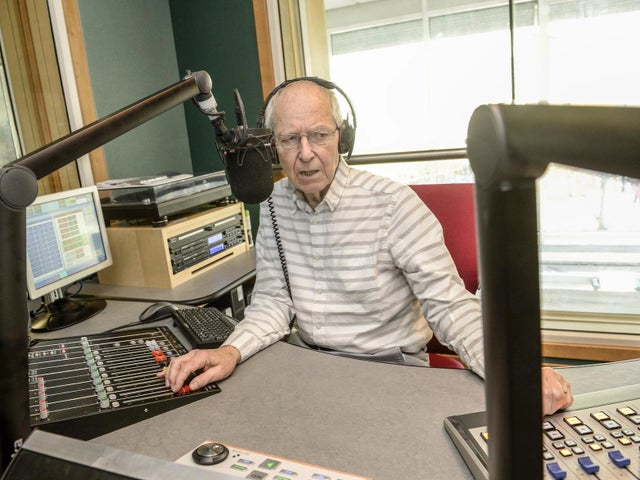
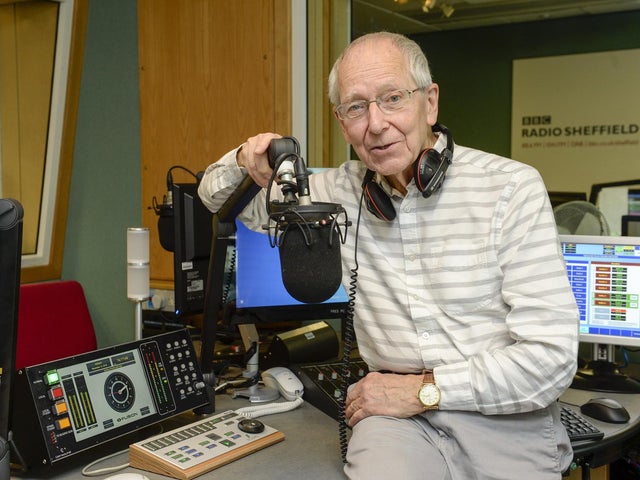
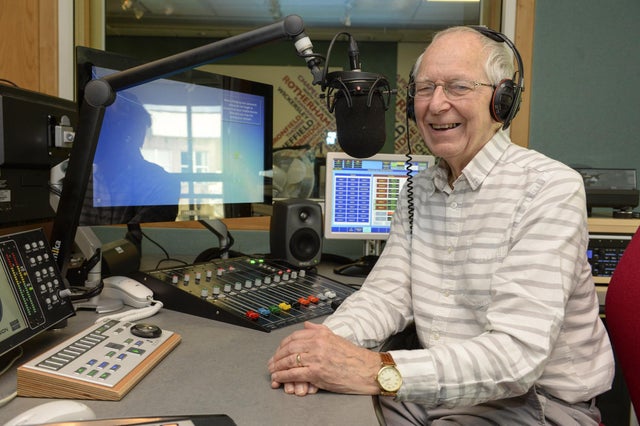
Today, we lose a genuine Sheffielder and a ‘survivor’ on the city’s radio airwaves. I’m referring to Gerry Kersey, the BBC Radio Sheffield presenter, who presents his last show today (at least for the time being that is).
For a generation, here’s a guy whose voice has been with us since childhood.
Born and brought up on Bellhouse Road, Shiregreen, his first job was at Hadfields, working in the wages department. By his own admission, going around the various departments collecting clock cards helped him develop communication skills. At 18, he was called up for National Service and recruited into the RAF as a telephonist.
He later handled advertising for Stanley Tools, and used amateur dramatics as a side-line, first playing with Shiregreen and District Community Players, followed by Sheffield Playgoers and finally South Yorkshire Operatic Society.
From 1968 he was called in by Radio Sheffield to read stories which led to him getting his own show in the early 1970s.
In 1980, Gerry made the switch to Radio Hallam, taking over Bill Crozier’s request programme, and a year later was the obvious replacement for broadcasting legend Roger Moffat on the weekday mid-morning show.
We should also remember his Sunday offering of Music of the Masters, a weekly classical music programme, a far cry from today’s output at Hallam FM, which the station morphed into.
With split frequencies between AM and FM, Gerry presented Classic Gold’s breakfast show from Sheffield, switching to other slots as it underwent a series of name changes – Great Yorkshire Gold, Great Yorkshire Radio – and finally Magic AM.
Like many ‘old timers,’ Gerry’s time in commercial radio was at an end, and in 1997 he switched back to Radio Sheffield, latterly presenting the Sunday afternoon nostalgia programme, with a generous response from listeners. Indeed, he is of the old school, choosing to acknowledge everybody who writes in.
Photograph by Sheffield Star
Gerry is also a talented painter and veteran member of Hallam Art Group and for years has combined stories of his long radio career and artwork with talks to community groups across the city.
This afternoon Gerry, now into his eighties, signs off while BBC local radio stations switches to standardised schedules, making it easier to share output if necessary, during the Covid-19 outbreak.
“It’s not been said to me that it’s my last show,” Gerry told the Sheffield Star. “As far as I’m aware it’s a temporary arrangement. They’ve got to cut down, inevitably brought about by the coronavirus. They’ve changed the system just for now.”
And finally, as somebody who once worked alongside him, I can confirm that off-air he is the same person that we have heard on the radio for the past 52 years. Nice guy, charming, friendly and incredibly humble.
“If you lay out your money in improving your seat, lands, gardens, etc., you beautify the country and do the work ordered by God himself.” These were the words of the 1st Marquess of Rockingham in the letter of advice he left for his son, the future Prime Minister, shortly before his death in 1750.
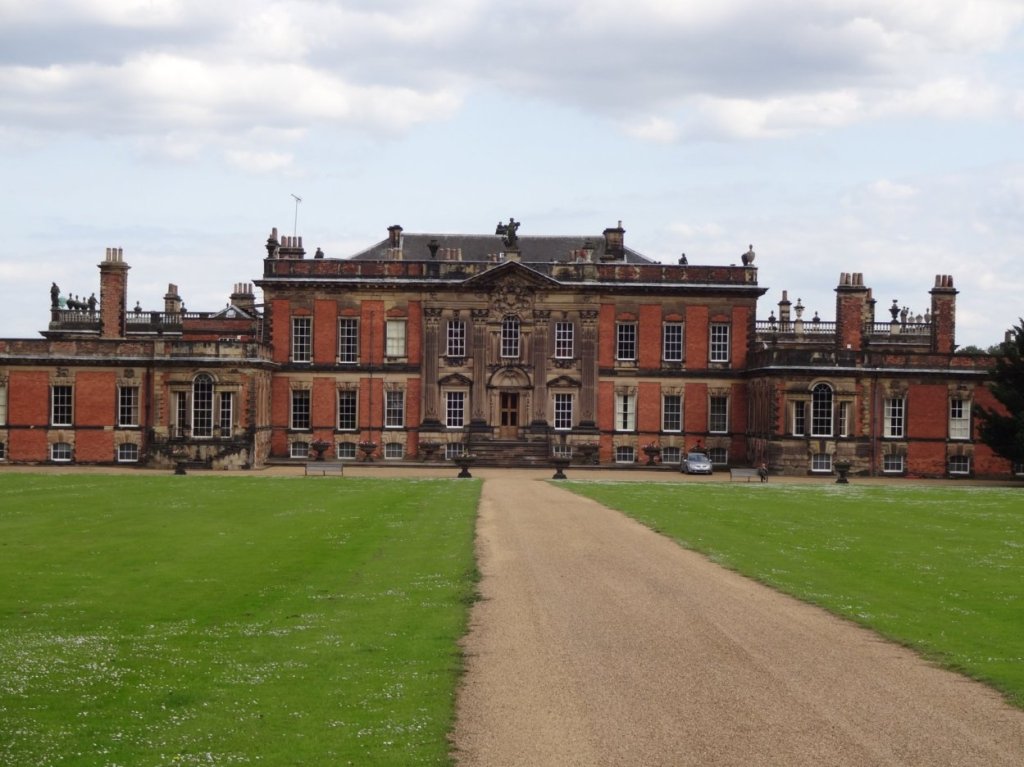
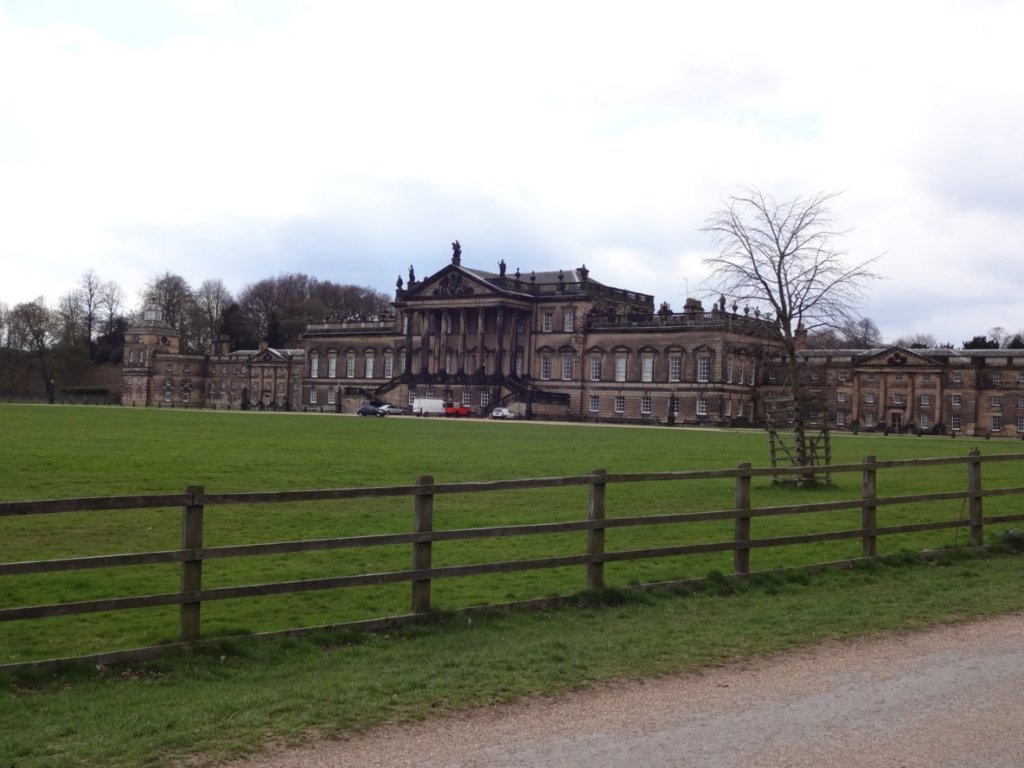
He had been good as his word, by his own reckoning he had spent £82,500 improving his house and grounds at Wentworth, providing it with one of the longest fronts of any English country house.
We are talking about Wentworth Woodhouse, situated within Rotherham borough, but within a stone throw of the Sheffield border, up the road from Chapeltown.
This remains one of South Yorkshire’s hidden secrets, only emerging from years of obscurity within the past few years.
Few people realise that behind the 600ft Palladian front is a second house with a grand baroque front. The difference between the two houses is blatant, but they formed a single building programme between 1724 to 1749.
Photograph by Sheffielder
The family made their fortune from coal mining, and the Fitzwilliams, descended from the Rockinghams, became well-known in Sheffield circles.
However, the 20th century wasn’t kind to the family and certainly not to Wentworth Woodhouse.
After World War Two, Manny Shimwell, Minister of Fuel and Power, told Peter Fitzwilliam, “I am going to mine right up to your bloody front door.” And he did.
Years of open-cast mining devastated the gardens and parkland and did lasting damage to the old house itself.
Unable to be maintained properly, Wentworth Woodhouse survived due to the efforts of Lady Mabel Fitzwilliam, sister of the 7th Earl, who negotiated a deal with West Riding County Council in 1949 to use it as a training college for physical education teachers. The family retained the Baroque wing.
Lady Mabel College later merged with Sheffield Polytechnic (now Sheffield Hallam University) and remained at Wentworth Woodhouse until 1988.
The house was put up for sale and bought by Wensley Haydon-Baillie, a millionaire, who, after a bad business investment in 1998, admitted debts of £13million, and the property was repossessed by the bank.
Its saviour was Clifford Newbold, a London architect, who, far from being the recluse he was originally made out to be, did what he could to save Wentworth Woodhouse.
After his death in 2015, Wentworth Woodhouse was put on the market and eventually sold to Wentworth Woodhouse Preservation Trust for £7million in 2017.
This is undoubtedly the renaissance for Wentworth Woodhouse, with £7.2million of repairs to the roof almost complete.
Photograph by Sheffielder
In normal circumstances, the state rooms are open to the public, with plans to use parts of the house as a hotel and business centre.
Subsidence and age have contributed to its unstable condition, underlined by the recent discovery that Georgian cornices, 18 metres above the ground, were crumbling away.
The good news is that Historic England has stepped in with a grant of £224,000 to replace more than 90metres of the ornate sandstone and limestone cornice, which runs around the roofline of the mansion’s Palladian East front.
They say that American schoolchildren know more about Wentworth Woodhouse than their British counterparts. More astonishingly, there are far more people in Sheffield who have probably never heard of it.
Wentworth Woodhouse, just over the Sheffield border with Rotherham, is the result of building work carried out by Thomas Watson-Wentworth, 1st Marquess of Rockingham (1693-1750), who built it between 1724 to 1749. It is remarkable for consisting of two houses built as one. The famous Palladian east front hides the grand Baroque west-wing behind.
His son, Charles Watson-Wentworth, 2nd Marquess of Rockingham (1730-1782), was a committed Whig and became Prime Minister of Great Britain on two occasions – between 1765-1766 and in 1782.
He spent most of his political career in opposition to George III’s Government, but Wentworth Woodhouse became a seat of political activity, where ‘The Rockingham Whigs’ including Edmund Burke, Charles James Fox and the Duke of Portland met to draft policies.
He argued consistently with reconciliation with America at a time when thirteen colonies were becoming increasingly at odds with Great Britain. However, he failed to convince most of the House of Commons and as a result there was the long and bloody American War of Independence (1775-1783).
When he took office again in 1782 it was on condition that George III recognise American Independence, but Wentworth died before terms of peace could be negotiated. As one historian says, he was “a champion of a lost cause.”
But don’t think that he was a radical, initially believing that America shouldn’t be given independence. “Our object has always been to try to preserve a friendly union between the colonies and the Mother Country.”
The American War of Independence ended a year later, marking the end of British rule and the formation of the United States of America.
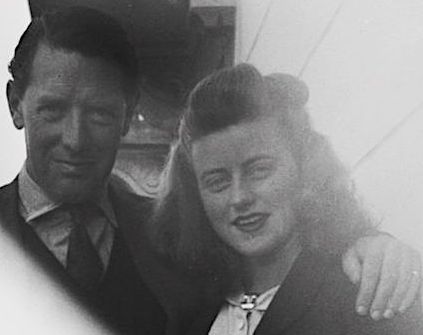
Photograph of Peter Wentworth-Fitzwilliam and Kick Kennedy by Turtle Bunbury
Peter Wentworth Fitzwilliam, 8th Earl Fitzwilliam (1910-1948), soldier, nobleman and peer, with a seat in the House of Lords.
He was born at Wentworth Woodhouse, just over the Sheffield border with Rotherham, married Olive Dorothea Plunket in 1933, and succeeded to the earldom in 1943.
In later years his marriage was said to be in disarray and heading for divorce.
His life was engulfed with scandal and, despite being married, he fell in love with Kathleen “Kick” Kennedy (Kathleen Cavendish, Marchioness of Hartington), sister of future US President John F. Kennedy, at the end of the Second World War after meeting the 28-year-old widow at the Dorchester Hotel in London.
Kennedy patriarch Joe had been persuaded to consider them marrying, but tragedy struck in 1948 as they took a premeeting holiday, and their plane crashed in France during a storm.
He left no son and the peerage moved to his second cousin once-removed Eric Wentworth-Fitzwilliam, but his fortune, including half the Wentworth Woodhouse estate, the Coolattin estate in County Wicklow and a large part of the Fitzwilliam art collection, was inherited by his 13-year-old daughter, Lady Juliet Tadgell.
Fitzwilliam is portrayed by Thomas Gibson in the television mini-series The Kennedys of Massachusetts (1990) and by Larry Carter in the film Lives and Deaths of the Poets (2011).
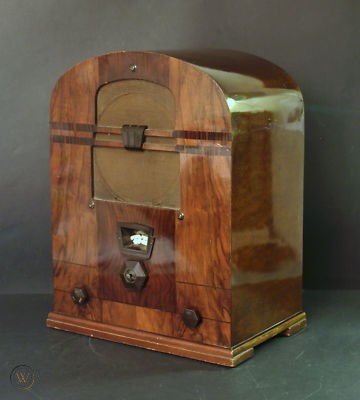
In February 1932, the advances made in wireless radio reception was demonstrated, when Stainless Stephen, a well-known Sheffield comedian and broadcast artist, opened at the Imperial Rooms, on Pinstone Street, an exhibition of Marconiphone Magic Radio Stagecraft.
Marconiphone was an English manufacturer of domestic receiving equipment, notably radio receivers and later reel-to-reel tape machines. In 1922, Marconi had set up the Marconiphone department to design, manufacture and sell domestic receiving equipment. It complied with Post Office specifications and tests, and was therefore awarded the BBC authorisation stamp.
The company was sold to the Gramophone Company in 1931, which became Electric and Musical Industries (EMI) and produced domestic radio receivers using the Marconiphone trademark until 1956.
At the event, Stainless Stephen said that in the early days of broadcasting, reception was so poor that it was difficult for listeners to tell the difference between his voice and that of a famous tenor.
A demonstration of effective radio magic followed, and similar performances were given five times daily.
The audience was introduced to the performers – standard Marconiphone models – by a young lady who apparently was able to carry on conversation with the individual models. Indeed, the models sang together the well-known chorus of Uncle Tom Cobley, chiming in with precision and great effect.
Then they combined to present various items in an amusing village concert, and there was an admirable climax introducing a soldier on sentry duty, the ghosts of his former comrades, and a swinging marching song.
Another instance of radio magic was the introduction of the various sections of an orchestra, music being played by the strings, the bass instruments, the drums etc., apparently from different parts of a stage, and precisely when requested by the main receiving set visible to the audience.
Here’s a Sheffield worthy that I bet you’ve never heard of.
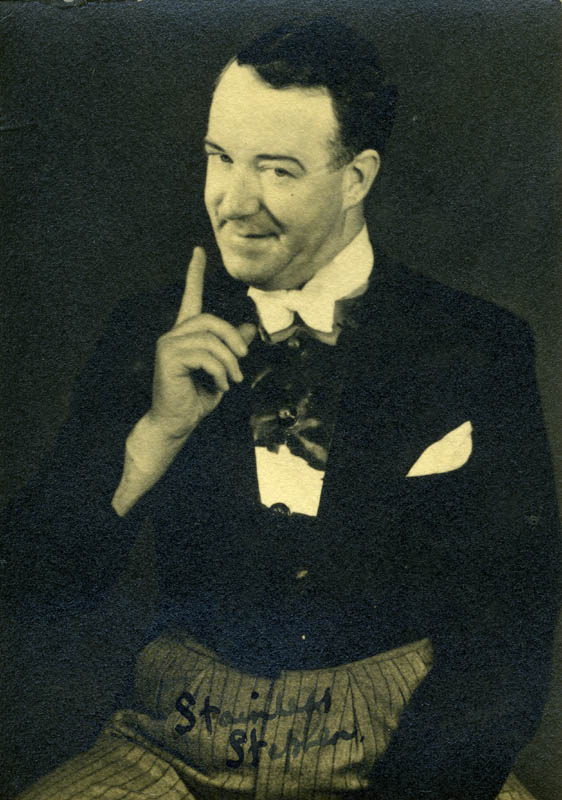
Arthur Clifford Baynes (1892-1971) was a comedian from Sheffield, who performed under the stage name of Stainless Stephen, making his debut at the Palace, Luton, in 1921.
His London debut was at the Victoria Palace in 1930.
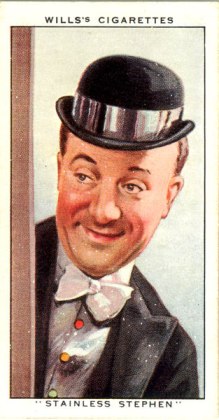
You would be forgiven for not knowing his name, for Stainless Stephen never quite made it as a top music hall comedian. He appeared on stage dressed in a smart tuxedo, a bowler hat with a steel band around it, a rotating bow tie, and a stainless steel vest, made in his home city.
He never gave up his day job, as an English teacher at Crookes Endowed School which he joined in 1922 after demobilisation from the Sheffield City Battalion, which he served during World War One, and wounded twice. His job meant he could only appear on stage at weekends and during school holidays.
Legend has it that Stainless’ lessons on Friday were always a bit light on the ground, as he spent most of the time leaving his classes to it whilst he wrote his radio material for the weekend! It was said that he based his routine on a radio course he took while on military service.
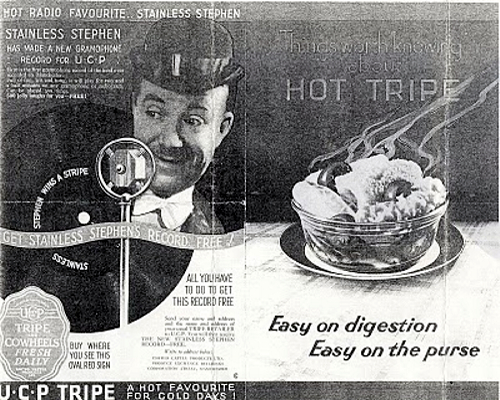
Stainless Stephen with a microphone and a record and a bowl of Hot Tripe. A special comedy record produced for United Cattle Products. Photograph by Gavin/Arkhonia
His speciality was that during his deadpan monologue, he would interrupt the flow by supplying punctuation, thus:
“Somebody once said, inverted commas, comedians are born not made, full stop. Well, slight pause to heighten dramatic effect, let me tell my dense public innuendo that I was born of honest but disappointed parents in anno domini eighteen ninety something, full stop. Owing to my female fan following, the final two digits must be left to the imagination, end of paragraph and fresh line.”
And.
“What a wonderful year 1930 was, semi-colon, said Stainless Stephen, semi-conscious. Thousands of new motorists took to the road, comma, and as a result thousands of pedestrians took to the pavements.”
As well as.
“This is Stainless aimless brainless Stephen, semi-colon, broadcasting semi-conscious at the microphone semi-frantic.”
Closing a broadcast in March 1941, he said:
“And so, countrymen, semi-colon, all shoulders to the wheel, semi-quaver, we’ll carry on till we get the Axis semi-circle, and Hitler asks us for a full stop!”
Photograph by HistoryForSale
In 1932, he was voted the most popular radio artist in a newspaper poll, appeared in the all-star extravaganza, Radio Parade (1933), a film of music hall acts, and supported Will Hay at the Victoria Palace in 1944. Throughout World War Two he toured Europe and the Far East and appeared at the London Palladium’s Royal Command Performance in 1945.
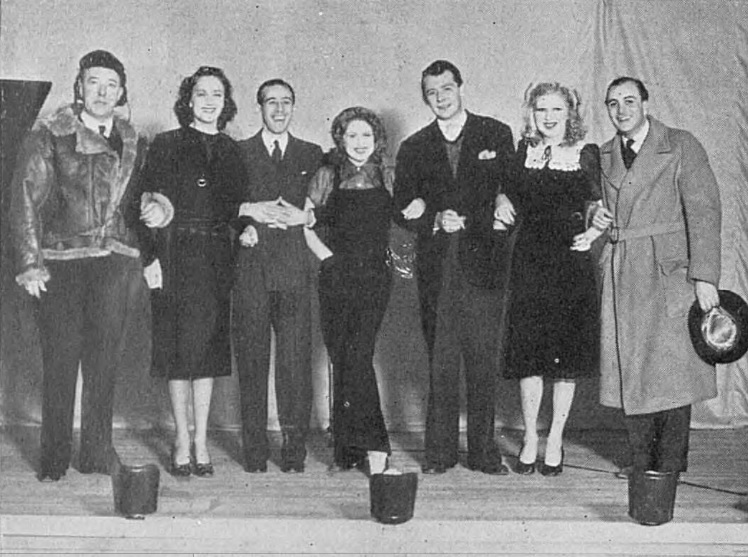
Famous radio stars entertain the RAF during World War Two. From left to right are: Stainless Stephen, Eve Beck, Eddie Pola, Renee Houston, Donald Stuart, Shirley Houston, and Frank Baron.
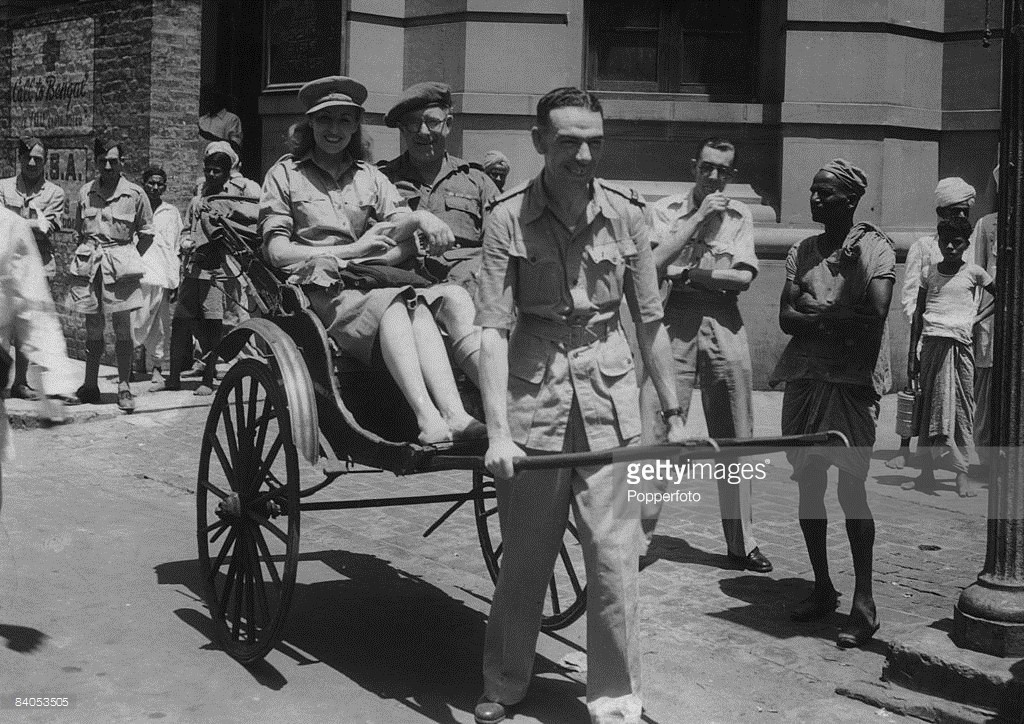
Vera Lynn and comedian Stainless Stephen riding in a rickshaw pulled by Lynn’s pianist Len Edwards, during an ENSA tour of India to entertain British troops, Calcutta, India, 1944. Photograph by Getty Images.
Stainless Stephen also appeared as a guest on This Is Your Life, celebrating the life of broadcaster Stuart Hibberd, in 1957, and in Frost on Saturday in 1969, an edition dedicated to the history of British broadcasting to mark the first evening of colour transmissions on ITV.
Stainless Stephen retired in 1952 describing himself as “stainless, painless, brainless, shameless, aimless, semi-conscious and approaching semi dotage.” He ran a 125-acre farm with his son, Ian, at Chiddingstone Causeway, Kent, where he died in 1971.
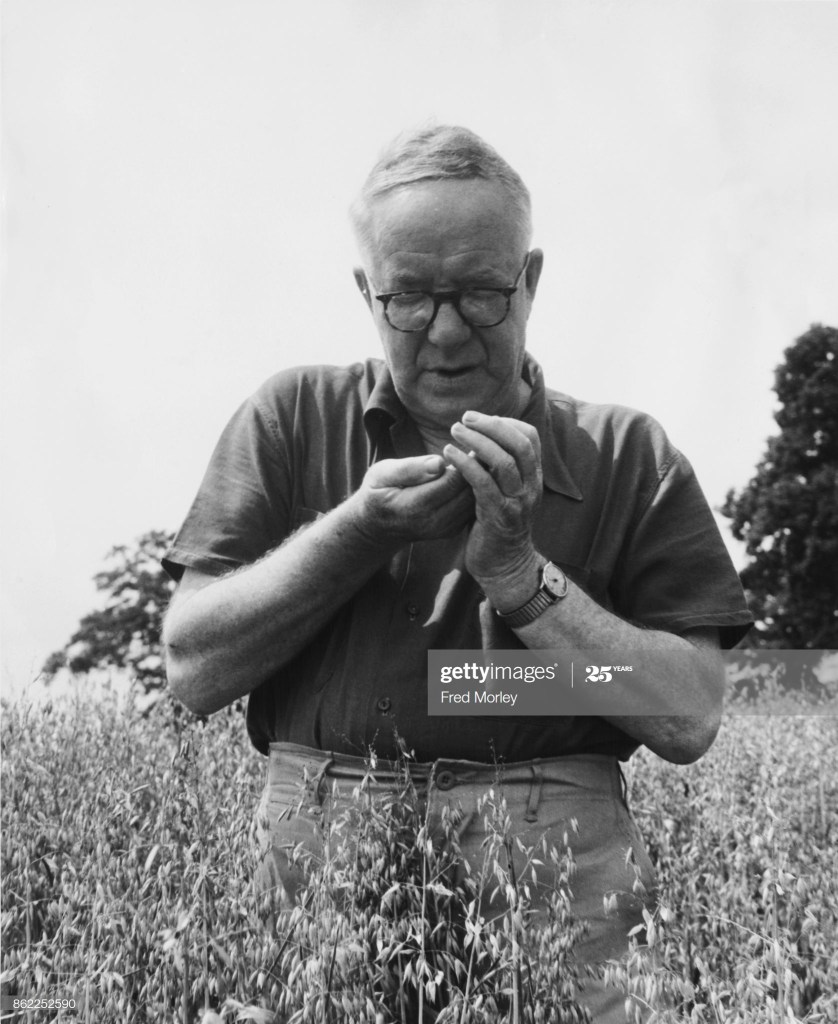
Arthur Clifford Baynes, who gained fame as comedian Stainless Stephen, inspects a crop of winter oats at his farm in Chiddingstone, Kent, in 1957. Photograph by Fred Morley/Fox Photos/Hulton Archive/Getty Images









 sheffielder.net