Categories
People

The Duke of Darnall

If we’re not careful we’re going to forget about the Duke of Darnall, so for future generations, it’s time to write about one of Sheffield’s great eccentrics.

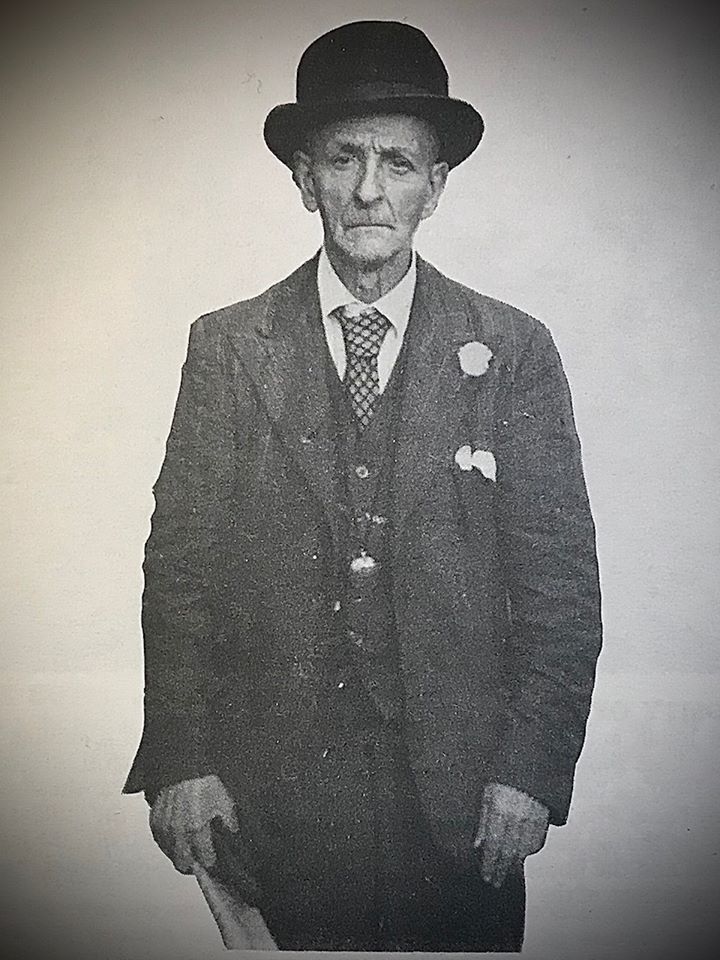
His real name was Harry Taylor, who lived on Darnall Road, and a clue about his daily life appeared in the Daily Mirror in 1939.

“Mr Harry Taylor is out of work and ‘deaf and dumb’, but he’s always immaculately dressed. Usually he takes an airing in black morning coat and striped trousers, with a flower in his buttonhole and carrying gloves. His manners are elegant, in keeping with his appearance.”

It appears that Harry lacked the ability to hear or speak all his life. A sign of our shameful past is that he was sacked as a core-maker at a steel works.

“Being ‘deaf and dumb’ proved a great handicap,” said Mr Antcliffe, a relative, “And he lost his job, but for some time he persevered in trying to talk, in the hopes of getting work.

“He made himself popular in the city and for some years shop managers and businessmen have kept him in clothes.”

As Harry grew older, his style of dress became even more colourful, always well-dressed, and carrying a stick or rolled-up umbrella, with monocle, bright bow-tie, bowler hat and spats.

In the 1940s and 1950s, he became known as the Duke of Darnall, with pretensions of grandeur, habiting the Darnall, Attercliffe and Haymarket areas of Sheffield, often taking over traffic control, much to the amusement of passers-by and annoyance of police, who regularly moved him on.

Harry was also referred to as ‘The Burton’s Dummy’, as he could often be found outside Burton’s on Attercliffe Road, or ‘The Toff of Sheffield’.

According to legend, Harry married a ‘deaf and dumb’ lady, and had a daughter. However, it is also said that one of Sheffield’s other eccentrics, Melanie Birch, known as Russian Edna, lodged with him until her tragic death in 1954, found murdered in a public shelter at High Hazels Park.

The date of his death is uncertain, but stories of his exploits can still be found on social media forums, including the taunts he received from cruel children who found him a figure of fun.

This eccentric old gentleman lived on in name, the Andrew’s Bus Company naming a bus after him, and a canal boat called ‘The Duke of Darnall’. Harry has also been the subject of paintings, brought to life in colour, by artists Brian Wilges and John Firminger.

And so, let us not ever forget The Duke of Darnall, a man once loved by Sheffielders.

Categories
People

Sue Biggs

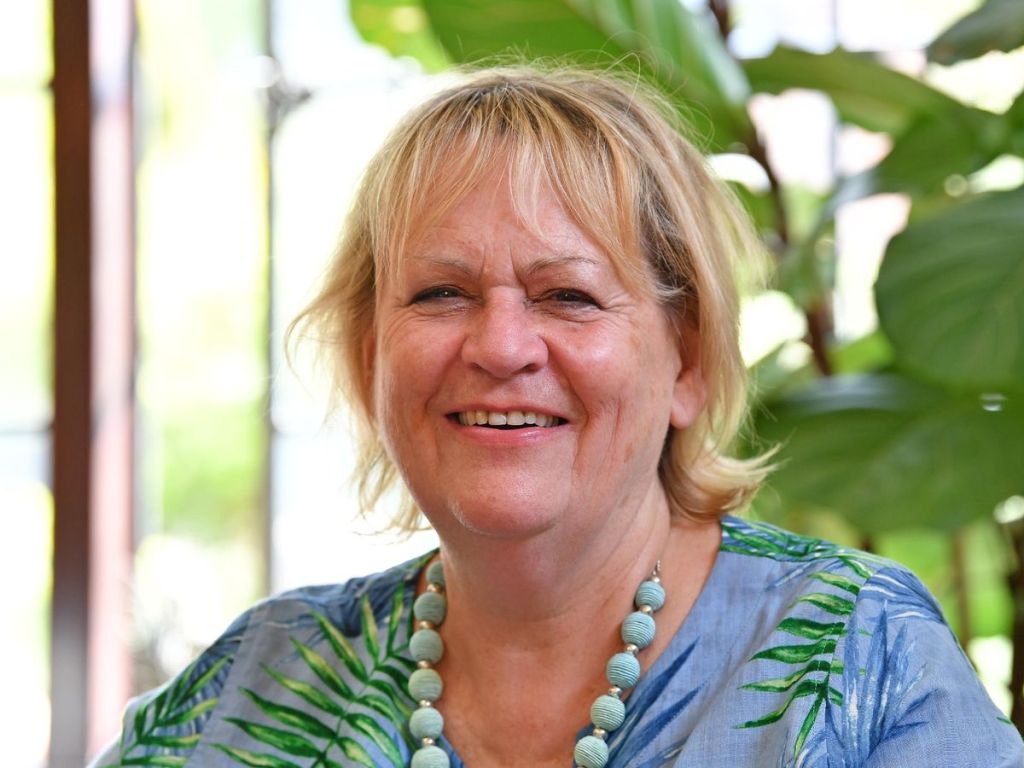
Sue-Anne Hilbre Biggs, CBE, or Sue Biggs for short, Director-General of the Royal Horticultural Society.

She was born in Leicester in 1956 but brought up on Caxton Road at Broomhill.

After attending Abbeydale Grange School she obtained a BA in English and American literature from the University of Manchester and a Postgraduate Diploma in Tourism at the University of Manchester.

She held senior positions at Kuoni Travel and Thomas Cook, before being appointed to the RHS in 2010.

“For my seventh birthday my mum gave me a packet of seeds and a baby trowel,” and the rest is history. Now living in Surrey, she still has close family at Crosspool and Ranmoor. “Yorkshire is the centre of Britain.”

Categories
Companies People Sculpture

Frank Tory and Sons

As we discover the historic buildings of Sheffield, and the intricate sculptors that adorn many, the name of Frank Tory frequently appears.

Frank Tory and Sons were a firm of sculptors that worked on many of the city’s buildings from the early 1880s until the 1950s. Apart from stone, the family also worked in wood, marble, bronze and fibrous plaster.

Frank Tory (1848-1938) was a Londoner who trained at the Lambeth School of Art. He came to Sheffield in 1880 after accepting a commission from the 15th Duke of Norfolk to work on the new Corn Exchange.

The contract brought him into contact with architect Matthew Ellison Hadfield and his son, Charles, who encouraged him to stay in Sheffield and offered him several commissions.

Tory set up a studio amongst terraced houses, and was joined in 1901 by his twin sons Alfred Herbert Tory (1881-1971) and William Frank Tory (1881-1968).

The Corn Exchange was destroyed by fire in 1947 and demolished in 1964. However, some of his finest work can still be found at Parade Chambers (High Street), St. John’s Church (Ranmoor), Cairns Chambers (Church Street), Carmel House (Fargate) and the Cathedral of St. Marie.

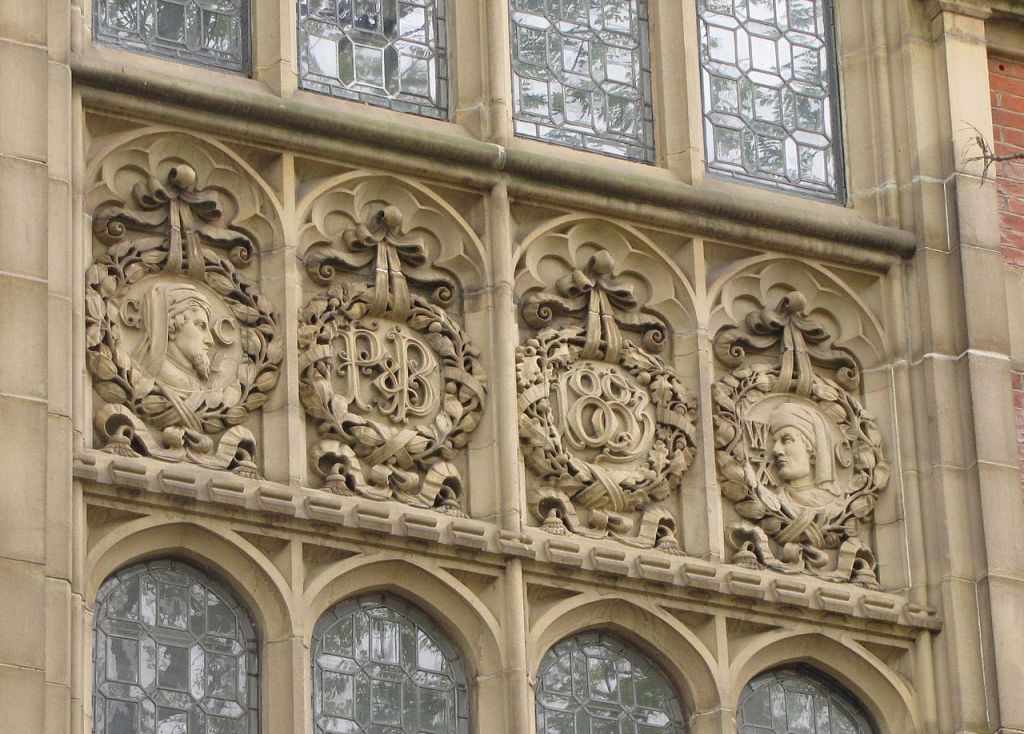
Perhaps Frank Tory’s greatest work is on Parade Chambers, with decorative sculptures of Geoffrey Chaucer and William Caxton, created in 1883 for Pawson and Brailsford, printers and stationers (pictured).

Alfred and William were born on Winter Street and attended the Broomhill County School and the Weston Academy for Sons of Gentlemen. They learned their trade from their father, who also taught at the Sheffield School of Art.

While Frank Tory worked on some of the city’s finest Victorian structures, his sons were responsible for sculptures on twentieth century buildings, including Sheffield City Hall, the Central Library, the White Building (Fitzalan Square), Victoria Hall (Norfolk Street) as well as Leeds Civic Hall and Chesterfield Town Hall.

After their father’s death, the firm moved to Ecclesall Road, at a site that is now the Porter Brook pub, eventually retiring in the 1950s after which the firm was wound up. 

Categories
People

The strange tale of Dr Alonzo Durant

The strange tale of Dr Alonzo Durant, one of Sheffield’s forgotten eccentrics.

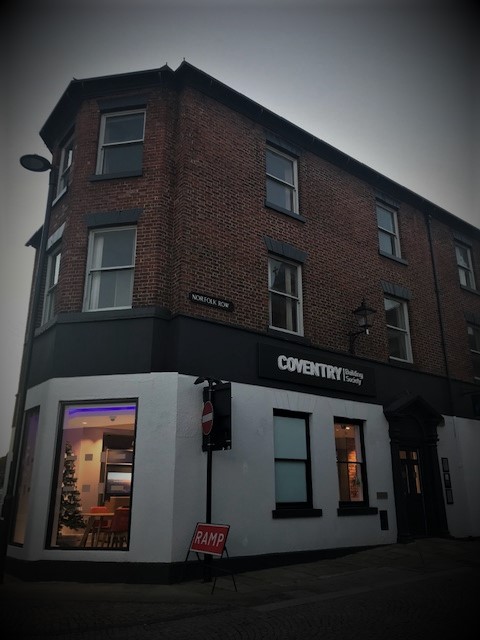
Abacus House, at the corner of Norfolk Street and Norfolk Row, is now home to the Coventry Building Society. According to Historic England it was built about 1791, originally as three houses, later converted into offices.

During the 1850s, one of the properties was tenanted by Mr May Osmond Alonzo Durant, operating as the Medical and Surgical Philanthropic Institution.

Amidst dozens of people who lived or worked here, the story of Alonzo Durant is one of the most unusual and tragic.

He was born in 1816, the eighth son of Colonel George Durant of Tong Castle, between Wolverhampton and Telford, in Shropshire. At the age of 21, he married Catherine Galley much to the disapproval of her father, in Prestwich, Lancashire.

Durant qualified as a surgeon, and by 1839 was a member of the Royal College of Surgeons.

Somewhere along the line Durant settled at Burbage, Leicestershire, living at Tong Lodge, honouring his pedigree, and appears to have lived beyond his means, declaring bankruptcy in 1847.

By 1851, Durant was practising in Ashton, Manchester, before turning up in Sheffield, opening a practice at Bank Street.

As well as offering his services as a surgeon, he claimed to be writing a refutation of a book called The Vestiges of Creation and preparing a book on heraldry “illustrated by engravings of baronial remains in Shropshire, where my ancestors flourished.”

Relocating to the corner house on Norfolk Street, he regularly appeared in newspapers, being described as “a trifle extravagant and not free from eccentricity.”

It appears that Dr Durant travelled the streets of Sheffield in a gig with two ponies tandem and a smart boy in buttons at his side. The boy “Joe” carried a horn with which he gave people warning of their approach but had to wait for his master to cry out, “Blow, Joe, Blow.”

Such was the spectacle that a Sheffield theatre mimicked the ritual in a Christmas pantomime, prompting Dr Durant and Joe to take along their horn and join in with proceedings.

Eccentric as this may seem, it didn’t stop Durant preferring charges against William Smith, of Crookes, a musician, for having “used a certain noisy instrument in South Street (now The Moor), for the purpose of announcing a certain entertainment.”

It appears that as Durant and Joe had approached a band playing on top of a large omnibus, by which a large crowd had gathered, the boy had blown his horn to prevent them from being run over, but the louder he blew the louder the band blew their own instruments.

It caused Dr Durant’s horses to bolt, eventually turning into Fitzwilliam Street, throwing the two of them into the air.

Notwithstanding, the band continued playing, and the horses flew up Fitzwilliam Street with the empty gig behind them, running over a man at the corner of Milton Street, and eventually smashing it into pieces against a post.

As one correspondent writes, Durant’s best form of defence was to attack, often pressing charges against individuals, representing himself in court, and causing great confusion with long incoherent speeches.

In 1857, Dr Durant relocated to Crimea House, opposite the Crimean Monument, before inexplicably closing his practice the following year. He sold all his possessions at auction, including “a white Orinoco cockatoo which danced the polka and said anything.”

Dr Durant next turns up at Ramsgate in Kent where, once again, he is recorded as driving through the crowded streets of the town at 17mph, his horn blowing loudly, and even driving on pavements to the danger of pedestrians and perils of shop windows.

By now, he was calling himself Captain Durant, referring to exploits in the East India Service, a fanciful claim, because although he applied for a post in Bengal he never joined.

Whilst in Kent, Dr Durant still took pleasure in appearing in court as plaintiff. On one occasion, after winning a case against a carter accused of damaging his 11 shilling hat, the magistrate remarked:

“Captain Durant [sic] . . . allow me to say a few words about the rapid speed at which you drive through the town. . . It is but a short time since that I myself saw two ladies nearly knocked down by your servant, who was riding, and who apparently had not got his horse under control.”

The ‘Captain’ retorted: “I have driven through the most crowded places and never yet knocked anyone down.”

In 1859, Dr Durant appeared at Ramsgate County Court where Judge Charles Harwood heard that the defendant, “a gentleman of great notoriety, recognised as the ‘Jehu’ constantly driving his tandem through the labyrinths of the place, and keeping the quiet inhabitants in perpetual fear and jeopardy by the peculiar speed of his eccentric performances.”

However, the charge wasn’t about his driving exploits but the mistreatment of a boy, George Ashby, from Ramsgate, whom he took from his father in 1855, promising to pay the boy £5 per annum in wages, but failing to pay up.

George Ashby was the boy “Joe”, forced to blow the trumpet in the streets of Sheffield. Dr Durant never paid him any wages, apart from the odd sixpence now and then for pocket money.

The jury returned with a verdict for the plaintiff and awarded Ashby £15 in damages.

Durant died in strange circumstances in 1861, overtaken by mental illness and probably drinking to excess.

He was seen wearing full military livery on Ramsgate Sands, worse the wear for liquor, walking up to his knees in water with his boots on. He later turned up at the Roman Catholic Chapel where his conduct forced him to be ejected. Durant claimed to be Jesus Christ and the Count de Chambord, and that he expected the King of France to dine with him shortly.

Durant hired a boy and pony chaise to take him for a drive, later abandoning him and jumping over a dyke to chase bullocks. He was next seen setting off for a ramble in the dikes around the River Stour where he was later found drowned.

The boy who had taken him for a drive said he had been with Captain Durant for a year and that he had been locked up in France on account of his madness, that it took several men to take him to prison, and that he had been much worse since he came out.

So ends the strange story of Dr Alonzo Durant, a true Sheffield eccentric, whose exploits could fill a book.
Categories
People

James Montgomery

The memory of James Montgomery plays a prominent part in the public life of Sheffield during his sixty year’s residence here.

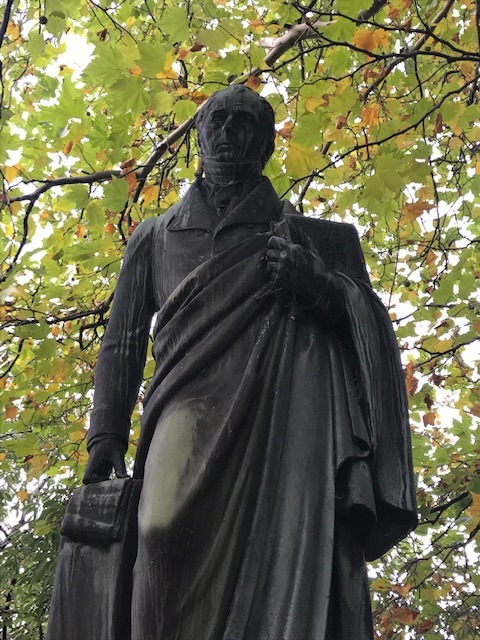
If you’ve never heard of him, take a walk to Sheffield Cathedral and look at his granite monument, with bronze statue by John Bell, moved from the overgrown General Cemetery in 1971.

Between 1792, when James Montgomery first set foot in Sheffield, becoming the assistant to Joseph Gales, of the Sheffield Register, and 1854, the year in which he died, vast changes took place.

Montgomery’s youth was a troubled and stormy period. His mature age was active, useful, benevolent, and made glorious by the development of his poetic genius. His old age had been still useful; beneficent on a large scale; honoured by all; and shedding a lustre on Sheffield, by investing it with popular hymns.

James Montgomery was the eldest son of the Rev. John Montgomery. He was born in 1771, the eldest of three sons. His father was a Moravian minister; at the time of his birth stationed at Irvine, in Ayrshire.

When he was five, his parents moved to Gracehill, Co. Antrim, and in his sixth year was placed in the Moravian School at Fulbeck, near Leeds, his family becoming missionaries to slaves in Barbados and Tobago.

Montgomery started writing poetry when he was ten-years-old and was destined for the church. However, after leaving Fulbeck Seminary in 1787, he ended up working in shops at Mirfield, near Wakefield, and later at Wath upon Dearne, near Rotherham.

A journey to London, with a hope of finding a publisher for his youthful poems, ended in failure; and in 1792, he was glad to leave Wath for Sheffield to join Mr. Gales, an auctioneer, bookseller and printer of the Sheffield Register newspaper, as his assistant.

In 1794, Mr. Gales left England or Germany to avoid a political prosecution. Montgomery took the Sheffield Register in hand, changed its name to the Sheffield Iris, and continued to edit it for 31 years. He was imprisoned twice; first for reprinting therein a song in commemoration of the Fall of the Bastille, and secondly for giving an account of a riot in Sheffield.

The editing of his paper, the composition and publication of his poems and hymns, the delivery of lectures on poetry in Sheffield and at the Royal Institute, London, and the earnest advocacy of Foreign Missions and the Bible Society in many parts of the country, gave great variety.

Montgomery was particularly associated with humanitarian causes such as the campaigns to abolish slavery and to end the exploitation of child chimney sweeps. He died in his sleep at the Mount, Sheffield, in 1854, and was honoured with a public funeral.

As a poet, Montgomery stands well to the front; and as a writer of 400 hymns, many still in use, he ranks in popularity with Wesley, Watts, Doddridge, Newton and Cowper.

As well as the monument carrying his name, there are various streets named after Montgomery and a Grade II-listed drinking fountain on Broad Lane. The meeting hall of the Sunday Schools Union (now known as The Montgomery), situated in Surrey Street, was named in his honour in 1886.

Categories
Companies People

Cole Brothers

It was August 1930, Cole Brothers at the corner of Fargate and Church Street, had been part of Selfridge Provincial Stores (owned by Harry Gordon Selfridge) for ten years.

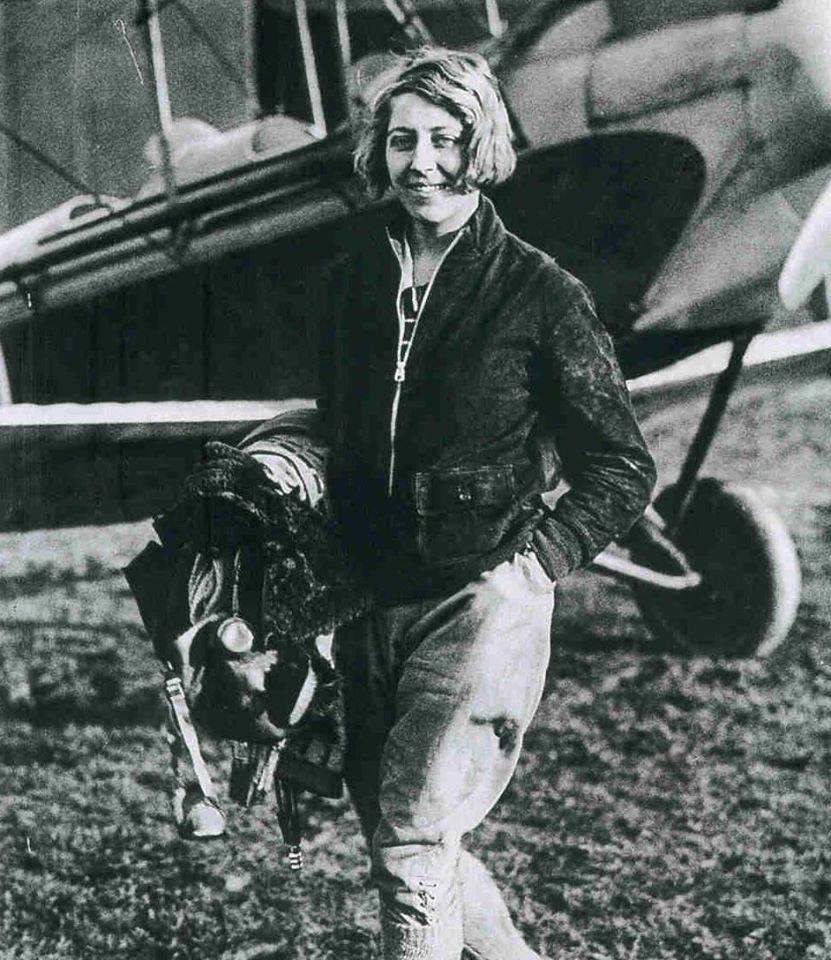
There was excitement with news that Miss Amy Johnson’s aeroplane, a Gypsy Moth called ‘Johnnie’, was travelling overnight by lorry to go on display in Cole Brothers shop window.

The plane had been presented to her in Hyde Park, London, by Air Vice-Marshal Sir Sefton Brancker, Director of Civil Aviation, and was a replica of the ‘Jason’ machine in which Amy Johnson had made her epoch-making flight to Australia. She intended to use the aeroplane for pleasure flying.

It had been funded by the Daily Sketch, with the help of readers of the Sheffield Daily Telegraph and Yorkshire Telegraph and Star, and had been on view at Selfridges in London.

‘Johnnie’ was displayed at Cole Brothers for one week, creating enjoyment for the huge crowds that gathered in front of the store.

But there had already been an Amy Johnson connection with Sheffield.

She graduated from Sheffield University in 1925 having studied Latin, French and Economics. She then became the first woman to fly solo from Britain to Australia after buying a single engine De Havilland Gypsy Moth aircraft naming it ‘Jason’.

Amy Johnson died in 1941 after a plane she was flying crashed into the Thames Estuary.

Categories
People

Julia Bradbury

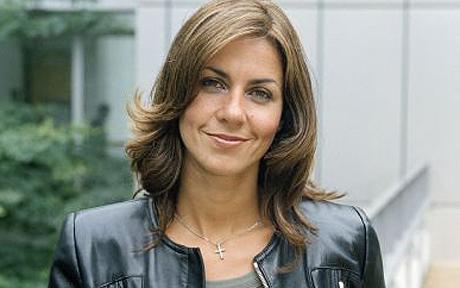
Returning to our profiles of people with Sheffield connections. Julia Bradbury (born 1970), television presenter, specialising in documentaries and consumer affairs.

Best known for co-presenting BBC1’s Countryfile with Matt Baker from 2009 until 2014. She also presented Watchdog, Planet Earth Live, Take on the Twisters, The Wonder of Britain and Britain’s Best Walks.

These days, she’s making a living out of walking documentaries (just about everywhere) and has unfortunately been nicknamed the “Walking Man’s Totty.”

Born in Dublin, but growing up in Sheffield, she attended acting classes, and took part as a child in the Crucible Theatre’s production of Peter Pan, starring Joanne Whalley and Paula Wilcox.

“My family moved to Sheffield and I went to King Edward VII School, which had just turned into a mixed comprehensive. My father worked in the steel industry, hence Sheffield, and my mother, who was in the fashion business, opened her first shop.”

Categories
People

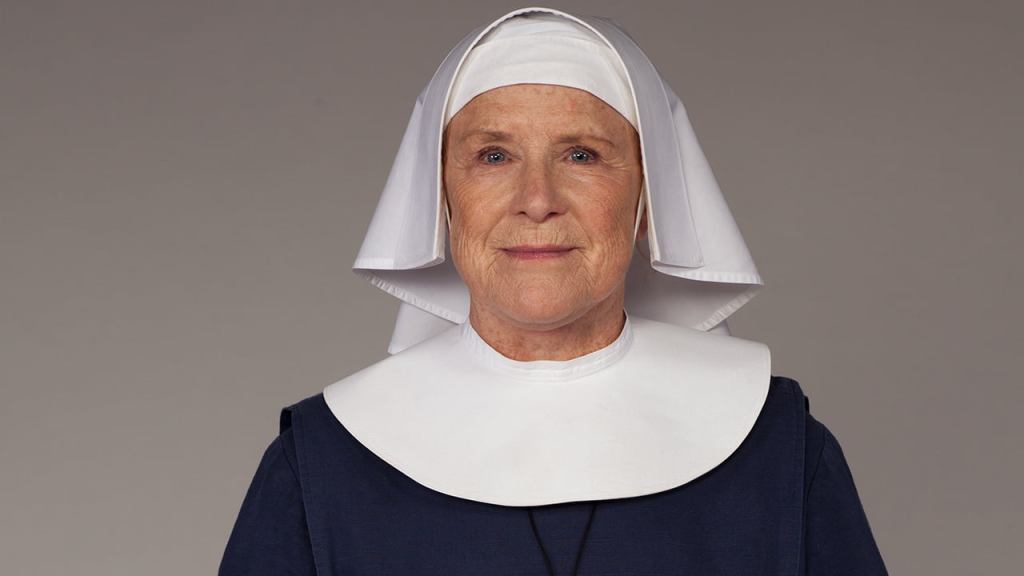
Judy Parfitt

Judy Catherine Claire Parfitt, born in Sheffield in 1935 to Lawrence and Catherine Parfitt, and attended Notre Dame High School for Girls.

She later trained at the Royal Academy for Dramatic Arts (RADA, darling), graduating in 1953. She made her stage debut the following year with ‘Fools Rush In’ and since then it has been one long flood of theatre, film and television appearances on both sides of the Atlantic.

‘Of regal bearing and imposing stance,’ she hit TV heights with ‘Pride and Prejudice’ (1980), ‘The Jewel in the Crown’ (1984) and (he says tongue-in-cheek) that stuck-fast classic of ITV3 scheduling, ‘Murder She Wrote’ (1989).

Known to a new generation as Sister Monica Joan, an elderly nun, in the BBC’s ‘Call the Midwife’ since 2012.

In her own words, she is an “old tart gainfully employed.”

Categories
Companies People

Henry Boot

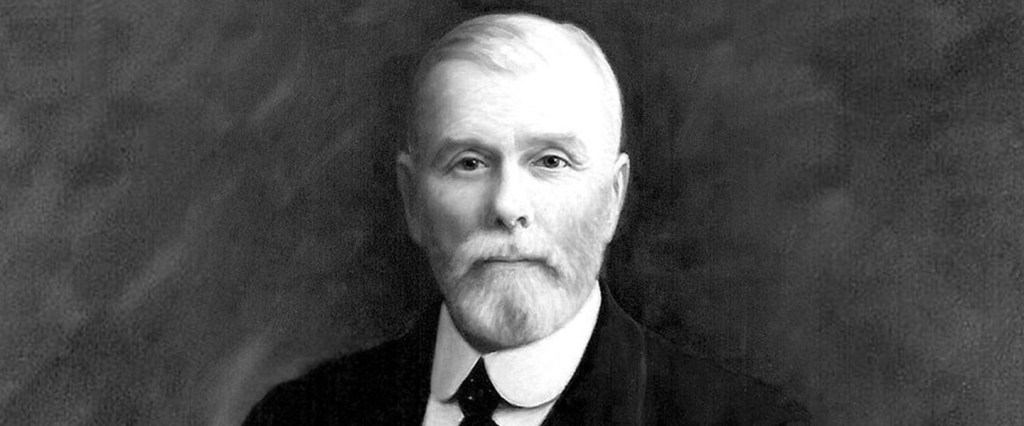
When Henry Boot died in 1931, he was described as the founder of a world-famous Sheffield firm. The company was only 45-years-old at the time, and surprisingly Henry Boot is going strong, still a respected construction and property development business.

Henry Boot was born in 1851 at Heeley, his father being a landowner and farmer, and was apprenticed as a joiner with a builder on Division Street. He spent thirty-three years learning his trade before launching out on his own in 1886.

Henry Boot was based on Moore Street, and moved into large scale public works and housing projects, and the growth of the firm makes romantic history.

During World War One, the firm carried out enormous Government contracts at a time of great difficulty.

The firm built a major part of Catterick Camp, in North Yorkshire, with accommodation for an Army Corps, and so substantial was the work that it was retained as a permanent training centre.

An urgent demand for an aerodrome at Manston, on the Isle of Thanet, also resulted in the firm getting the contract, construction completed in record time.

Other important war work included the Tees naval base, the famous Calshot seaplane station, Chepstow Military Hospital and the American Army Rest Camp and Hospital at Southampton.

Afterwards, the company set up an office in Paris and, in conjunction with the French Government, administered contracts for the reconstruction of devastated towns and villages.

Its Athens office also secured a £10million contract for irrigation work with the Greek Government (a project that lasted until 1952).

Henry Boot was also a prolific house builder, constructing over 80,000 homes in the inter-war period, over 50,000 of these for local authorities, and about 1,000 on the Manor estate in Sheffield.

Henry retired before the war, succeeded as chairman by his eldest son, Charles Boot, of Thornbridge Hall, at Great Longstone. Although Henry retained an active part, it was Charles that built the business into one of Britain’s major construction companies.

Henry Boot had two other sons, William and Edward, and seven daughters, two of whom had married and lived in British Columbia.

Categories
People

Alastair Burnet

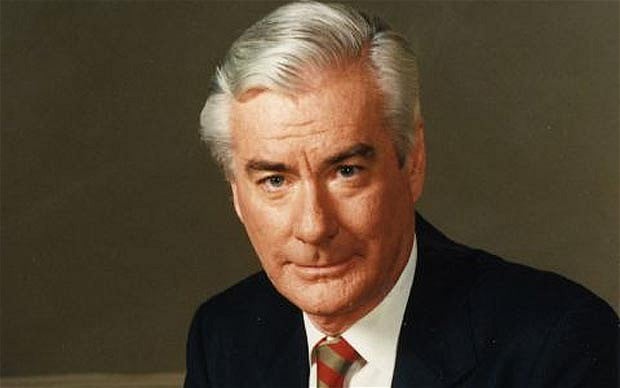
Sir James William Alexander Burnet (1928-2012) was born in Sheffield, the son of a Scottish engineer.

He was educated at the Leys School, Cambridge, and at Worcester College, Oxford, where he read history.

To many of a generation he was simply Alastair Burnet, the suave ITV news reader once described as “the booster rocket that put ITN into orbit.”

He joined ITN in 1963 as its political editor, but left after two years to become editor of The Economist and later the Daily Express.

On July 3 1967, with Andrew Gardiner sitting beside him, he launched the first ‘News at Ten’ bulletin with the words “Good evening. The railway freight strike has been called off.”

It was the beginning of a television institution.

He retired in 1991, disappeared from our screens, and died seven years ago at a nursing home in Kensington.