Categories
People

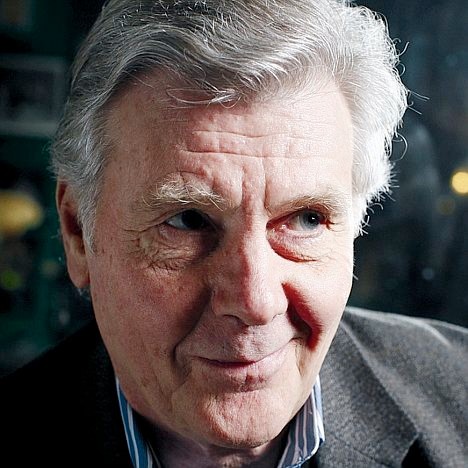
James Fox

Imagine you are a famous actor, at the top of your game, and have just appeared in a movie with Mick Jagger. And then you give it all up and move to Sheffield to become a travelling salesman. This story has done the rounds since the 1970s and yes, it is all true.

William Fox, born London 1939, was the son of theatrical agent Robin Fox and actress Angela Worthington. He first appeared on film in 1960 in The Miniver Story but was working in a bank when director Tony Richardson offered him a minor role in The Loneliness of a Long-Distance Runner.

Under his stage name, James Fox, he went on to star in The Servant, King Rat, Thoroughly Modern Millie, Those Magnificent Men in their Flying Machines and The Chase. Handsome and appealing, Hollywood was calling, but there was a problem.

After playing alongside Mick Jagger in Performance in 1968 (not released until 1970 owing to its sexual content and graphic violence), James Fox was in a crisis.

“There were so many things that caused tension in me,” he said. “Working on Sundays, making love on screen and using bad language.”

The result of this self-torture was that Fox turned to religion. In 1970 he joined a Christian group called The Navigators, his involvement the subject of a BBC documentary, Escape to Fulfilment, in 1971.

“When it was over, I had to decide what to do in the longer term. I had met another Christian, Alan, from near Sheffield, that summer, and we immediately became friends. He was an administrative manager with British Steel at Stocksbridge. He invited me to come north to live with his family.

“I was told that I’d have to get a job, so I bought a copy of the Sheffield Morning Telegraph and sat down in Barker’s Pool to study it. Just about the only job I could see that I could do was as a salesman and there was a vacancy for a post with Phonatas, to get new clients for their office telephone sterilising service in the Sheffield and Rotherham area.

“On my first day at work, I went to London Road. My second stop was a car showroom. The manager interviewed me. ‘You’re James Fox, aren’t you? What on earth are you doing here?’ I told him I wanted him to sign up to have five phones cleaned weekly and that I’d come to live in Sheffield and was doing this as a job. I was given the contract by the incredulous manager.”

For the next eighteen months he toured every business district in Sheffield and Rotherham, the evenings spent making evangelism visits, attending meetings and Bible studies.

Attracted by the estate agency business, Fox moved to T. Saxton and Co, to become an assistant in its commercial property department. During the summer of 1972 he met Mary, a nurse, whom he married the following year and set up home at Oughtibridge.

“I went to the office each day by bus down London Road, which I had walked so many times as a salesman, and in the evening, I came home to my wonderful wife and her cooking.”

After he was offered a chance to join the staff of The Navigators, Fox and his wife finally left Sheffield and moved to Leeds in 1974.

By the early eighties, suitably refreshed, Fox decided to return to acting. The first role he was offered was playing opposite Meryl Street in The French Lieutenant’s Woman, a role he understandably turned down.

In the end, his comeback involved several dramas for the BBC before hitting the big screen again with Greystoke: The legend of Tarzan, Lord of the Apes, A Passage to India and Absolute Beginners.

Since then, Fox has enjoyed a second career on stage and screen, although often overshadowed by acting brother, Edward Fox.

James and Mary Fox have five children – Thomas, Robin, Laurence (DS James Hathaway in Lewis), Lydia and Jack, the youngest two also capable actors. He is, of course, also uncle to other acting offspring – Emilia and Freddie Fox.

The Sheffield connection may now be forgotten, but when James Fox appeared on Desert Island Discs, he chose Oft in the Stilly Night by the Bolsterstone Male Voice Choir, as one of his eight discs.

Categories
Other People

A Cornish mystery

Here’s a story that goes back to November 1912… one that takes place in Newquay, on the Cornish coast, but involves two people with Sheffield connections. This is a mystery that captured the attention of the British people and one that has never been solved.

On Saturday November 23, 1912, Marian Nowill, the wife of Sheffield merchant Sidney Nowell, went missing from the Atlantic Hotel at Newquay, Cornwall.

Nine days later her body was recovered from the sea near the hotel.

Her husband was Sidney Nowill (1851-1920), second son of John Nowill, who had left England when he was 15 years old, to be educated at the Greek College near Constantinople. After being apprenticed to a Scottish merchant he started his own business, later joined by his brother, Stephen, acting as overseas brokers for the family firm of John Nowill and Sons, Sheffield-based knife manufacturers. In time, Sidney Nowill and Co, extended business to other Sheffield firms and opened an office in Athens.

He lived abroad up until his marriage to Marian Foster (born 1877), whom he had known since she was a baby. When they married in 1900 Sidney was twenty-six years older than Marian. The couple settled at Sandygate House, 94 Ivy Hall Road, Sheffield, but Sidney made annual visits to Constantinople and Athens, and to Egypt every three years.

It was while the couple were travelling by boat to Port Said in 1910 that they met James Arthur Delay, a retired Singapore solicitor. The three of them became good friends and Delay was a regular visitor to Sandygate House.

In November 1912, Delay arrived at the Atlantic Hotel in Newquay, later joined by Marian Nowill and her mother. It didn’t take a lot of imagination for other guests to realise that Marian and Delay were involved in a romantic affair. The two played golf each day and spent most evenings together. She was described as a cheerful individual while Delay was often morose, nicknamed by guests as ‘The Singapore Tiger’.

On the night of November 22, they had dinner and talked for a while in the hotel lounge. She retired to bed and was seen at breakfast the following day, guests noticing distinct coolness between Marian and Delay. She appeared to be pre-occupied, very absent-minded, and repeatedly asked hotel reception about train times to London. She told her mother that Delay was “a bad lot,” subsequently accusing him of taking her purse.

In the afternoon, after returning from a walk with Delay she went out again wearing her golfing clothes, promising to return for tea, but was never seen again.

For two days, the lonely coast was beaten by search -parties, the man who was her intimate friend aiding in the quest. Delay was grief -stricken and in the middle of one search tried to throw himself off a cliff but was prevented from doing so by a coastguard.

At 11 o’clock on the Sunday morning Delay posted a letter, to whom it was never determined. In the afternoon he remained in the hotel, very depressed, later going to his room. Late on Monday his door was forced, and Delay was found hanging by braces from the hook in the door.

For more than a week the country was riveted.

Sidney Nowill travelled to Newquay to be close to the search, seemingly oblivious to the tragic liaison between Marian and Delay. There had been reported sightings across the country, but Sidney thought her dead, and nine days later, just as a telegram arrived stating she had been ‘seen’ in Southport, a body was spotted in the sea.

At three o’clock in the afternoon, a local fisherman, Joseph Harris, was looking over cliffs near to the Atlantic Hotel, when he observed the body amidst rocks and foam. The police arrived as did hundreds of people, including Sidney Nowill, while Coastguard Noad descended a rope ladder. He reached the safety of the sand, despite the huge breakers dashing over the rocks, and managed to secure the body that had become wedged. Despite it being dreadfully mangled the body was identified as being Marian Nowill. It had been high water for the previous nine days, and it was presumed that the body had been lodged, only to emerge at the next low water.

It was only afterwards that events took a sinister turn.

During the inquest a coastguard recalled seeing Marian and Delay on their morning walk. “The gentleman would walk a few yards and then take hold of the lady’s hand. She would push him away and appeared to have an altercation.”

We can only speculate as to the cause of the argument.

However, when Delay’s will became public, it revealed that he was in fact married, a situation unknown to his family and friends. He had wooed Mary Leslie Young, convincing her to leave her husband, Edward, a solicitor’s clerk. After marrying her in New York in 1911 she had settled in London, apparently oblivious to her new husband’s double-life. Was it this information that had caused a rift between Marian and Delay?

Even more sensational, was the news that Delay had left £30,000 to Marian Nowill. In time, Sidney Nowill managed to convince the Coroner to record Marian’s death as being on Saturday 23 November, two days before Delay’s suicide, therefore forfeiting any claim to the money.

And this is where the story ends, still a mystery all these years later.

Was Marian alone when out walking that fateful afternoon? Was she pushed? Did James Delay follow her? Why did he take his own life? Was it guilt, or was he simply grief-stricken? Did Sidney know more than he revealed? Or was it all just a terrible accident?

Sidney Nowill returned to Sheffield, immersed himself in business affairs, and in his last three years suffered failing health. He died at Sandygate House in 1920, the newspaper obituaries failing to mention anything about Marian, apparently air-brushed from his life.

Sandygate House still stands, as does the Atlantic Hotel in Newquay. 

Categories
People

Lee Child

James Dover Grant. Born Coventry in 1954. Better known as author Lee Child, writer of the Jack Reacher thriller series, following a former American military policeman who wanders the United States (selling over 100 million books to date).

He has strong connections with Sheffield, studying law at the University of Sheffield in the 1970s.

“I was here for four years to do my three-year degree as I failed the second year and retook it. All my memories are of the University of Sheffield Drama Studio where I spent most of my time. I remember the lovely people alongside the sex, drugs and rock & roll! My favourite places whilst I was here were the Drama Studio and the open country – I used to party to 4/5am and then catch a bus out to the moors and watch the sun come up.”

Afterwards he worked for Granada Television as a presentation director, until being made redundant in 1995, turning his attention to writing novels.

Now living in New York, but a regular visitor to Sheffield, Child has funded 50 ‘Jack Reacher Scholarships’ in the city, supporting students through their studies, and was presented with an Honorary Doctor of Letters from Sheffield University in 2009.

Categories
People

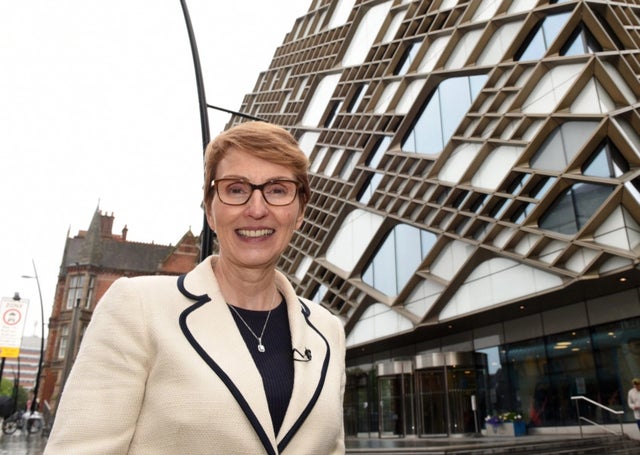
Helen Sharman

Helen Patricia Sharman CMG, OBE, HonFRSC. Born at Grenoside, Sheffield, in 1963. She later moved to Greenhill, attended Jordanthorpe Comprehensive, and later studied chemistry at the University of Sheffield and Birkbeck, University of London. Better known to us as plain old Helen Sharman, the UK’s first astronaut.

In 1989, she responded to a radio advert and was selected from more than 13,000 applicants to be part of Project Juno, an Anglo-Soviet space mission. In May 1991, she launched on a Soyuz spacecraft to spend eight days orbiting the earth, most of that time on the Mir space station.

She’s also famous for tripping and dropping the torch, extinguishing the flame, at the opening ceremony of Sheffield’s World Student Games in the same year. But she has other claims to fame as well, including an appearance in an episode of Hollyoaks, and having Sharman Court student flats on Broad Lane named after her.

These days she works full time at the Department of Chemistry, Imperial College, London.

Categories
People

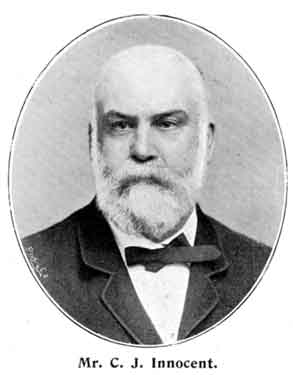
Charles John Innocent

Charles John Innocent (1839-1901), architect, was born in Sheffield, the son of John Innocent, a publisher. He was educated at Sheffield Commercial Academy and later articled to the architects Weightman, Hadfield and Goldie.

Innocent went into partnership with Thomas Brown in 1862 and the Education Act of 1870, and the immediate demand for school buildings, proved to be a triumph for them.

He was appointed architect for the Sheffield Schools Board in 1871 after which school after school went up using his designs, including amongst many, Attercliffe, Springfield, Carbrook, Abbeydale, Gleadless Road, Hunters Bar, Sharrow Lane and Duchess Road.

Innocent also did a considerable amount of work for the Sheffield Board of Guardians, providing the plans for the erection of the headquarters of the Children’s Homes and the Cottage Homes for aged people.

Charles Innocent designed Glossop Road Baptist Church, now the Sheffield University Drama Studio (1871), and St. John’s Chapel, Crookesmoor, but his greatest achievement was probably the Montgomery Hall (1884-1886) on Surrey Street for the Sheffield Sunday School Union.

He died in November 1901 at his home on Wellesley Road, Broomhill.

Categories
People

Dominic West

I sometimes think these posts ought to be called “They escaped from Sheffield.”

Dominic Gerard Francis Eagleton West. Born Sheffield, in 1969. Actor and producer. Educated at Westbourne School, Broomhill, Eton College and Trinity College, Dublin. First cousin, once removed, of American Thomas Eagleton, briefly the 1972 Democratic nominee for Vice President. West is celebrated for once spending four months as a cattle herder in Argentina.

Best known for The Wire (2002), Chicago (2002) and Tomb Raider (2018). Also famous for playing serial killer Fred West in ITV’s Appropriate Adult and appearing three times on the Crucible Theatre stage (The Country Wife, Othello and My Fair Lady).

West is married to Catherine FitzGerald, daughter of Desmond FitzGerald, 29th Knight of Glin, and lives in Shepherd’s Bush, London, and Glin Castle, County Limerick.

He’s also received an Honorary Doctorate from Sheffield Hallam University and an Honorary Degree from the University of Sheffield.

“When I meet anyone from Sheffield, they look at me sceptically, as if to say, ‘You don’t come from Yorkshire’.”

Categories
People

John Dodsley Webster

Here’s a name that keeps appearing on Sheffielder.

John Dodsley Webster (1840-1913), might not have been our best-known architect, neither was he responsible for Sheffield’s finest buildings, but his legacy was probably the most important.

J.D. Webster was born in Sheffield, received private tuition from Rev. H.D. Jones, Vicar of Heeley, and was later educated at Mansfield Grammar School.

Afterwards, taking up a career in architecture, he was articled to M.R. Mallinson, the Burnley ecclesiastical architect, later managing the Halifax office of Mallinson & Healey, after which he returned to Sheffield and spent time with Worth & Campbell.

Webster set up on his own soon after 1865 and along with his son, John Douglas Webster, who became his partner, practiced in Sheffield for nearly 50 years.

He became Diocesan Surveyor for the Diocese of Sheffield, and before that for the Archdeaconry of Sheffield when in the Diocese of York.

Unsurprisingly, with clerical interests, he was a prominent churchman, and for several years was warden at St. Mark’s Church at Broomhill.

Webster was the architect of St. Matthias’, Emmanuel Church (Attercliffe), St. Bartholomew’s (Burgoyne Road), Carbrook Church, St. Cuthbert’s (Fir Vale), St. Paul’s (Norton Lees), St Anne’s (Netherthorpe) and prepared the designs of extensions to Heeley Church.

Other works included Grenoside Church, the “Fox” Memorial Church (Stocksbridge) and the Trinity Church at Highfields (the last regarded as one of the best examples of its class).

With his son, he also designed St. Augustine’s Church (Brocco Bank), St. Oswald’s (Millhouses), St. Timothy’s (Crookes) and St. Clement’s (Newhall).

In addition, his name can be ascribed to Gleadless School, now vacant on Hollinsend Road, Woodhouse East, on Station Road, and Woodhouse West, at Sheffield Road.

A fellow of Royal Institute of British Architects (RIBA), his best-known works were the former Jessop’s Hospital, Sheffield Children’s Hospital, and extensions to the Royal Infirmary and Ecclesall Union.

In Clarkson Street, at the corner with Western Bank, is the oldest surviving part of the Children’s Hospital which moved here in 1878. J.D. Webster was one of the hospital founders and chairman of its management committee.

The Jessop’s Hospital for Women, on the north side of Leavygreave Road, opened in 1878, a rather forbidding building in late Gothic style, that lost the top stage of its central tower during the Second World War, but survives as the University of Sheffield’s Department of Music.

Unfortunately, Webster’s Edwardian wing of 1902 was demolished, despite Grade II-listing, in 2013. The site is now occupied by The Diamond, the university’s futuristic home to the Faculty of Engineering.

There are few examples of Webster’s work in the city centre, but those that survive are passed on a regular basis by locals.

The Davy’s Shop in Fargate (1882) is now home to W.H. Smith, the Bainbridge Building on Surrey Street (1894) was most recently occupied by Halifax Bank, and the attractive St. Paul’s Parade building at the side of the Peace Gardens was completed in 1901.

Around the corner, in Norfolk Street, is the original frontage to the Central Hall for Sheffield Workmen’s Mission (1899), later becoming New Central Hall, the city’s first cinema, and now occupied by Brown’s Bar and Brasserie.

J.D. Webster practised at 19 St. James’s Street and lived at Sunbury, on Westbourne Road, at Broomhill.

He died in October 1913, aged 74, and was succeeded by his son, John Douglas Webster

Categories
People

Henry Jasper Redfern

It is incredibly difficult to write about Henry Jasper Redfern (1871-1928). Almost forgotten now, his curriculum vitae is almost too long:- optician, photographer, exhibitor, filmmaker, the proprietor of a photographic and lantern business, cinema pioneer, as well as being an x-ray and radiographic innovator.

On reflection, he was a jack-of-all trades, probably master of none, because his business undertakings often ended in financial failure.

Born in Sheffield, Redfern trained as an optician and opened a business on Surrey Street, later opening a photography shop nearby. However, he was more famous in the realms of cinematography, studying the form in its early stages, and became a forerunner in exhibiting moving pictures.

In 1898, Redfern was offering photographic supplies and instruction, Röntgen rays (X-rays), and exhibitions of the Lumière Cinématographe, for which he was one of a number of agents in Britain at this time.

Specialising in ‘locals’, films of interest around Sheffield, Redfern travelled around with Sheffield United during 1899, photographing at least four major matches, climaxing with the Cup Final at Crystal Palace, when Sheffield United played Derby. He entitled the series Football Events. He also filmed local cricket matches.

The following year he seems to have made a tour of Africa (Morocco, Tunisia, Algeria), making travelogues, and eventually went wholeheartedly into the moving picture business with his ‘World Renowned Animated Pictures and Refined Vaudeville Entertainments’.

These package shows eventually led to his owning and operating a seaside summer show at Westcliffe, ‘Jasper Redfern’s Palace by the Sea’, the ‘Grand Theatre of Varieties’ in Manchester, while also operating the Theatre Royal, Windsor, and the Public Hall in Barnsley.

Together with Frank Mottershaw, he made the first outdoor films in Sheffield, producing A Daylight Robbery in 1905.

In the same year, Redfern took over the lease of the Central Hall in Norfolk Street, built in 1899 for the Sheffield Workmen’s Mission. Here, he showed his own work, opening with ‘The Royal Visit to Sheffield in its Entirety.’

Redfern was also famous in x-ray work. In its infancy, he travelled from hospital to hospital around the country with portable apparatus, subsequently joining the Army during the Great War where his expertise was used to treat wounded soldiers.

Afterwards, Redfern was a radiologist at Grange Thorpe Hospital, Manchester, but had lost use of most of his fingers due to x-ray work. He died from cancer, thought to have been accelerated by the effects of radiation poisoning.

Redfern died in comparative poverty and obscurity, aged 56, leaving a widow and four children, and his collection of motion picture memorabilia was presented to the Science Museum.

Categories
People

Marina Lewycka

Not strictly a Sheffielder, but somebody who chose to settle in the city. She is Marina Lewycka, British novelist of Ukrainian descent.

She is the author of A Short History of Tractors in Ukrainian (2005), a million-seller, Two Caravans (2007), We Are All Made of Glue (2009), Various Pets Alive and Dead (2012), The Lubetkin Legacy (2016) and the soon-to-be-published The Good, the Bad and the Little Bit Stupid (2020).

Lewycka was born in 1946 at a displaced persons camp in Schleswig Holstein in Germany. Her family subsequently moved to England, where she attended Gainsborough High School for Girls and Witney Grammar School, Oxfordshire, later graduating from Keele University and the University of York.

In 1985, Lewycka moved to Sheffield with her husband, who worked for the National Union of Mineworkers. She became a teacher and afterwards a lecturer of Media Studies at Sheffield Hallam University, retiring in 2011.

She now splits her time between Sheffield and London and is aware of the north-south divide. “When I get off a train (in Sheffield) you can just see how poor everybody is.”

Categories
People

Matthew Bannister

Richard Matthew Bannister. Born at Sheffield in 1957. Better known to us as plain old Matthew Bannister. Media executive and broadcaster. He grew up around Millhouses and Ecclesall, attending King Edward VII School, and played as a folk musician around the area, also performing on BBC Radio Sheffield.

His mother, Olga, was a paediatric physiotherapist at the Sheffield Children’s Hospital, while his father was a research chemist for British Steel at Orgreave.

In the early 70s, Bannister signed up for a young people’s acting class at the Crucible Theatre, later taking a course with the National Youth Theatre in London, whilst at the same time studying law at the University of Nottingham.

Instead of a theatre career, Bannister joined BBC Radio Nottingham as a trainee reporter, later presenting Morning Report. He moved to Capital Radio as a journalist, before heading to Radio 1 as presenter of Newsbeat (1983-1985).

Bannister moved back to Capital as Head of News and Talks, became Managing Editor of BBC GLR, and was later appointed as the controversial Controller of Radio 1. He sparked the end of the “Smashie and Nicey” era with the likes of Dave Lee Travis, Simon Bates and Alan Freeman jumping before they were pushed.

He was nicknamed the “fat controller” by his most famous hiring, Chris Evans, with whom he would later have a spectacular falling-out over his refusal to let the DJ work a four-day week.

Rising the executive ladder, he lost out to Greg Dyke for the Director General’s job, before deciding that his future was behind the microphone instead.

Presenting shows on BBC Radio Five Live and World Service, notably Outlook, he is known as the ‘Celebrator of Death’, presenter, since 2006, of Last Word, Radio 4’s obituary programme, and Folk on Foot, his own podcast, where he goes for a walk and chat with a folk musician.

Bannister co-owns Wire Free Productions, the company behind a syndicated evening show for the BBC local radio network – think Mark Forrest and Georgey Spanswick – that ended last year.

His proudest achievement?

“Changing Radio 1 from a middle-aged radio station to a champion of new music, particularly the major role it played in the success of Britpop and the UK dance scene in the 1990s.”