Categories
Buildings

The lost picturesque ivy-clad building called Sharrow Moor School

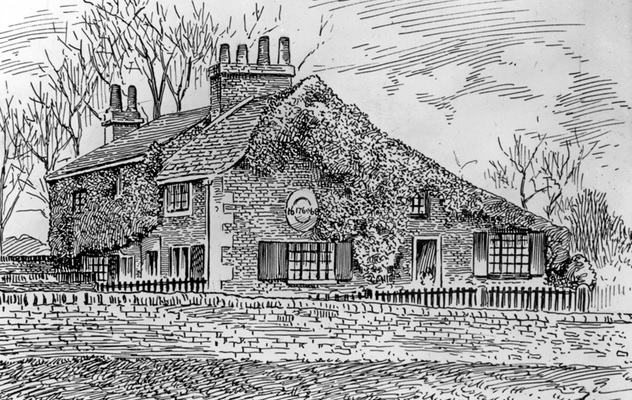
Sharrow Moor Endowed School, also known as Whitehead’s School (after headmaster ‘Daddy’ Whitehead), Bagshot Street, Sharrow Moor. Built 1668, extended 1769. Demolished 1904. Image: Picture Sheffield

“Another bit of old Sheffield has disappeared. Over 200 years ago it stood ’distant, secluded, still’ away on Sharrow moor, with a beautiful rural country all around it, and Sheffield a comparatively long way off. But, like an invading army, Sheffield has been rapidly enveloping it in the last century. The city spread all around it. For a time, the town left it standing while it went on and on, seizing fields and woods, and filling them up with houses. Latterly, however, it has had time to turn back, and look around for spots that might have been passed and left unspoilt by bricks and mortar. And it has discovered quaint, old-fashioned Sharrow Moor School, a picturesque ivy-clad building, with its old-world air of simplicity and quietude, and its still rural surroundings. And down comes one of the few remaining bits of old Sheffield to make room for more of the all-devouring, up-to-date city.”

This expressive piece appeared in a local newspaper in November 1904.

Sharrow Moor School was one of Sheffield’s earliest schools. Originally a farmhouse, when erected in 1668, it subsequently became a charity school, and for many years boys and girls were taught to read and write, and some of them to learn mathematics.

In 1668, few houses dotted the landscape in this lovely valley. Its only neighbours were strewn far and wide across it. Beauchief Hall, Banner Cross, Whirlow Hall, Graystones, Whiteley Wood Hall, Broom Hall, Machon Bank,  and Mount Pleasant.

In 1769 the building passed into the hands of the Rev. Thomas Savage, of Cherry Tree Hill, who extended it, and through his will it was destined to become a school.

His trustees were obliged to pay someone “four pounds, eleven shillings, and four pence for the teaching and instructing of eight poor children, born, or residing in or belonging to the parish of Sheffield, at a certain school situated in Sharrow Moor called Sharrow Moor School, to read the English language, two whereof to be taught to write, and account by being taught the first four rules in arithmetic. The sum of nine shillings and eight pence to be paid annually for the purchase of books.”
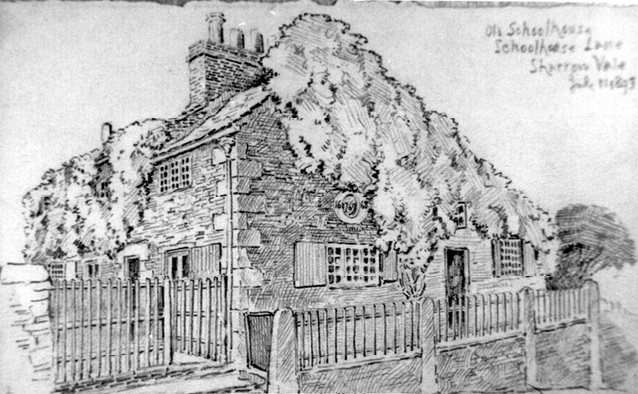
Sharrow Moor Endowed School, also known as Whitehead’s School (after headmaster ‘Daddy’ Whitehead) in 1893. Image: Picture Sheffield

The school prospered under several masters – Mr Siddle up to 1860, followed by a Frenchman, Mons. Louis Theodore Elile Isensee, until 1865. Afterwards, ‘Daddy’ Whitehead took charge for 25 years until his death (the school referred to as Whitehead’s School)  and it  briefly closed before reopening in 1890 by Mr Haslam.

Then came the Free Education Act and the arrival of new schools at Hunter’s Bar, Pomona Street, Nether Green and Greystones, and the school closed. The money received from the sale of the land and building, together with its endowment, was transferred by the Charity Commission to find scholarships for children in the parish of Ecclesall, at the Sheffield Central, Technical, and Art Schools.

If it had survived, where would this forgotten treasure have been today? The answer is Bagshot Street, at Sharrow Vale.  
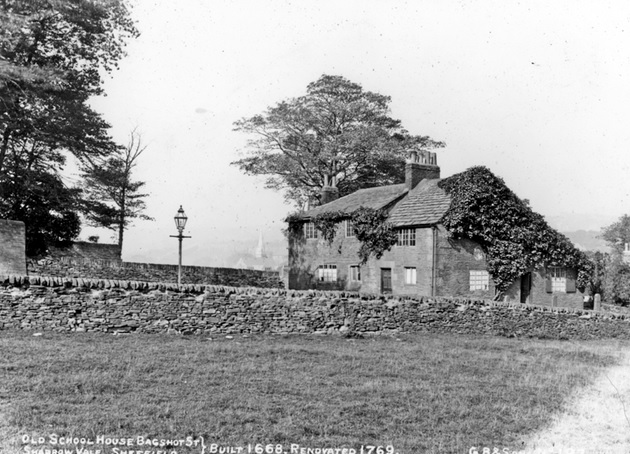
Old School House Bagshot St., Sharrow Vale Sheffield Built 1668; Renovated 1769. Image: Picture Sheffield

© 2022 David Poole. All Rights Reserved
Categories
Late Night Tales

Late Night Tales #4

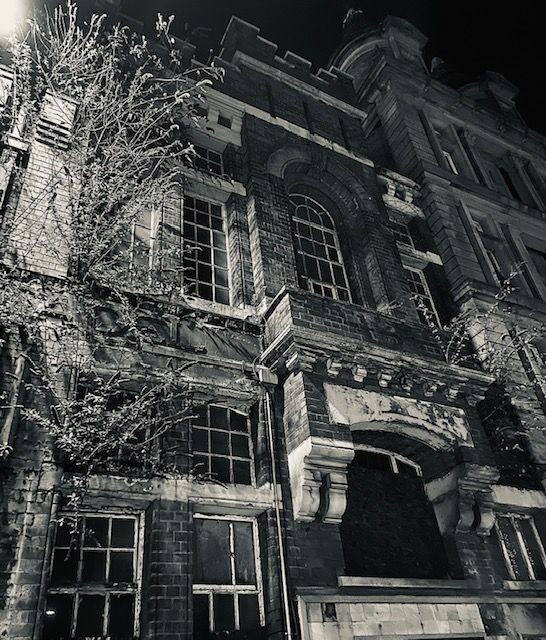
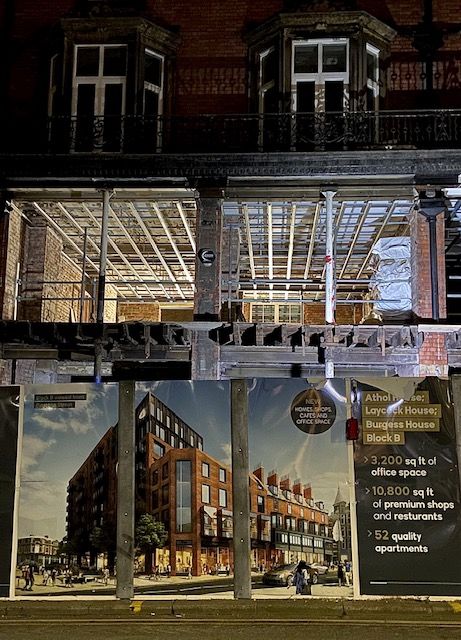
Pinstone Street redevelopment (2022). Image: DJP/2022

In 1892, the opening of a new shop on Pinstone Street offered splendid facilities for pickpockets. A crowd stretched across the road, and while those were looking through the windows, the light-fingered gentry deftly relieved them of their purses and wallets which contained the bulk of their week’s wages.

© 2022 David Poole. All Rights Reserved

Categories
Buildings

Sheffield Energy Recovery Facility

Sheffield Energy Recovery Facility. More than 140 buildings, including leisure centres, hotels, houses, schools and colleges and offices use energy recovered from waste generated by the city. Image: Andy Kelly

It is a landmark on the Sheffield landscape but may not be the most welcome. This is the Sheffield Energy Recovery Facility on Bernard Road, a stone throw from the city centre.

It can treat up to 240,000 tonnes of the city’s household waste per annum, and its incinerator supplies heat to a local district heating scheme. Owned by Sheffield City Council, the plant is operated by Veolia under a 35 year contract.

Waste is tipped into a waste storage bunker and fed into a single incineration unit where it is burned in excess of 850ºc. A large boiler above it is heated to produce superheated steam at 400ºc. A condensing steam turbine uses this steam to generate electricity for the National Grid and produce hot water for the District Energy Network.

Facilities like Ponds Forge, Park Hill Flats, the Lyceum Theatre, Millennium Galleries, Weston Park Hospital, and Sheffield City Hall, all benefit with heating from the system, delivered through more than 44km of underground pipes.

In 2001, Greenpeace declared it the worst incinerator in England, and painted ‘Toxic Crime’ on the chimney. The council had to privatise the plant because it could not afford the cost to upgrade it. The contract passed to Onyx (later Veolia) which replaced it in 2006 with modern plant to meet strict environmental standards.

However, Sheffield Green Party claimed it was still responsible for 31,308 tonnes of harmful greenhouse gas emissions.

Further controversy surfaced in 2017 when Veolia was forced to admit that it was diverting recyclable waste from household waste recycling centres to the incinerator. In addition, it began accepting waste from Derbyshire and Nottinghamshire after difficulty finding enough local waste to feed it.

The controversies appear to have quietened down, and people like me, assume that smoke belching from the large chimney is ‘safe.’

© 2022 David Poole. All Rights Reserved
Categories
Companies

The HOME of Stanley Tools

“For many of us, you hear the name “Stanley” and you think blades. And when you think “blades”, you think Sheffield. Yes, Sheffield and Stanley seem to go together like peaches and cream.”

The signs around Bramall Lane and Hillsborough used to say ‘The Home of Stanley Tools’ and a generation of us thought this was another great old Sheffield company.

However, the story of Stanley Tools takes place on two continents.

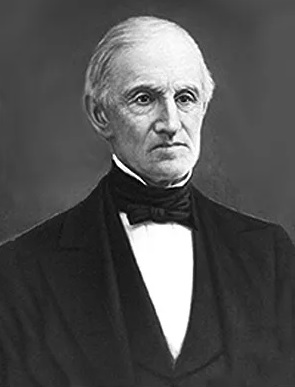
The forebears of Frederick Trent Stanley were English and emigrated to the United States. He was born in Connecticut in 1802 and began working on the family farm before labouring in various manufacturing industries. In 1843, he co-founded the Stanley Bolt Manufactory, and later the Stanley Works,  in New Britain, to make door bolts and other wrought-iron hardware. He could often be seen driving around New England in his horse-drawn buggy, visiting homes and farms to fit them up with his products.

By the time of his death in 1883, The Stanley Works’ capital investment had increased more than tenfold, and the enterprise had developed into a well-known manufacturer of hinges, planes, bolts, bits, and other tools.

Frederick Trent Stanley (1802-1883)

In 1857 his cousin, Henry Stanley, founded The Stanley Rule and Level Company in the city. Planes invented by Leonard Bailey and manufactured by the company, known as Stanley/Bailey planes, were prized by woodworkers of the late 19th and early 20th centuries. The two companies merged in 1920, and the Stanley Rule and Level Company became part of Stanley Works.

And now to Sheffield where James Arscott Chapman (born Bristol, 1827) began making carpenters’ braces in the 1860s at the Industry Tool Works, Woodside Lane. On his death in 1891, the W.A. Chapman company might have passed to his eldest son Joseph, but he was about to spend time in prison after being found guilty of embezzlement. Instead, James, his youngest son, took over the business which grew and prospered.

After the turn of the twentieth century further expansion took place, and during the First World War the company manufactured thousands of bayonets in addition to their regular line of tools.

The business changed hands after the death of James Chapman in 1925 and the manufacture of planes, hand drills and breast drills were added to the line of carpenters’ braces. In 1934, it started making hand planes under the Acorn name.

In 1936, the Stanley Works of New Britain, Connecticut, purchased J.A. Chapman Ltd and started developing its celebrated range of Stanley Tools which had previously been imported from the United States since the 1870s.

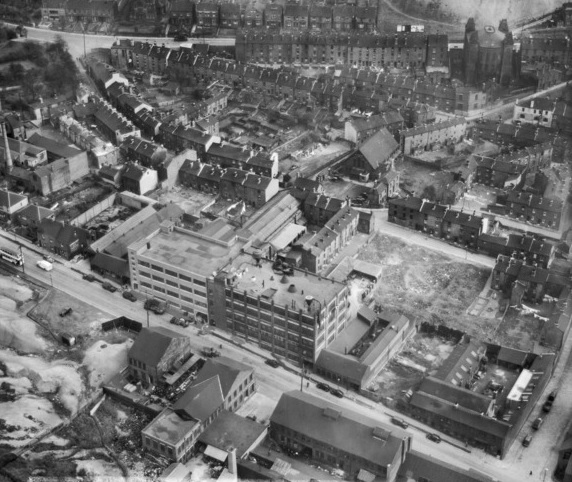
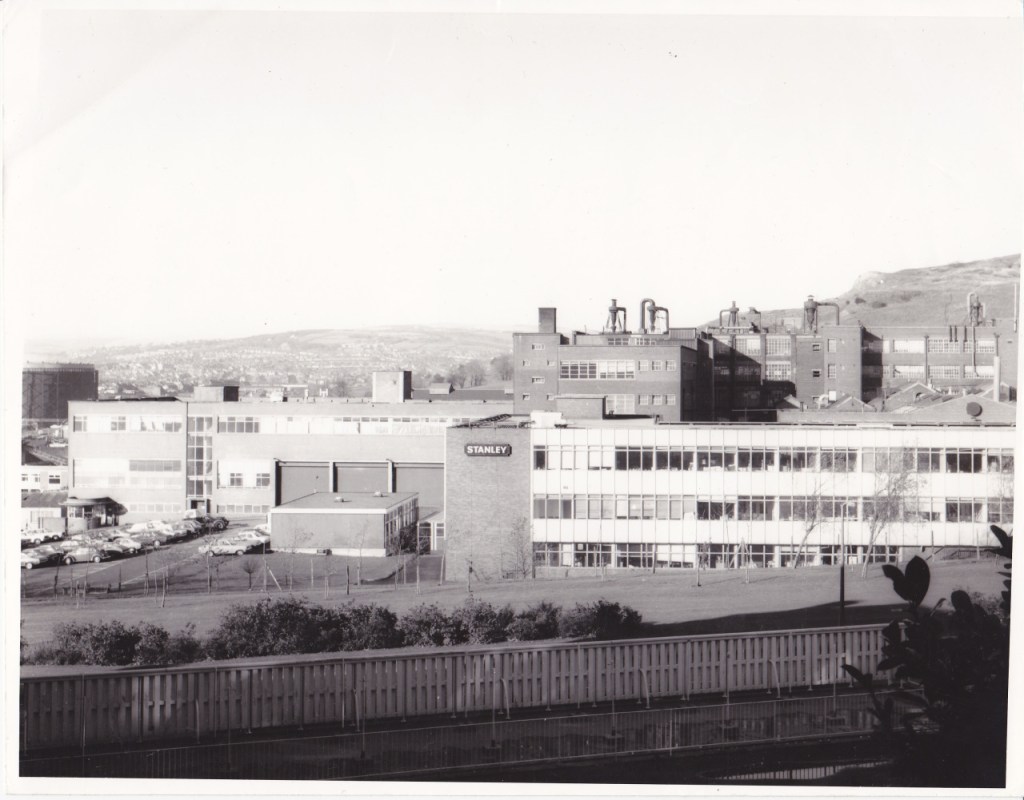
Existing plant and facilities were expanded, and a new five-storey building was erected in Rutland Road.

The Stanley Tool Works on Rutland Road and environs, Sheffield, 1950. Image: Britain from Above

The first line to be introduced was the famous Stanley bench plane, and production was well established by the time World War Two put a stop to further developments.

During the war the production of planes, braces, breast drills and hand drills, was expanded to meet the ever-increasing demands of the armed forces and Government departments.

In addition, millions of shell primers and tracer shells were manufactured on modern automatic plant.

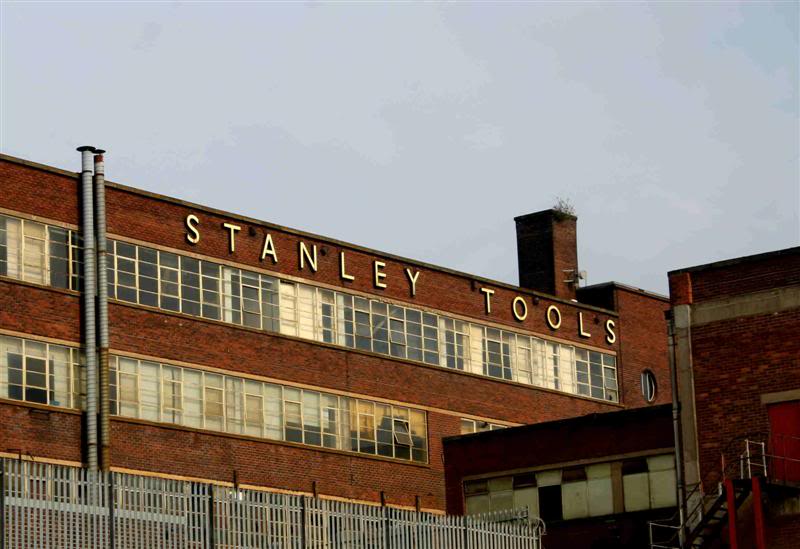
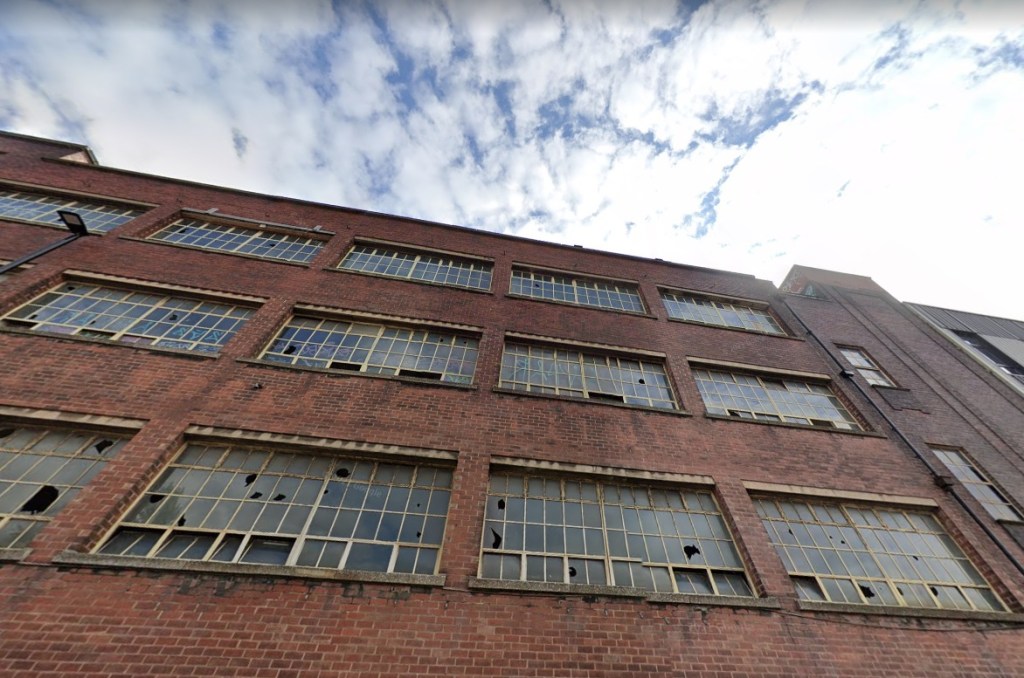
The building was extended in 1950 and 1961 and a second site opened at Ecclesfield, but like the rest of Sheffield’s tool industry, the company suffered at the hands of cheap imports. A lot of production was switched abroad, and the Rutland Road/Woodside Road site was closed in 2008.

Better days. The former Stanley Tools factory on Rutland Road. Eventually killed by cheap tool imports. Image: Hill Shadowed City

But that wasn’t the end of the Stanley Tools story.

Tool manufacturing was switched to an efficient new factory at Hellaby, Rotherham, and allowed the manufacture of Stanley Tools to return from Asia.

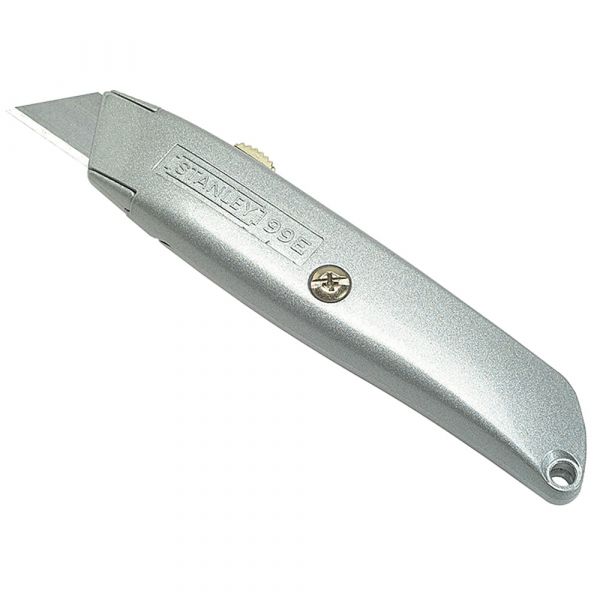
And what about that famous utility knife, generically known around the world as a Stanley Knife? In 2012, Stanley brought the manufacture of steel blades for its knives back to the UK. Made in Rotherham.

Stanley Works and Black & Decker merged in 2010 to become the world’s largest tools and storage company, the world’s second largest commercial electronic security business and the world’s second largest engineered fastening company.

But there is a sad twist to the Stanley Tools story in Sheffield.

Search ‘Stanley Tools Sheffield’ on the internet and you will come across loads of urban explorer sites that record the decline and fall of a former manufacturing facility.

The Rutland Road site is empty and becoming more derelict by the day. Image: Google

“The Stanley Tools Factory, which quickly fell into a state of disrepair, was being frequented by homeless. It was put up for sale, with parts of the factory used on the weekends as a zombie-themed Airsoft venue. When a buyer for the full site couldn’t be found, some of the buildings were sold to smaller businesses, such as car dealers and scrapyards. On 30th January 2021, a large fire tore through one of the derelict buildings on the Stanley Tools factory site. Around 25 firefighters tackled the blaze overnight and got it under control by the early hours of the following morning.”
Lost Places & Forgotten Faces

Today, the term “utility knife” also includes small folding-, retractable- and/or replaceable-razor blade knives suited for use in the general workplace or in the construction industry. The latter type is sometimes generically called a Stanley knife, after the prominent brand.

© 2022 David Poole. All Rights Reserved
Categories
Sculpture

“If I am not grotesque, I am nothing. Except when I light a fag.”

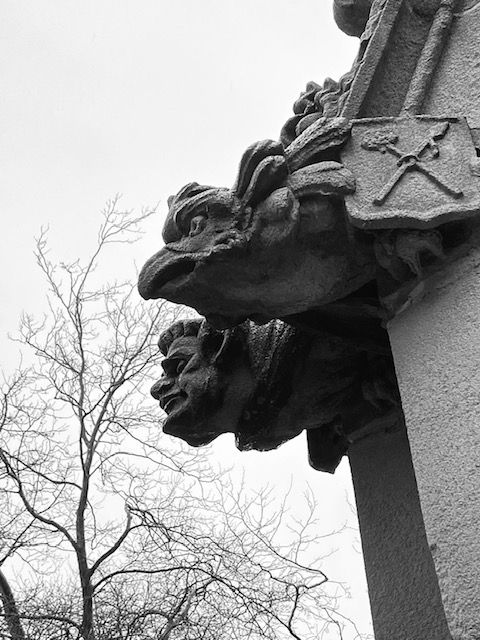
Grotesques. Sheffield Cathedral. Image: DJP/2022

“Just look at them,” said George Grotesque to his neighbour. “They’re always wandering around, annoying people, begging for money, and they’re always drunk.”

“I know,” said Godfrey Grotesque, “I remember the days when all we had to look at were gravestones.”

“At least they don’t bother us,” continued George Grotesque. “We’re far too ugly for them to even notice.”

Godfrey Grotesque smiled. “That’s not strictly true, because all I have to do is light a fag and they all come running to ask if I’ve got a spare one.”

*****

Have you noticed these Victorian grotesques decorating the stone gate pillars outside Sheffield Cathedral?

Grotesques were originally ornamental decorations discovered during the Renaissance in subterranean ruins known as ‘grotte’, hence ‘grotesques’.

We now associate them with unnatural, ugly, or distorted forms, which can have the power to shock or scare those that cast their eyes over them.

They are thought to have the power to ward off evil spirits, guarding the buildings they occupy, and protecting those inside.

© 2022 David Poole. All Rights Reserved
Categories
Late Night Tales

Late Night Tales #3

“Sir, gather your copies of War Cry and follow me. It is a weapon of attack; and a very efficient weapon it has been. Tonight, we shall visit all the public houses in surrounding streets and offer a copy to those with the evil drink. Afterwards, we shall return here and take a cup of hot chocolate, braced with a drop of brandy.” – Anon. Salvation Army Citadel. Cross Burgess Street. March 1903.

© 2022 David Poole. All Rights Reserved
Categories
Buildings Uncategorized

Demolishing Moorfoot might not be that easy

I listen, I watch, I give my own opinions.

There is a whisper that New River, owner of The Moor, might be in talks with Sheffield City Council about purchasing the Moorfoot building. This ties in with the council’s Strategic Vision document that suggests the area will be targeted at young professionals and promoted as a ‘prime location for city core living’.

“The future of the Moorfoot Building itself (adaptation or replacement) is currently being considered’ due to the emergence of hybrid working.”

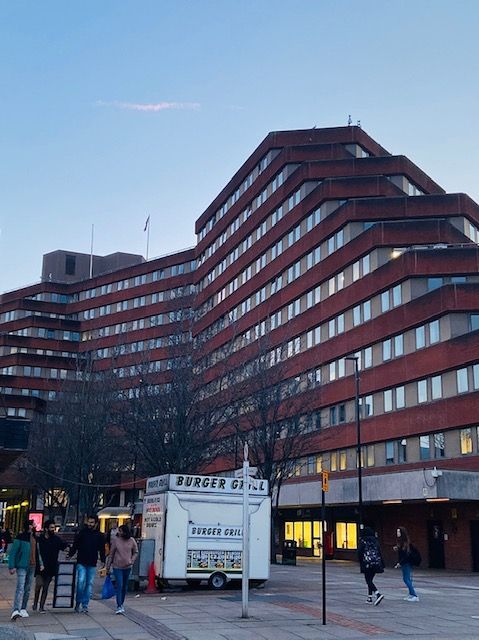
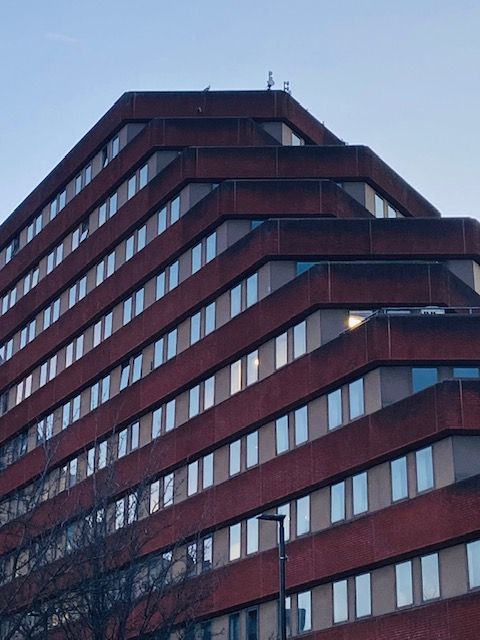
Eleven storeys high, with stepped levels across east, west, and north wings, it was built for the Manpower Services Commission which occupied it from 1981. It was here that the infamous Youth Training Scheme (YTS) was instigated, before being used by other Government agencies. The council bought it in the late 2000s.

Will Moorfoot be demolished and replaced?

I think there will be obstacles in the way of demolition, not least from architectural experts who regard the building as a Brutalist landmark. Don’t be surprised if there is an application to get it listed.  

It might also seem a waste of money for Sheffield City Council to spend a fortune buying and renovating Moorfoot, and then spend even more money to relocate departments elsewhere. But stranger things have happened.

I don’t think the Moorfoot building will disappear, although there might be an opportunity to demolish the indoor car park attached to it. Much more likely is that the block of shops, and hospitality venues bordering Moorfoot, Hereford Street, South Lane, and Cumberland Street, will go instead. This would provide an ideal public space, paving the way for the Moorfoot building to be converted to residential (think of The Barbican in London).

And don’t forget that the former Office Outlet/Theatre Deli block is earmarked to be replaced by Lidl.

A lot of speculation and perhaps wide of the mark, but extremely interesting.

© 2022 David Poole. All Rights Reserved
Categories
TV and Movies

When Sheffield became Cleveland, Ohio

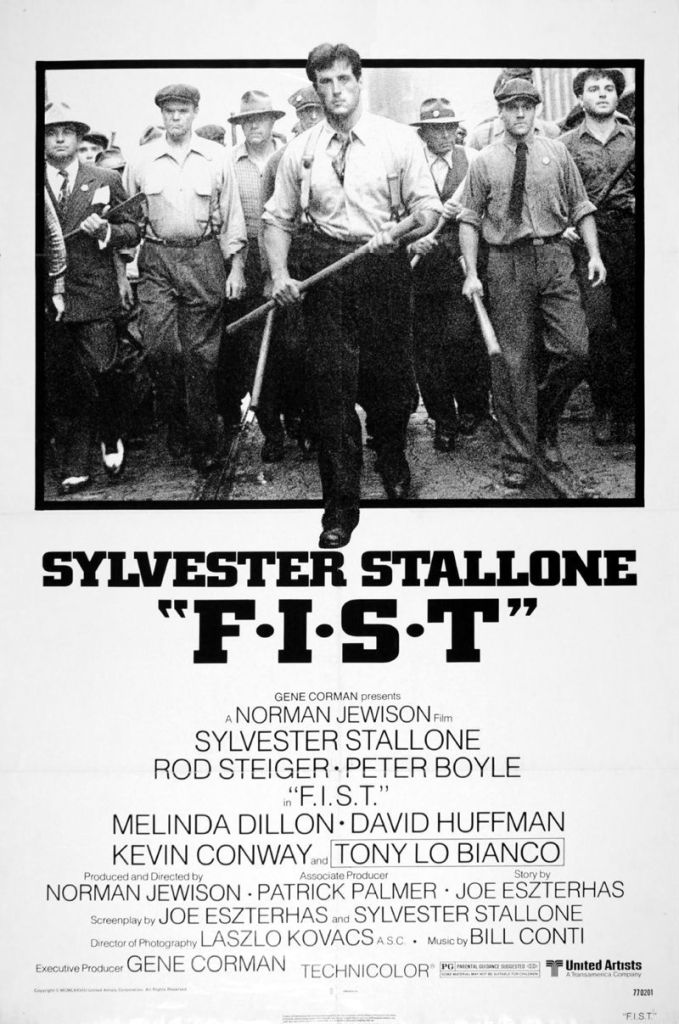
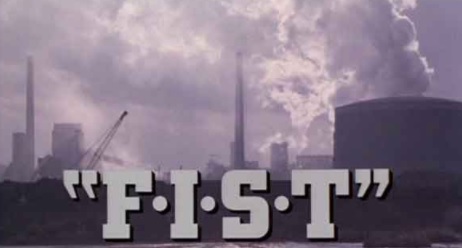
F.I.S.T. is a movie. It was released in 1978 and starred Sylvester Stallone as a Cleveland warehouse worker who becomes involved in the labour union leadership of the fictional Federation of Inter-State Truckers (F.I.S.T.).

Directed by Norman Jewison, several other well-known actors and actresses appeared in F.I.S.T. They included Kevin Conway, Brian Dennehy, Rod Steiger, Melinda Dillon, Richard Herd, Peter Boyle, and Red Hot Chili Peppers lead singer Anthony Kiedis.

Most of the filming was done in Dubuque, Iowa, chosen because of its similarity to Cleveland of the 1930s, and because the city used cable TV instead of  TV aerials on its roofs.

But there were other locations used, including Washington, Wisconsin, Los Angeles, Culver City Studios, and… Sheffield.

The chances of seeing Sylvester Stallone in Sheffield were nil. His star was on the ascent after the success of Rocky, and he remained in the United States.

F.I.S.T.(1978). Directed by Norman Jewison. Opening credit. Image: United Artists

A glance at the Internet Movie Database (IMDb) confirms Sheffield’s claim to fame, and the website, British Film Locations, had this to say: –

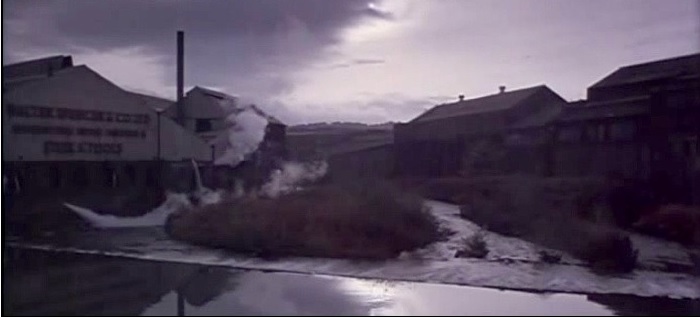
“For some inexplicable reason, this movie, which takes place entirely in the Midwest of America, features shots of Sheffield during its title sequence. Most of the Sheffield locations are unrecognisable now, due to redevelopment.”

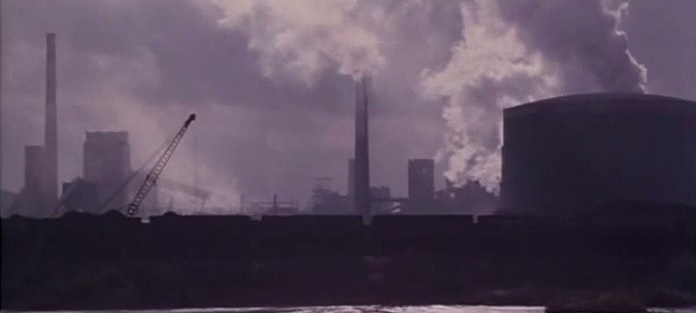
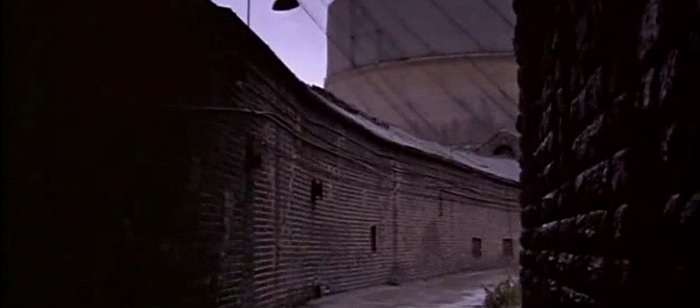
Sheffield was seen as being suitably dismal with gloomy shots of Hawke Street, Leveson Street, Blast Lane, Carbrook Street, Hadfield Steelworks, Orgreave Coke Works, the canal towpath, and a fittingly dirty River Don. (Rotherham even managed to be represented as well).

F.I.S.T. was regarded a succesful movie, $20,388,920 on an $8 million budget,

By the way, Sylvester Stallone did eventually visit Sheffield.

In 2015, he gave a talk at Sheffield City Hall and even popped into Nonnas, on Ecclesall Road, for a meal afterwards.

Hawke Street. Image: British Film Locations
Leveson Street. Image: British Film Locations
Orgreave Coke Works. Image: British Film Locations
Canal towpath. Image: British Film Locations

© 2022 David Poole. All Rights Reserved
Categories
Late Night Tales

Late Night Tales #2

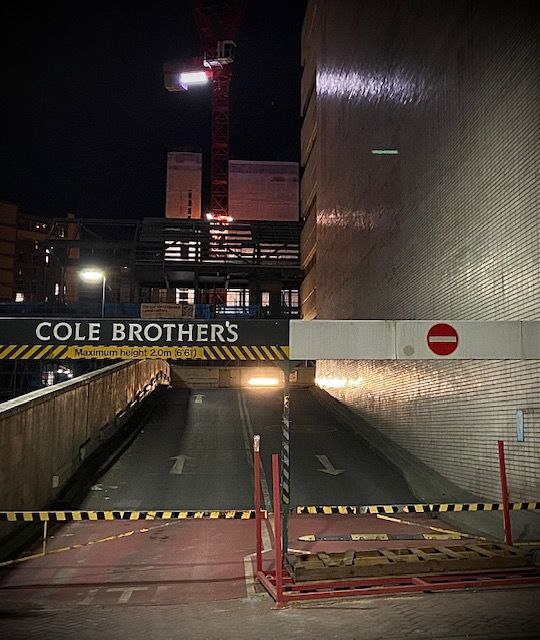
Torquay, April 1896. “I regret to inform the family that Mr Skelton Cole has passed away at Braddon Court. The sea breezes did not cure him of illness after all. The wonderful success of the business is in no small measure to this gentleman. Only yesterday, he spoke affectionately about Thomas and John, and sincerely hoped that Sheffield would always have a Cole Brothers.” (Gone, but not forgotten, and this sign recently reappeared in defiance).

© 2022 David Poole. All Rights Reserved
Categories
Late Night Tales

Late Night Tales #1

It was a rainy Wednesday night, on 14 June 1916, and a soldiers’ buffet was opened at Midland Station for the convenience of soldiers and sailors’ night-travelling through Sheffield. A sailor was the first man in and was on his way to Newcastle to spend brief respite with friends after taking part in the Battle of Jutland.

© 2022 David Poole. All Rights Reserved