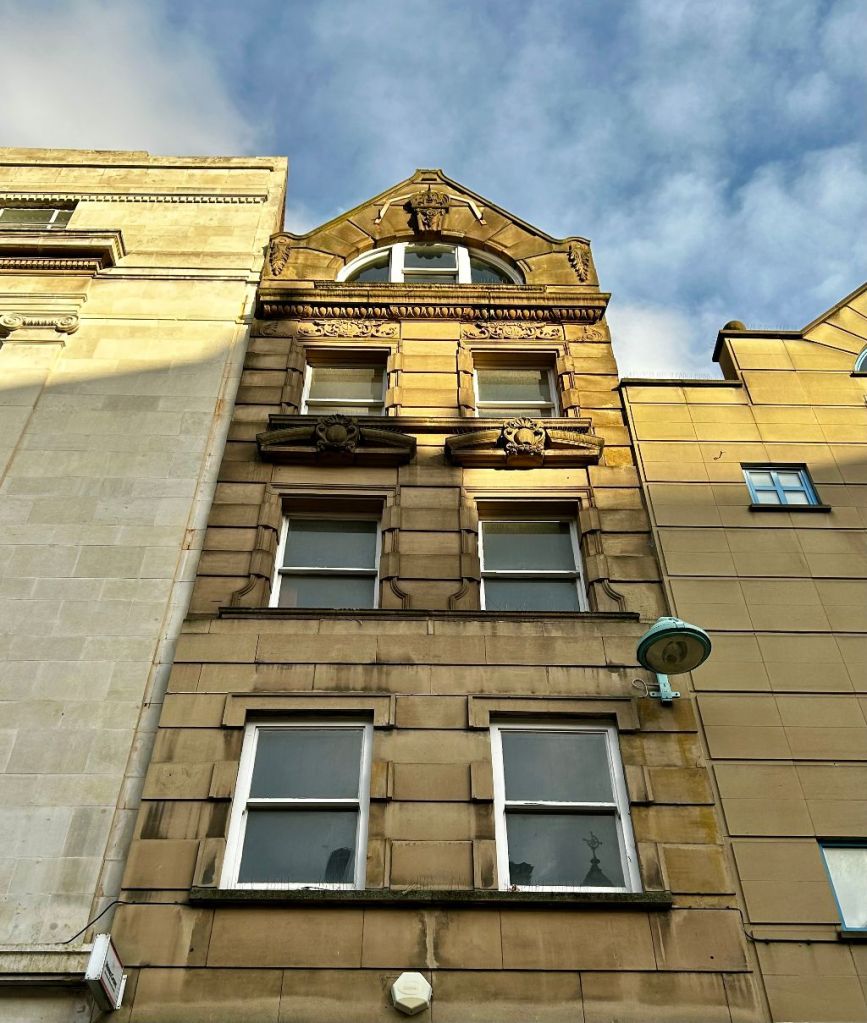
If buildings could talk, they might be able to fill in the blanks. Like when this building was constructed, what the carvings on the outside mean, and might provide us with forgotten stories of the people who passed within its walls. It might also be dismayed to see Fargate as it is now.
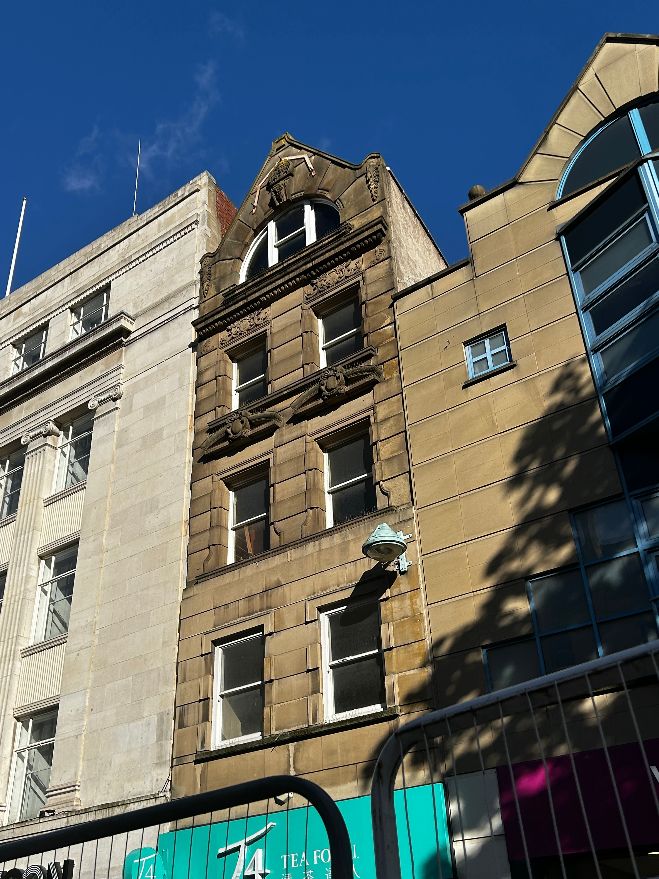
This is No. 37 Fargate, with its grand Victorian (or might that be Edwardian) facade, home to T4, a Taiwanese tea store, which opened earlier this year, and ended a few years of abandonment.
The interesting thing about the building is that it is sandwiched between two newer constructions, and the last in this block to survive street improvements from the 1890s onwards. Look up the next time you pass, and you’ll see what I mean.
The likelihood is that it was built for one of Sheffield’s wealthy entrepreneurs who snapped up this sliver of land as part of the street widening programme and enjoyed the rents that the ground floor shop provided.
The Victorians turned Fargate into a shopping street, and prior to this, the site had been home to businesses including the Misses Innocents’ hosiery and fancy goods store, Singer’s Sewing Machines, Bagshawe Bros, bicycle shop, and a brief spell as an auction house.
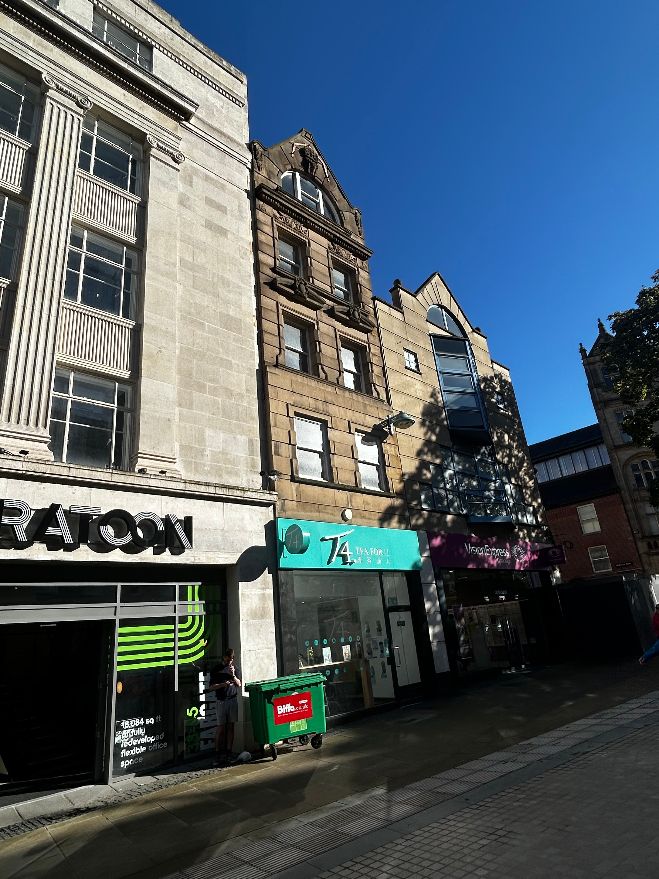
The property was likely built in 1903-04, and taken by Bonnet and Sons, who installed mahogany fittings, and turned two long rooms into a high-class cafe.
The business, founded in 1880 by Swiss chocolatier Louis Bonnet, had other concerns in Bath, Bristol, Scarborough, and Bradford, and specialised in freshly made chocolate and all kinds of French confectionery, catering for the ‘best class of people’ who were prepared to pay a moderate price for the delicacies.
“Bonnet and Sons are preparing special novelty boxes filled with these sweetmeats. The cases, attractive in character, have been brought from Paris and Vienna, but are filled in Sheffield immediately before their despatch to a customer, with the result that the chocolate and fondants are quite fresh. They are just the kind that go to ornament the supper table at a party or are delightful as a dessert. They are typically French. Two dozen of these petits gateaux are put in the boxes to retail at two shillings. The best way to obtain an opinion is to visit Bonnet and Sons’ Cafe where, together with a cup of delicious tea, coffee, or chocolate, the confectionery can be enjoyed.” – Sheffield Independent – November 1905.
The cafe closed in 1912, as eventually did the other branches, except for Scarborough, where astonishingly, the business survives under different ownership as Bonnets on Huntriss Row.
Between 1912 and 1922, the building was the Sheffield outpost for Van Ralty Studios, owned by Harry Wolff, a portrait photographer, with studios in Liverpool, Manchester, Nottingham, Oldham, and Bolton. Its work continues to be popular, the vintage postcards and photographs eagerly sought by collectors.
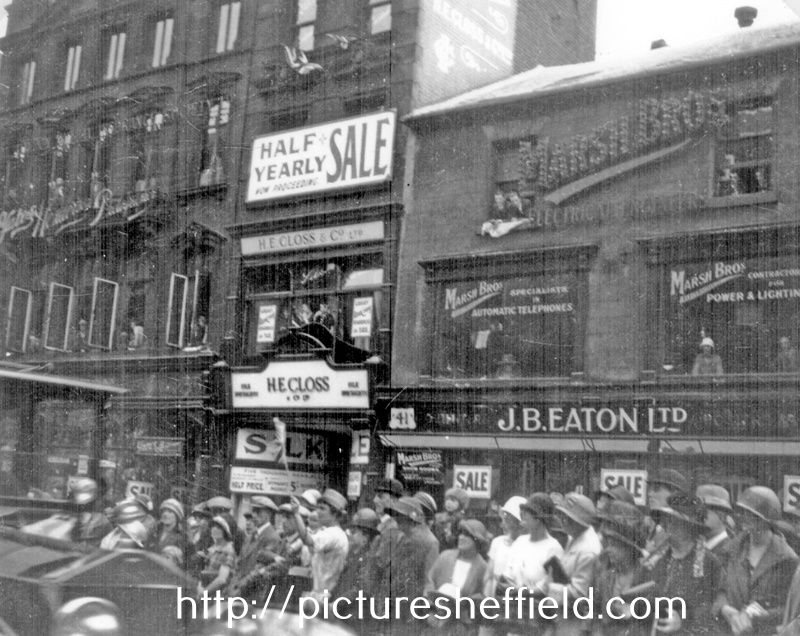
There are a couple of images in Picture Sheffield’s extensive collection that shows No. 37 Fargate belonging to H.E. Closs and Company, silk merchants. This was Harold Edward Closs’s first shop, but he quickly expanded with branches across the country. His buyers visited the Continent to choose the latest modes of colour and design, providing its shoppers with the latest silk fashions. It ceased trading in the 1930s, and Harold Closs set up a new business with Cyril Hamblin and still trades in the southeast as Closs & Hamblin (formerly C&H Fabric Specialists).
Next into No.37 was Thomas Cook, the travel agents, which turned out to be the building’s longest occupant, remaining here until its dramatic collapse in 2019. Although acquired by Hays Travel it closed soon afterwards.
Fargate always liked its eateries, but these gave way to shops during the latter part of the twentieth century, but, as one historian told me, history has a habit of repeating itself, with Fargate earmarked for leisure and hospitality.
No. 37 Fargate starts a new chapter as T4, its chrome and glass interior far removed from the days when Bonnet and Sons charmed the folk of Sheffield with fancy chocolates and cakes.
© 2024 David Poole. All Rights Reserved
 sheffielder.net