In the same week that William Flockton’s The Mount is subject of a planning application comes news of another one of his buildings that could also be restored. It is one that most Sheffield folk will probably not have heard about.
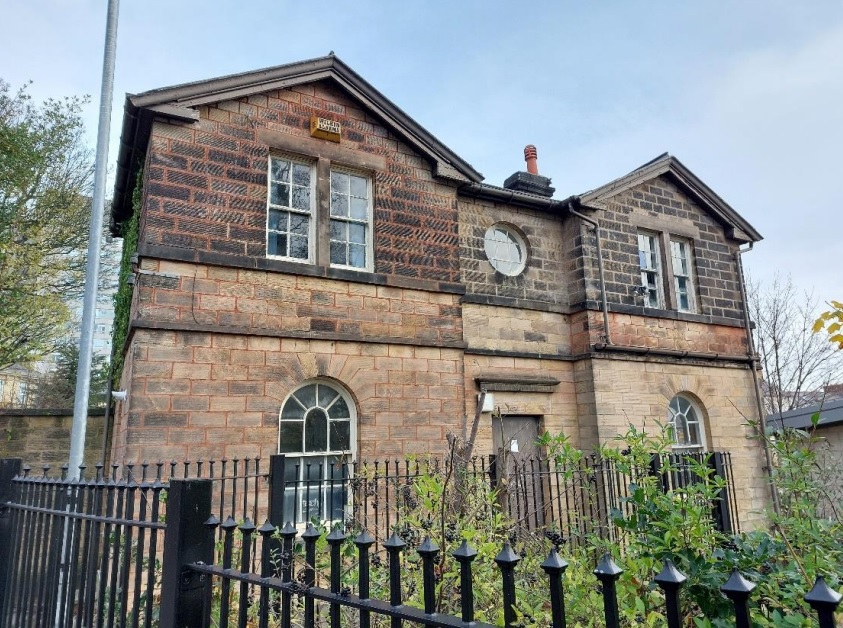
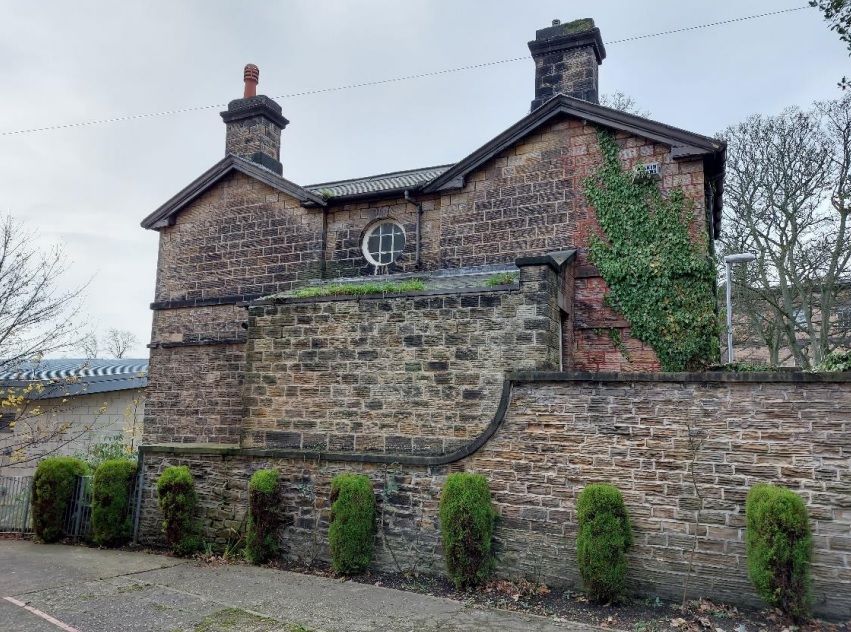
A planning application has been submitted by King Edward VII School for the refurbishment of the ‘Caretaker’s House’ on the upper school site. Once completed, the building would be used for small group work, a therapy, meeting, and isolation space, as well as a transition unit for students with complex needs and additional space for work with SEND students.
Externally the school wishes to bring the building ‘back’ into the secure school site as it currently is outside of the school’s fenced boundary, requiring all users to exit via the pedestrian site gates to gain access. The school also suggests that they are intending to use the external area to the front of the building for a sensory garden or similar, within existing trees.
Although the building is referred to as the caretaker’s house, it has not been used for this function for several decades and is currently being used for storage, small group working and music practice.
The plans by Jump Architects show no changes to the overall appearance of the building beyond the replacement and refurbishment of the existing fabric.
The Grade II listed building is believed to date from about 1838 and designed by Wiliam Flockton, originally built as the caretaker’s house to the main school building, which itself dates from 1837-38 and was built as the Wesleyan Proprietary grammar school.
William Flockton (1804–1864) was the son of Thomas Flockton, a carpenter and builder in Sheffield. He was brought up in his father’s trade and established himself as an architect in 1833. From 1845 to 1849 he operated the business with William Lee and his son Thomas James Flockton as Flockton, Lee and Flockton, continuing in partnership with Thomas James Flockton as Flockton & Son until his death on 24 September 1864.
More news about one of Sheffield’s architectural gems. Back in early 2022 it was announced that plans had been submitted to convert The Mount, on Glossop Road, into fifty-five residential apartments. The application was approved but work never started.
That was probably because there had been a rethink, and a new planning application has now been submitted by Axis Architecture that could see the Grade II* listed building turned into eight townhouses and four apartments instead.
This involves the removal of internal corridors, stairs and lifts associated with the former office use, and the reinstatement of internal dividing walls from front to back to form the townhouses and apartments, with new external stepped accesses to each entrance. The previously approved proposals included eighteen apartments within the main listed building.
The remaining new apartments would be built within the 1950s office block that stands behind Flockton’s building.
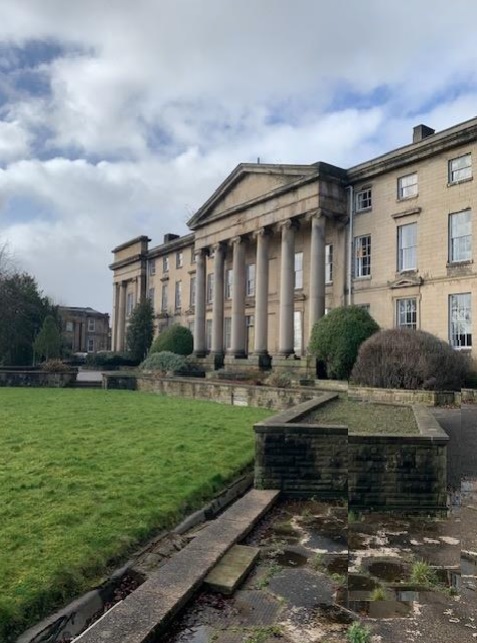
The Mount was an ambitious attempt to recreate the grand terraces of Bath’s Royal Crescent and London’s Regent’s Park. It was built between 1830-1832 by William Flockton, aged twenty-six, a builder, and forever famous as one of Sheffield’s leading architects.
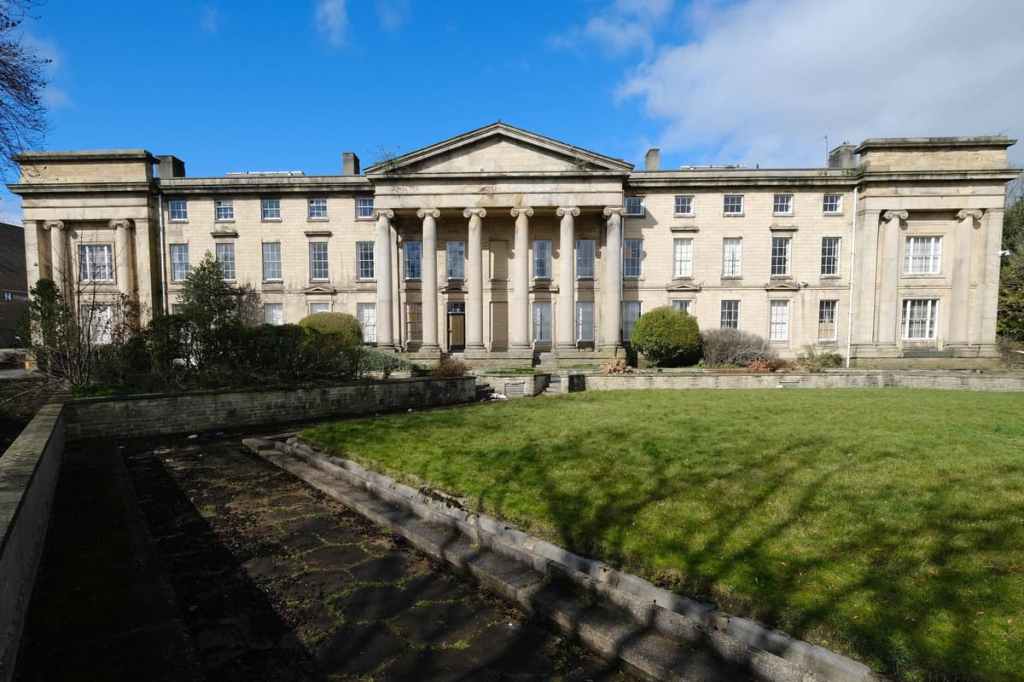
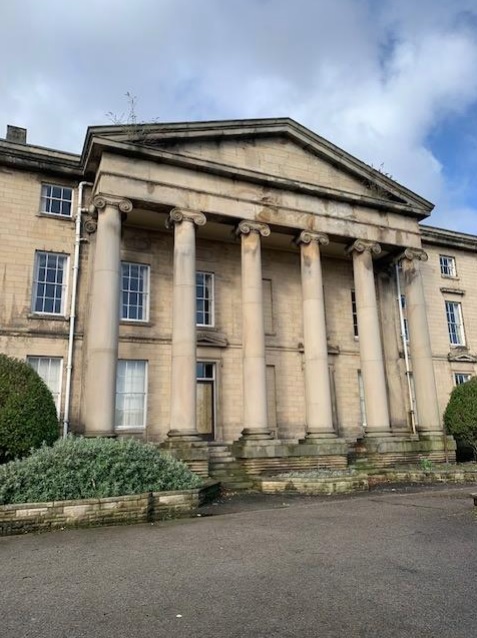
Pevsner described it as “a palace-fronted terrace of eight houses, seventeen bays long, with an Ionic giant portico of six columns carrying a pediment and end pavilions with giant columns in antis.”
It was referred to as ‘Flockton’s Folly’ because for the first eight years after construction one person only occupied it. But its popularity increased and became a place of literary fame when James Montgomery lived and died here, while John Holland, another noted Sheffield poet, lived in one of the houses.
It was used as the model for the nearby Wesleyan Proprietary Grammar School in 1838, later Wesley College, and better known now as King Edward VII School.
In 1914, John Walsh, the department store owner, bought The Mount and served notice on its tenants. The need to expand his city centre store meant that his live-in shop assistants needed new accommodation. Numbers 10-16 were used for the purpose, and when the Blitz of 1940 destroyed the store, the building was used as temporary retail space for a year.
It was bought by United Steel Companies in 1958 and converted into offices, with extensive additions to the rear.
In 1967 it became the regional headquarters of British Steel Corporation and in 1978 was purchased by the insurance company General Accident, later becoming Norwich Union.
Aviva, formed from the merger of Norwich Union and Commercial General Union, later owned The Mount, and subsequently rented it to A+ English, a language school, which conducted significant improvements to the offices.
The Mount. View from landscaped gardens towards portico on southern elevation. Axis Architecture
History has the gift of repeating itself, and this applies to one of Sheffield’s forgotten masterpieces. I am referring to The Mount, on the north side of Glossop Road, at the top of the hill, in which a listed planning application has been submitted by Broomgrove Properties and Axis Architecture to convert the Grade II* listed property into fifty-five residential apartments.
Its beauty is lost amidst the urban sprawl of Broomhill, but once upon a time this was an ambitious attempt to recreate the grand terraces of Bath’s Royal Crescent and London’s Regent’s Park. It was built between 1830-1832 by William Flockton, aged 26, a builder, and forever famous as one of Sheffield’s leading architects.
Pevsner describes it as “a palace-fronted terrace of eight houses, seventeen bays long, with an Ionic giant portico of six columns carrying a pediment and end pavilions with giant columns in antis.”
Main portico of the Flockton range, southern elevation. Image: Axis Architecture
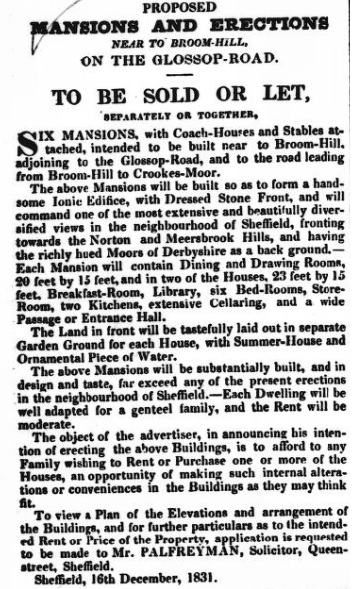
Newspaper advertisement from 1831. Interesting to note that in this proposal there are only six mansions. There were eight when it was built. Image: British Newspaper Archive
The Mount, located in rural surroundings, looked like a country house but contained several individual mansions. It was first advertised in 1832 and allowed prospective occupants to view a shell before adjusting the interior to individual needs.
It was referred to as ‘Flockton’s Folly’ because for the first eight years after construction it was only occupied by one person. But its popularity increased and became a place of literary fame when James Montgomery lived and died here, while John Holland, another noted Sheffield poet, lived in one of the houses – occupied by William Parkin for 33 years – until his own death.
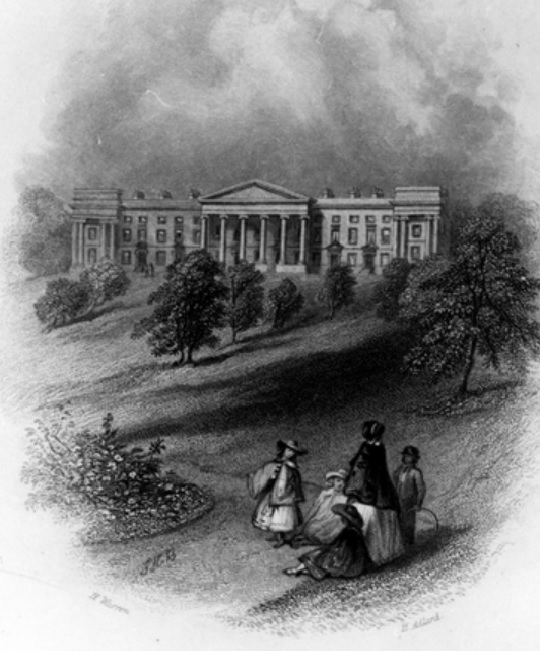
The Mount, 1849. Built of stone with an Ioninic giant portico of six columns carrying a pediment in 1834 by architect William Flockton. It was the first home of the Wilsons of Snuff Mill fame. Once the home of James Montgomery. Image: Picture Sheffield
The fame of The Mount says that a ballot was once taken as to who should become the tenant of one of the houses.
Other well-known people who lived at The Mount included, Walton J. Hadfield, the City Surveyor who lived at number 2 from 1926 to 1934, James Wilkinson, the iron and steel merchant who lived at number 6 from 1837 to 1862 and George Wostenholm, the cutlery manufacturer, who lived at number 8 between 1837 and 1841. Numbers 14 and 16 were lived in by George Wilson, the snuff manufacturer, between 1857 and 1867, one house not being big enough for his family. While another George Wilson, who was managing director of Charles Cammell and Co for many years, also lived at The Mount.
In time, it was occupied by “headmasters, ministers, station masters, and all sorts of people.”
The Mount was used as the basis for the nearby Wesleyan Proprietary Grammar School, later Wesley College, and now King Edward VII School, in 1838.
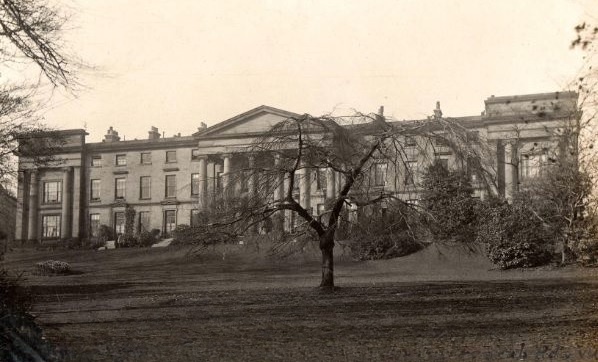
The Mount, Glossop Road, Sheffield. 1900-1919. This image was originally part of the Tim Hale Photographic Collection. It was purchased at auction in September 2019 through donations from members of the public and a grant from the Graves Trust. Image: Picture Sheffield
In 1914, John Walsh, the department store owner, bought The Mount and served notice on its tenants. The need to expand his city centre store meant that his live-in shop assistants needed new accommodation. Numbers 10-16 were used for the purpose, and when the Blitz of 1940 destroyed the store, the building was used as temporary retail space for a year.
It was bought by United Steel Companies in 1958 and converted into offices, with extensive additions to the rear, by Sheffield architects Mansell Jenkinson Partnership, who also installed lifts. In 1967 it became the regional headquarters of British Steel Corporation and in 1978 was purchased by the insurance company General Accident, later becoming Norwich Union.
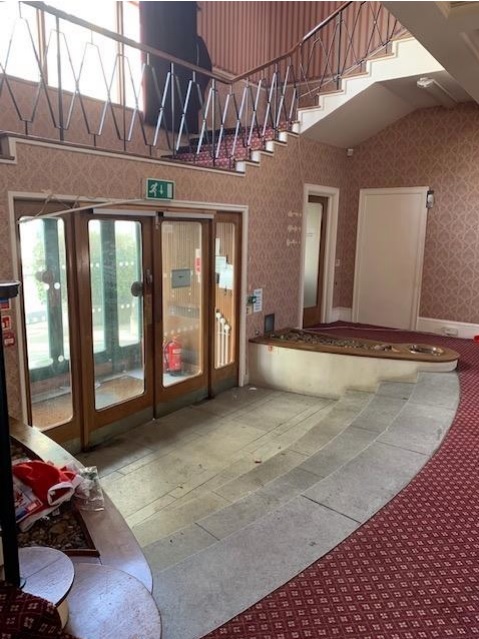
Existing galleried office entrance inserted into Flockton range as part of 1960’s office conversion. Image: Axis Architecture
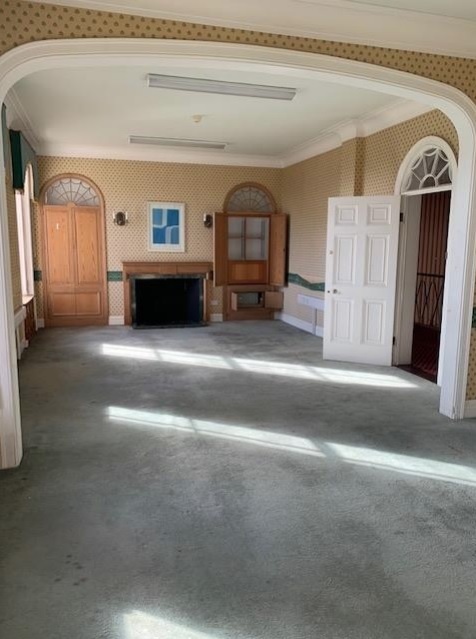
View of typical room in Flockton range with dividing wall removed. Image: Axis Architecture
For a long time, The Mount was owned by Aviva (formed from the merger of Norwich Union and Commercial General Union) but was rented to A+ English, a language school, which carried out significant improvements to the offices.
The latest planning application calls for fifty-five residential apartments (with a mix of 1, 2, and 3, bedroom and studio units), including single-storey infill extensions at ground floor level, a single-storey rooftop extension to the existing annex, formation of four basement lightwells to the listed range, and provision of internal/external residents’ parking and associated landscaping. In addition, the proposals allow the removal of the through vehicular route, with access from Newbould Lane closed, and with an infill extension at ground floor level to provide in effect a new main entrance for the development and space for a concierge.
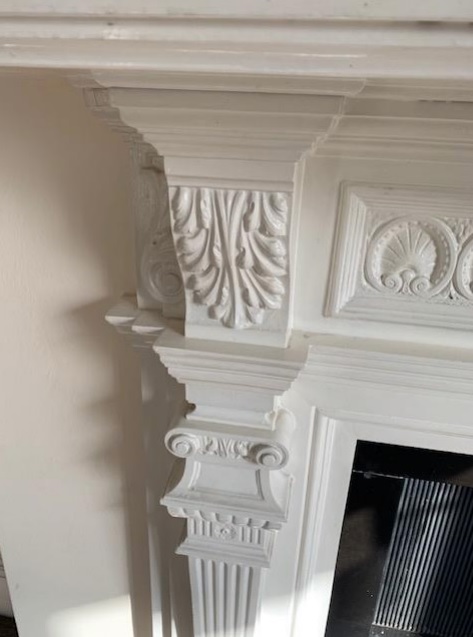
Ornate fireplace. Image: Axis Architecture
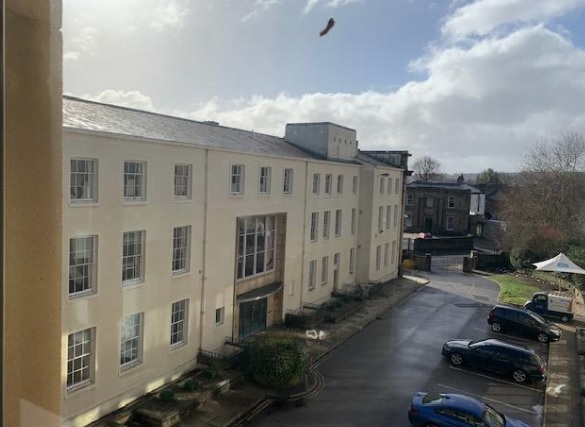
The Mount. Internal view looking towards north elevation of Flockton range. Image: Axis Architecture
 sheffielder.net