Categories
Buildings

Alexandra Theatre: “New Theatre! New Scenery! New Pit!” 

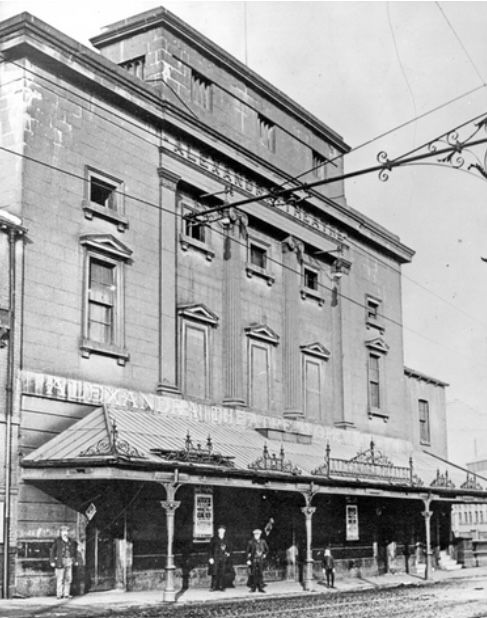
Alexandra Theatre, Blonk Street. Demolished 1914. Image: Picture Sheffield

I recently posted about Alexandra House at Castlegate, which was erected on part of the site of the Alexandra Theatre that was demolished in 1914. Before then, Castlegate didn’t exist, and the theatre would have stretched right across the present road towards Blonk Street.

None of us can remember the Alexandra Theatre and it’s hard to imagine what it must have looked like in its heyday. It lasted only seventy-eight years but played an important part in Sheffield’s cultural history.

It didn’t start out as a theatre at all, but as a circus. The Victorian circus ring was different to today, providing a showcase for equestrian battle scenes, jugglers, clowns, female acrobats, and child performers.

The first record we have of a circus near the New Cattle Market at the confluence of the River Sheaf and River Don was in 1836 when John Brown laid the first stone. The building was designed by the architect James Harrison, Norfolk Row, and opened as the Royal Circus with ‘Tourniare’s Splendid Equestrian Establishment consisting of forty-two horses belonging to French, German, and Italian Equestrians.’ 

History books mention that it was built by Mr Egan, but this person has eluded me to the point that I’m beginning to doubt he ever existed. I can confirm that it was built for a company called Sheffield New Circus and Theatre and its interior was a copy of the famous Astley’s Amphitheatre in Westminster Bridge Road, London.

The shareholders were Mr Ryan (proprietor, a well-established equestrian, and circus owner), Mr Usher (manager, and former clown at the Theatre Royal, Drury Lane), Mr Sambourne (solicitor), and Mr Harrison, the architect. By the following year, the shareholders were ready to let the circus on generous terms.

When Queen Victoria was proclaimed in 1837, there is reference to the spectacle seen at the circus: –

“The gay trappings of the soldiers on their richly caparisoned horses; the flags waving gently, the sound of music almost lost in the distance, and the dense crowd around the circle, made the view from that point very imposing.”

In April 1838, Mr Ryan announced the opening of a new season at the New Theatre Circus with upward of one hundred horses and a company of dramatic, pantomime and operatic performers.
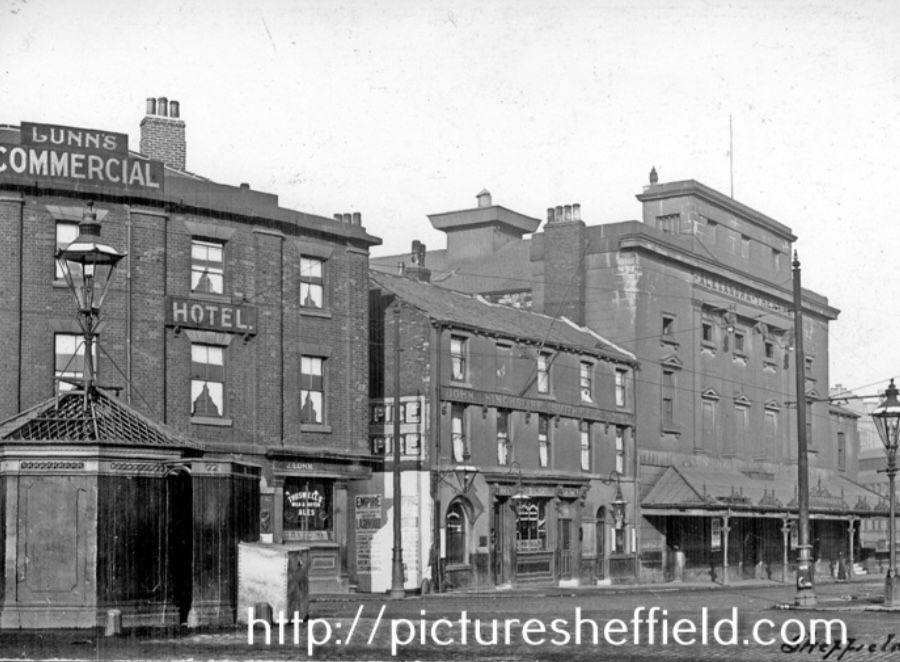
Victoria Hotel, Smithfield Hotel and Alexandra Theatre, Blonk Street from Furnival Road. Image: Picture Sheffield

While most Sheffielders referred to it as The Circus, it appears to have been known by several names. In those days, circuses were taken on seasonal leases by touring companies, and by 1839 it was advertised as Mr Batty’s Circus at the Royal Amphitheatre. A few years later it was the Royal Circus and by 1848 was called the Royal Adelphi Theatre under Mr Sloan who made significant changes.

“Considerable alterations have been made in the pit, and the middle of that hitherto dreary space is now fitted up with seats and protected from the cold by a close screen. By an admirable contrivance, the pit may be enlarged at pleasure. In its contracted state, a considerable number of persons may be comfortably seated; and if thrown open to the full size, hundreds more might find good accommodation. A new orchestra has also been constructed, and the whole house seems to wear a clean and lively, though yet unfinished, appearance. There is nothing striking or novel in the way of decoration; but in other respects, considerable efforts have been made to render the place more worthy of public patronage.”

Once again, the architect was James Harrison, and the building work was completed by Thomas Staniforth. “New Theatre! New Scenery! New Pit!” 

The changes were made so that the Adelphi could show plays and compete with the only theatre in Sheffield, the Theatre Royal, but by 1849, it had proved unsuccessful, and the drama company dispersed.

Briefly known as the Theatre Royal Adelphi under Mr Cockrill, the lease passed to John Woodward who engaged Pablo Fanque’s Talented Troupe of Equestrians.

Pablo was  a fascinating character, a Black man who started his own circus that toured  across Yorkshire. In 1839, Pablo had spent the summer season with Andrew Ducrow’s troupe at Astley’s Amphitheatre and later toured with him. 

In 1849, Pablo Fanque took on the lease for a year (not a season) at £200. He applied to magistrates for a theatre licence to perform stage plays but it was opposed by the owners of the Theatre Royal who claimed that one theatre in the town was sufficient (for a population of 130,000). To allow another theatre would have been to the detriment of both. 

Fanque got his licence on the condition that he didn’t show serious drama but showed ‘spectacles’ that featured horses. The promise was kept for a brief time but soon there were performances of Othello, Julius Caesar, Richard the Third, The Merchant of Venice, and The Flowers of the Forest. 

In 1850, a character called James Scott, a commercial traveller for a Leeds firm, bought the lease of the Adelphi from Pablo Fanque and managed to obtain a theatre licence.

By now, the Adelphi was owned by a consortium of eighteen people, headed by Dr John Carr, who was the Mayor of Sheffield in 1851.

Scott claimed that the owners had never drawn a shilling rent and that he had managed to turn a profit. When he left for another theatre at Derby, he stated that it was because the owners had demanded a greater share of the takings, but in truth, it was more likely because he’d been declared bankrupt in 1853. 

This was also the year that the theatre was put up for sale because it had never made a profit for its owners.

When it was rumoured, that Scott was returning to the Adelphi in 1859, the lease was quickly acquired by Thomas Youdan, the proprietor of the Surrey Theatre, in West Bar, who used it for storage of scenery and lumber.
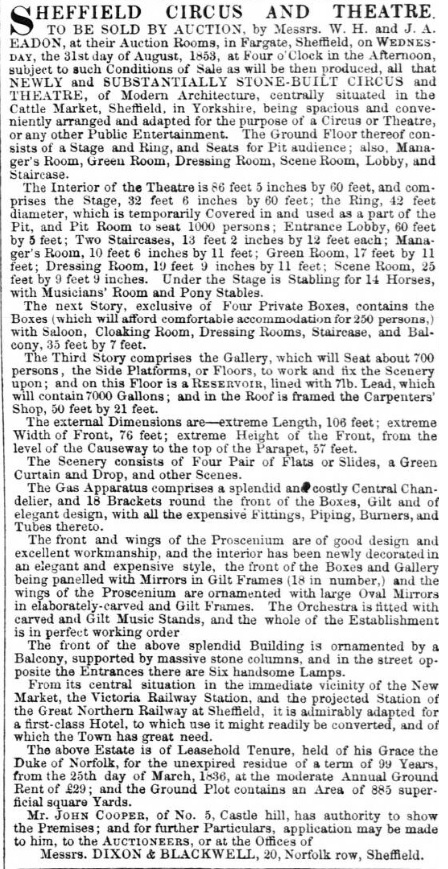
Auction notice from August 1853
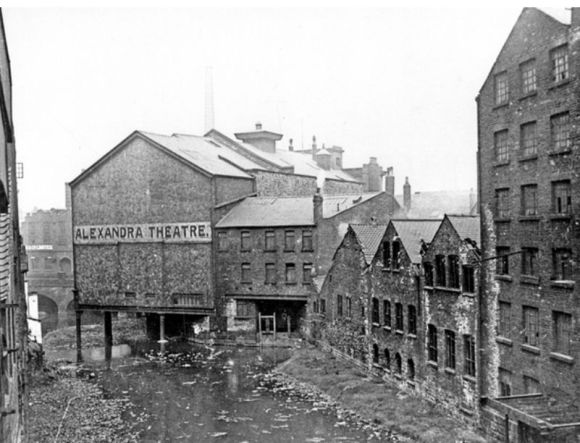
Alexandra Theatre, Rear view, showing stilts over the combined flow of the rivers Don and Sheaf, from Exchange Street Bridge. Image: Picture Sheffield

Youdan made several unsuccessful attempts to obtain a theatre licence and contemplated turning it into a first-class concert hall, but for three years it remained dark and in a poor state of repair.

Youdan was born at Streetthorpe, near Doncaster, and had started as an agricultural labourer, before coming to Sheffield aged eighteen to work as a silver stamper for James Dixon and Sons. Abandoning the trade, he became the keeper of a beer house at Park, and then moved to an inn at West Bar called Spink’s Nest. He added music and singing to the public house and eventually became its owner, creating the Surrey Theatre with ballroom, theatre, concert hall, museum of curiosities, and a menagerie of animals from George Hunloke’s Wingerworth Hall.

When the Surrey Theatre burnt down on 25 March 1865, Youdan sustained a £30,000 loss, but was able to switch his business to the Adelphi Theatre.

He had it improved, cleaned its ‘black’ exterior, replaced all its fittings, and extended it with a stage house that was built on girders over the River Sheaf behind, and reopened it as the Alexandra Music Hall with accommodation for 3,000 to 4,000 people. 

‘Tommy’ Youdan was a well-known figure and had a clever idea of what would please the Sheffield worker. He secured the most popular and exciting dramas and the cutlers and grinders, and steelworkers, thoroughly enjoyed a night at ‘Tommy’s.’ 

He was joined by William Brittlebank as manager and the two increased the prestige of the house of which they obtained a lengthy lease.

That was the commencement of more prosperous days with ballet and varieties, and on its boards appeared the stars of the day, including George Leybourne, prince of comedians; Sam Cowell, Arthur Lloyd, J.H. Milburn, and other celebrities. Sim Reeves also sang there and cursed the draughts from the river which flowed beneath the stage.

Youdan later renamed the theatre as the Alexandra Opera House, before retiring in 1874, and passing the lease to William Brittlebank. 

During Brittlebank’s 20 years’ connection, such famous artists as J.L. Toole, Barry Sullivan, Charles Dillon, Marie Roze, Mrs Langtry, Charles Wyndham, E.S. Willard, Lewis Waller, Nelly Farren, Kate Vaughan, G.H. Harkins, and Henry Neville appeared in turn. The latter appeared in the best of the sporting dramas of Sir Augustus Harris from Drury Lane, and the pantomimes, too, were second to none.
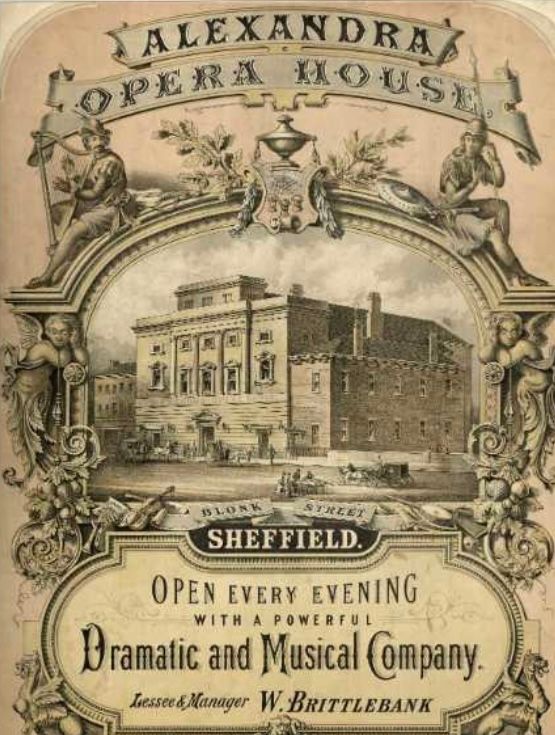
Poster for the Alexandra Opera House, Blonk Street. Image: Picture Sheffield

Brittlebank retired in 1895, and the theatre was taken over by a private company, with William David Forsdyke as managing director, who increased the seating capacity of the auditorium, and with a careful eye, watched the trend of public taste and catered accordingly. 

He boldly advertised the Alexandra as the ‘People’s Theatre,’ and staged stirring domestic dramas and popular pantomimes that were originally produced in-house but were later sourced from London.

In this he was well aided by his acting managers, of whom none was more popular than C.W. Ramsey who managed it for the last ten years of its existence.

Ramsey had come to Sheffield as assistant to F.W. Purcell, then sole owner, and manager at the Theatre Royal. In 1904, on the death of the manager of the Alexandra Theatre, Ramsey was offered the job by W.D. Forsdyke, who was a well-known building contractor.
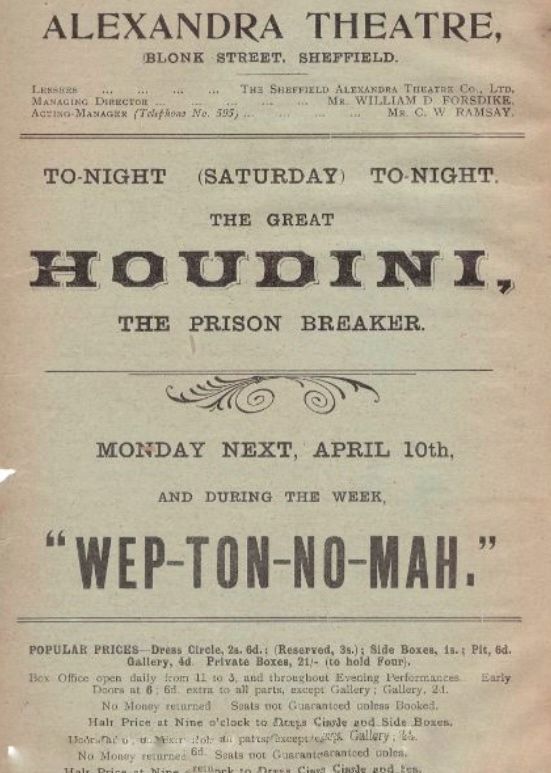
Advertisement for the Great Houdini, The Prison Breaker, Alexandra Theatre, Blonk Street. Image: Picture Sheffield

Pantomimes at the Alex usually ran from Christmas to just before Easter, and every Shrove Tuesday old folk were entertained and given gifts of tea, sweets, and tobacco. Ramsey also arranged nine benefits, usually under the patronage of the Lord Mayor and Lady Mayoress, Earl and Countess Fitzwilliam and other notables, and the programme was contributed by artists from all the other theatres in the city.

The ‘Alex’ closed on Saturday 28 March 1914, its fixtures and fittings auctioned, and afterwards demolished as part of Sheffield Corporation’s scheme for making a better approach from the centre of the city to the Victoria Station. 
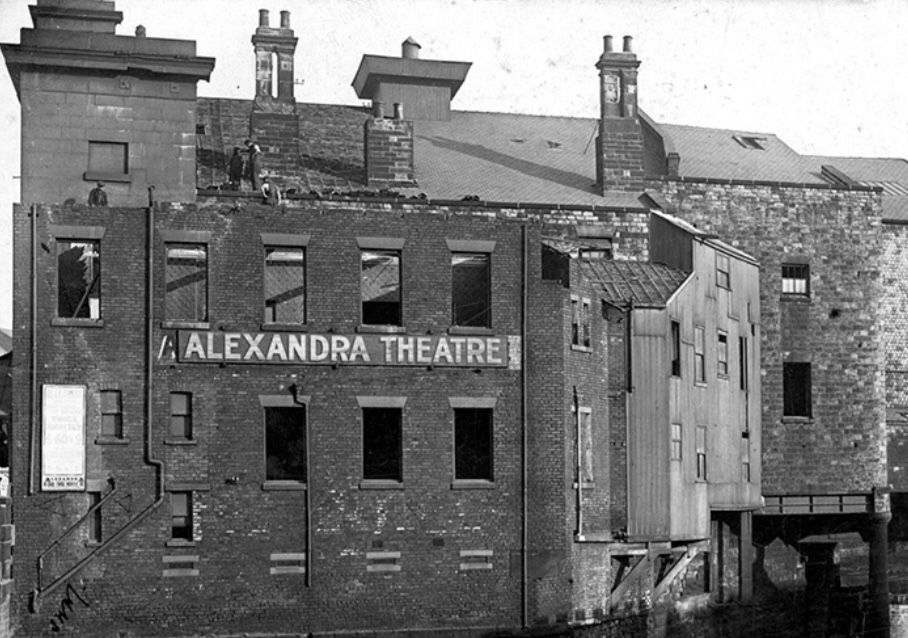
Demolition of Alexandra Theatre, Blonk Street, showing the combined flow of rivers Don and Sheaf flowing underneath. Image: Picture Sheffield

© 2024 David Poole. All Rights Reserved.
Categories
People

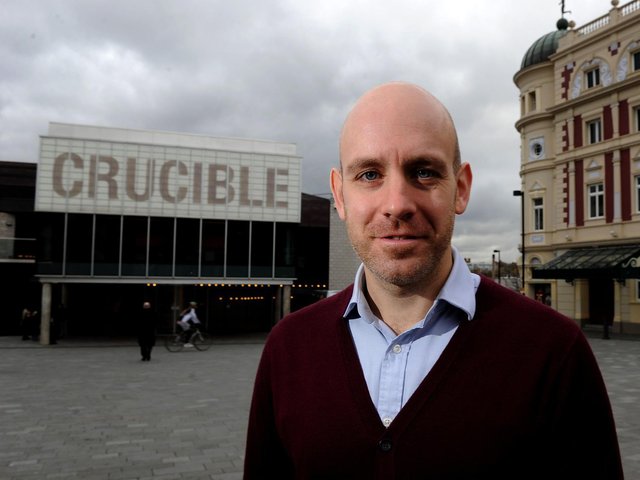
The Crucible Theatre at 50: Robert Hastie

It’s fifty years since Colin George fought and succeeded in opening the Crucible Theatre, and there have been many ups and downs along the way.

The current Artistic Director, Rob Hastie, had big shoes to fill when Daniel Evans left for the Chichester Festival in 2016, and an unforeseen challenge – the long-enforced closure of the Crucible Theatre during the pandemic.

Hastie’s connection with Sheffield Theatres has been a long one. As a child he travelled from Scarborough to see plays, and in 2005, fresh out of drama school, he appeared in Edward Bond’s Lear – his professional theatre debut.

“My grandfather was born near Sheffield, and my parents were at college here. So the city always meant something to me growing up. When we went to the theatre, one of the places we came to was The Crucible. So Yorkshire is home. More sentimentally for me, it’s where I started my stage career as an actor.”

Much has been made about Hastie’s meteoric rise as a director. His first taste of professional directing came as an associate on Josie Rourke’s West End production of Much Ado About Nothing, starring Catherine Tate and David Tennant. He followed this with acclaimed productions of Events While Guarding the Bofors Gun, Splendour and My Night with Reg, which landed him an Evening Standard Theatre Award nomination. He also became associate director of the Donmar Warehouse in London.

“I was very happy at the Donmar, and I had some great experiences there. But there’s no way I could have refused the possibility of getting to work at the Sheffield Crucible which is, for my money, the most beautiful and welcoming theatre space in the country.”

At the Crucible, Hastie has directed Coriolanus with Tom Bateman and the musical Standing at the Sky’s Edge, which was created by Richard Hawley and Chris Bush, and which opened in March 2019 to outstanding reviews.

He’s also directed a critically acclaimed revival of The York Realist, co-produced with, and presented at the Donmar Warehouse in London. Other productions have included Guys and Dolls, Julius Caesar, Of Kith and Kin, A Midsummer Night’s Dream, and The Wizard of Oz.

Above all else, it will be Everybody’s Talking About Jamie that Hastie commissioned and premiered at the Crucible in 2017, going on to the West End, possibly Broadway, and now a movie.

Categories
People

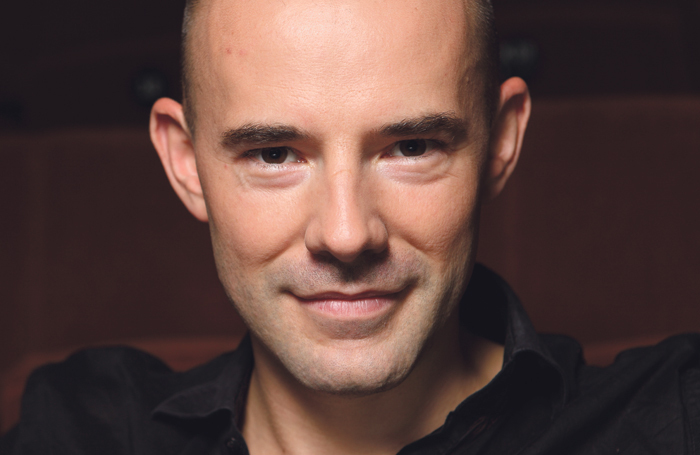
The Crucible Theatre at 50: Daniel Evans

There are those that thought Daniel Evans might have ended up at the National Theatre, and he might still do. When he left in 2016, he had led Sheffield Theatres to major award-winning success with nine UK Theatre Awards including Best Musical Production (This Is My Family), Best New Play (Bull) and Best Touring Production (The Full Monty 2013, Translations 2014, Twelfth Night 2015). Sheffield Theatres also won The Stage Regional Theatre of the Year Award for an unprecedented two consecutive years in 2013 and 2014, in recognition for its ambitious and exciting work.

Evans’ tenure was marked by a balance between popular and adventurous programming, including hugely successful musical productions of Me & My Girl, Company, My Fair Lady, Lionel Bart’s Oliver!, Anything Goes and Show Boat (which transferred to the West End) and four major writer’s seasons.

He also commissioned two new British musicals – This Is My Family, and Flowers for Mrs Harris, along with countless plays, including Queen Coal, set around the miners’ strike, Kes, a dance adaptation of the classic story and Richard Bean’s The Nap, a comedy-thriller about snooker.

Evans also established Sheffield People’s Theatre – a company of community actors aged from 12 – 90+ who staged several major productions featuring over 100 participants including The Sheffield Mysteries , Camelot: The Shining City and A Dream.

Evans had a successful career as an actor before being announced as something of a surprise choice to take over from Samuel West at Sheffield in 2009.

He was a memorable Peter Pan in the National Theatre’s 1997 production and won two best actor in a musical awards for Sondheim shows – Merrily We Roll Along in 2001 and Sunday in the Park With George in 2006.

Daniel Evans left to join the Chichester Festival Theatre in 2016 saying, “I’ve definitely grown to love Sheffield, I’ll miss it very much. It’s a place where there’s a real independent spirit, they’re so proud that they’re not Leeds or Manchester. There’s a down-to-earthness and generosity here that reminds me of home.”

He is a Fellow of the Guildhall School and an Honorary Fellow of the Royal Welsh College of Music and Drama. He was awarded an Honorary Doctorate from Sheffield Hallam University in 2012 and is a trustee of Act for Change.

Categories
People

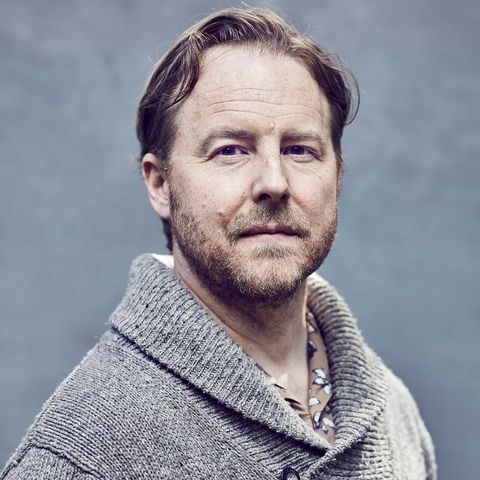
The Crucible Theatre at 50: Samuel West

Following Michael Grandage’s departure, the Artistic Director’s role at Sheffield Theatres was one of the most sought after jobs. The role went to Samuel West, son of Timothy West and Prunella Scales, and born into the acting business.

At prep school, the boy Samuel made his debut playing Claudius in Tom Stoppard’s Rosencrantz and Guildenstern Are Dead. It was seeing his dad play Shakespeare’s Claudius to Derek Jacobi’s Hamlet at the Old Vic a few years later that settled his choice of career.

“People clapped loudly,” he said recently, “and I thought ‘I’d like to do this’.”

He read English at Oxford and moved into a career that combined classical theatre with British movies (Howard’s End, Iris, Carrington, Reunion, Jane Eyre, Notting Hill, and Van Helsing), TV and radio. His London stage debut was in 1989 in Les Parents Terrible and was a success in Tom Stoppard’s Arcadia at the National Theatre in 1993. He later spent two years with the Royal Shakespeare Company.

West made his directorial debut with The Lady’s Not for Burning at the Minerva Theatre, Chichester in 2002 and succeeded Grandage at Sheffield Theatres in 2005, reviving the controversial The Romans In Britain and As You Like It as part of the RSC’s Complete Works Festival.

Several of his acclaimed productions perhaps proved a little too controversial for the people who held the financial purse strings, and there might have been conflict as he battled the dramatic “powers that be.”

When the Crucible closed for its massive refurbishment in 2007, he had hoped that the Crucible might continue with touring productions, but relinquished his role when the theatre fell silent.

“Two years is never long enough to spend at a great theatre like this and my plans being turned down was the only reason I decided to leave.

“When the building is closed, I believed, and still believe, we should make attempts to produce outside the theatre, with co-productions, found spaces, bringing back old shows that had served us well and doing West End seasons – all those sort of things – partly because it’s important to keep audiences alive in a city where you’re the only theatre.”

West said he did not believe board members were against his aims but that their financial plans prevented them from making “promises which they couldn’t later fulfil.”

He rekindled his association with the Crucible in 2017 when he returned to play Brutus in Julius Caesar.

“I’ve missed it. I think Sheffield is a great city and it’s really nice to see some friendly faces who seem quite pleased to see me.”

We know West for his TV roles – Midsomer Murders, Waking the Dead, Poirot, Any Human Heart – and big roles in Mr Selfridge and Jonathan Strange and Mr Norrell.

However, his biggest role is playing Siegfried Farnon in the two series of Channel Five’s recent revival of All Creatures Great and Small.

Categories
People

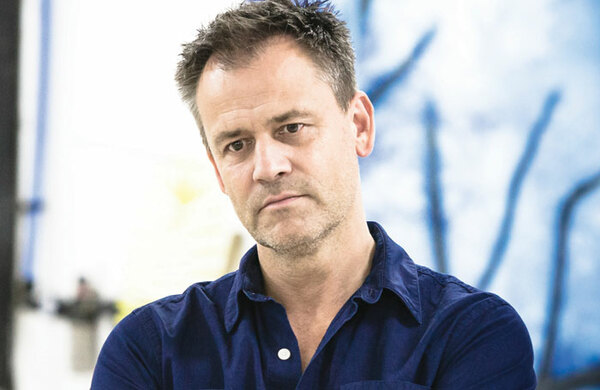
The Crucible Theatre at 50: Michael Grandage

In 2000, as Deborah Paige left, having directed fourteen productions in her five-year tenure, Michael Grandage took up the reigns as Artistic Director. His predecessor had laid the “foundations for the Crucible Theatre’s renaissance” and with the securing of extra funding, he arrived at an opportune moment.

Grandage was no stranger to Sheffield, having worked at the Crucible Theatre several times and joining as Associate Director in 1999.

“My first show was in 1997. In 2000, when Deborah Paige left, Grahame Morris, who was the executive director, asked me to step up.

It was a very bold thing of the board and him to do. Normally you require quite a lot more experience – I convinced them I was 100 per cent dedicated to the city and the productions. We put on two Joe Orton plays and two Shakespeares straightaway. I moved out of London, and I made a commitment to it.”

Yorkshire—born Grandage trained as an actor at the Royal Central School of Speech & Drama and spent twelve years working as an actor for companies such as the Royal Exchange and Royal Shakespeare Company before turning to directing. His directorial debut was in 1966 with a production of Arthur Miller’s The Last Yankee at the Mercury Theatre in Colchester while his first Shakespeare production was in 1998 in the Crucible’s production of Twelfth Night.

Within a few years of his stay, the Crucible had attracted a succession of stage and screen stars such as Derek Jacobi, Joseph Fiennes, Diana Rigg, Ian McDiarmid, Amanda Donahoe and Kenneth Branagh. Grandage produced over forty plays with predominantly young directors and designers. He is credited with delivering consistently high quality work as well as bringing in new audiences and in 2001, Sheffield Theatres won the Barclays TMA Theatre of the Year.

In 2003, Grandage unveiled a £15m expansion scheme for the Crucible.

“We are generously told by audiences, critics and awards juries that Sheffield is now at the forefront of British Theatre, but we want and need to go further.”

Grandage left in 2005, Sheffield Theatres hailed as ‘the National Theatre of the north,’ and concentrated on his other role as Artistic Director at the Donmar Warehouse, London, where he’d succeeded Sam Mendes three years earlier.

He left in 2012 and now heads the Michael Grandage Company producing theatre, film, and TV work, and recently returned to the Crucible to direct the world premiere of Ian McDiarmid’s one-man show, The Lemon Table, which was based on two Julian Barnes short stories.

Categories
People

The Crucible Theatre at 50: Deborah Paige

The mid-nineties brought change to Sheffield Theatres. Together with reductions in funding, this was a critical time for Deborah Paige, who succeeded Michael Rudman as Artistic Director in 1995. Critics pointed out that the Lyceum Theatre had fared much better with its touring productions and that the Crucible Theatre was the less commercial venue.

While previous directors like Colin George and Peter James fought to get the Crucible established, the tenure of Deborah Paige was more a battle of survival. However, she managed to turn its fortunes around with several successful shows, including My Fair Lady, The Little Mermaid in 1997, and Brassed Off in 1998.

At the end of the decade the Sheffield Telegraph remarked that it was “a remarkable turnaround in fortunes… at the same time that it (had) been earning critical acclaim.”

Deborah Paige started her directing career at the Bristol Old Vic. She went on to work at Theatre Centre London, the Wolsey Theatre, Ipswich, and the Soho Theatre, and was then appointed Artistic Director of Salisbury Playhouse.

She left Sheffield Theatres in 2000 to pursue a freelance directing career in opera, theatre, TV, and radio. For her own company, Paigeworks, she produced and directed the premieres of Afterbirth by Dave Flores and Into the Blue by Beverley Hancock at The Arcola Theatre in London.

Paige’s television work includes EastEnders, Casualty, Judge John Deed and Holby City, and for radio she has directed several productions for BBC R4’s Woman’s Hour.

She regularly works in London drama schools and was Head of Recorded Drama at LAMDA between 2009-2011, and Interim Director of Performance at Mountview in 2012.

At RADA, where she is an Associate Teacher, Paige has taught and directed projects and productions for stage and screen.

Categories
People

The Crucible Theatre at 50: Michael Rudman

In 1990, Stephen Barry was appointed to run the newly-formed Sheffield Theatres, comprising the Crucible and Lyceum Theatres, and Mark Brickman, perhaps best known for his dynamic productions of classical texts, was new in his role of Artistic Director of the Crucible.

However, the early 1990s were marked with “recession, gloomy figures and disappointingly low attendances.” Mark Brickman left in 1991 and was replaced by American-born Michael Rudman, an Artistic Director who had previously directed at the old Sheffield Playhouse, and returned with a wealth of directing experience including the West End and Broadway.

Rudman graduated from Oberlin College in 1960, and four years later received an MA in English Language and Literature at St Edmund Hall, Oxford.

His career as a director began at the Nottingham Playhouse, where he was Assistant Director and Associate Producer to John Neville from 1964-1968. He went on to become Director of the Traverse Theatre in Edinburgh from 1970-1973, after which he took up the post of Artistic Director at Hampstead Theatre until 1978. Rudman was invited to join the National Theatre by Sir Peter Hall, and was Director of the Lyttelton Theatre from 1979-82. He continued there as an Associate until 1988, after which he went to the Chichester Festival Theatre before arriving at Sheffield Theatres in 1991.

His stay at the Crucible might have been short, but he masterminded seven out of the eleven shows staged during his reign, credited as having turned around the artistic fortunes of the theatre and increasing audience figures by the time he left in 1994.

“I spent most of my time on the train between London and Sheffield and the train was always late.”

Perhaps he is best-known for his adaptation of A Midsummer Night’s Dream with Alex Kingston and Anthony Brown in 1992.

Following his departure from Sheffield, Michael spent most of the nineties out of the limelight, occasionally returning to Texas to help run the family business, but has notched up a credible roster of productions in New York and on the West End.

Rudman was married to Felicity Kendal for seven years until their divorce in 1990, and reunited as a couple eight years later.

Categories
People

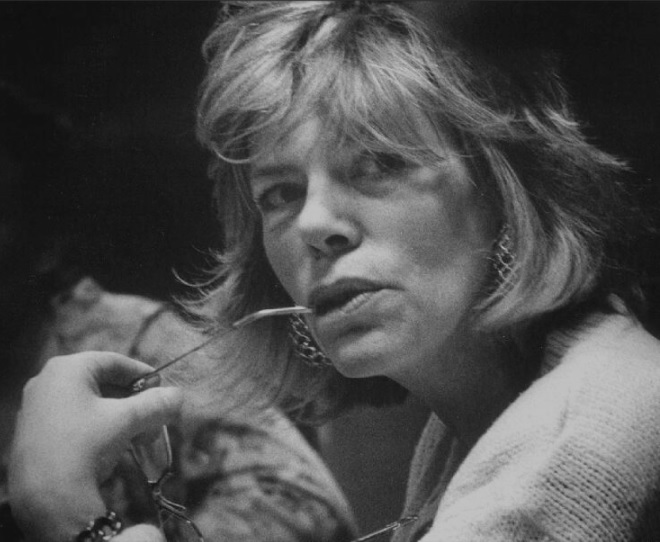
The Crucible Theatre at 50: Clare Venables

She might have been little more than five feet tall, but Clare Venables (1943-2003) was described by Michael Boyd as an “infectiously energetic theatre director.”

She came to the Crucible Theatre in 1981 and will be remembered for hugely successful productions that travelled from Sheffield to Broadway.

Her father was Sir Peter Venables, one of the founders of the Open University, and she studied at Manchester University where she became a member of staff in the drama department. She did repertory training at the Leicester Phoenix and began directing in 1968 at the Lincoln Theatre Royal.

She took over Lincoln in 1970, with Howard Lloyd-Lewis as her associate, and she took him with her when she moved to Manchester Library Theatre in 1973. She succeeded Joan Littlewood at the Theatre Royal, Stratford East, in 1977 before moving to the Crucible in 1981.

In Sheffield, she encouraged young directors and designers – now a rollcall of the establishment – such as Michael Boyd, Tom Cairns, Stephen Daldry, Martin Duncan, Deborah Findlay, David Leland and Steven Pimlott.

Venables mixed high-art ambition with showbusiness, her productions ranging from Schiller’s William Tell to Bob Eaton’s Lennon (with Mark McGann), which transferred to London and New York. She also cast Marti Caine in Funny Girl.

According to Sheffield-based art critic, Paul Allen, “She left Sheffield in 1990 after realising that the refurbishment of the Lyceum Theatre would necessitate the appointment of a Chief Executive rather than Artistic Director.”

Subsequently she became head of the BRIT School of Performing Arts and Technology in Croydon, and then, in 1999, Head of Education and Technology at the Royal Shakespeare Company, where she worked under another former associate from Sheffield, Michael Boyd.

“Spending time with Clare Venables was like being at a party. She injected fun and a wicked sense of adventure into everything she did.”

Her dream was to put education at the centre, rather than the periphery, of the RSC. Her work in the US led to ground-breaking educational work as part of the RSC’s residencies with Michigan University, Columbia University, and the Kennedy Center in Washington. She also took the education service on to the internet with the digitisation of the RSC’s archives, online production packs, and the development of interactive projects.

On Clare’s death in 2003, Michael Billington, The Guardian’s art critic, wrote: –

“Clare Venables was one of those pioneering figures to whom a whole generation of directors is indebted. At a time when it was still rare to find women running big theatres, she took over the directorship of the Sheffield Crucible.

“What I really remember is Clare’s unfailing cheerfulness in committee, along with her determination to fight tooth and nail for regional theatre. Clare was always battling for a brighter future, and it seems entirely fitting that, shortly before her death, she received the first Young Vic Award for her work in encouraging a new generation. She was a genuinely inspirational figure.”

Categories
People

The Crucible Theatre at 50: Peter James

The long-flowing hair might have gone, but at 81, Peter James remains one of the country’s leading theatre directors and teachers.

His early career was shaped in 1964 when he was one of the three founders of Everyman Theatre, Liverpool, and assumed full directorship in 1966.

He went on to the Royal National Theatre in 1971 at the Young Vic, working as Associate Director alongside Laurence Olivier and Peter Hall, and directed for the RSC and the National Theatre’s Mobile Company.

James was strongly associated with the Arts Council Drama Panel, and was chairman of its Young People’s Theatre Committee, as well as president of the International Theatre Institute’s Theatre and Youth Committee, directing in the USA, Australia, and Israel.

During the seventies he directed Twelfth Night at the Sovremennik Theatre, Moscow, becoming the first British person to lead a Russian company since 1905.

He became Artistic Director at the Crucible Theatre in 1974 – “The highlight of my career” – and put it on the map as the place that could do musicals – Chicago, The Wiz, Cabaret – but only after a long fight to get people into the theatre.

This was the happiest time of my life. The trouble was I couldn’t get people through the doors. My answer to that was snooker. I’d tried boxing, but then I was handed a newspaper cutting about an attempt to take the world championships to the Guthrie Theatre in Canada, which was perfect for snooker. I wrote to the organisers and told them, ‘We have a similar theatre here’. The money we made from that first tournament paid for a production.”

He left in 1981 to become Director of Lyric Theatre Hammersmith until 1992, but later admitted that he didn’t enjoy it as much as Sheffield.

He left live theatre and championed young talent, becoming principal of LAMDA between 1994 – 2010, and was awarded a CBE for his contribution to arts in 2011.

James is now Head of Theatre Directing at Mountview Academy of Theatre Arts in London.

Categories
People

The Crucible Theatre at 50: Colin George

Colin George, the actor and theatrical visionary who was the founding Artistic Director of the Crucible Theatre in Sheffield, which opened in 1971 with its radical ‘thrust stage’.

He was one of the post-war generation of British directors who moved theatre on from fortnightly rep in “the provinces” to more adventurous productions that could compete with television drama and the West End stage.

George took over from Geoffrey Ost as Artistic Director of Sheffield Playhouse in 1965, and much to his astonishment, a year later, the city’s Labour council asked George where he wanted his new theatre. His meeting with Tyrone Guthrie, the American director, convinced him to make the Crucible as it is today.

George worked in turn at the State Theatre Company of South Australia and then the Hong Kong Academy for Performing Arts. In Australia, he gave Mel Gibson and Judy Davis their first stage roles as the leads in Romeo and Juliet.

Returning to Britain he devised his own one-man-show in the person of Shakespeare’s father and in 1994 joined the Royal Shakespeare Company. In the company was Daniel Evans, who later became Artistic Director of the Crucible. In 2011, in the theatre’s 40th anniversary production of Othello with Dominic West and Clarke Peters, Evans invited George back to play Desdemona’s aged father.

It was George’s last role, and in the theatre he loved. He died in 2016.

A new book, ‘Stirring Up Sheffield,’ written by Colin George, and his son, Tedd George, is published by Wordville Press this week.