Categories
Buildings Places

Northern General Hospital

Photograph by David Lally

It’s appropriate that during these dark times we look at the Northern General Hospital, the city’s largest hospital and one of the country’s leading facilities.

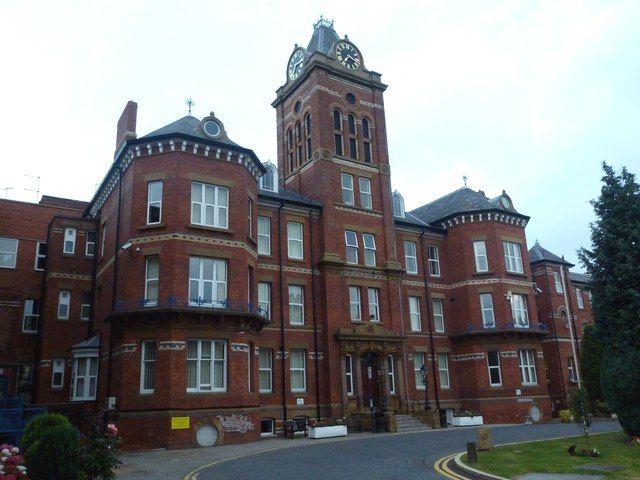
The sprawl that is the Northern General has its origins in the hospital of Sheffield Poor Law Union workhouse, erected in 1878-1880.

Before the creation of the Sheffield Poor Law Union in 1837, the workhouse for the township of Sheffield was in Kelham Street. That building, originally erected in 1811 as a cotton mill, had been converted in 1829 for use as a workhouse to accommodate some 1,200 inmates.

It had no special provision for the sick except for an isolation unit provided during the cholera epidemic of 1832.

Due to opposition from ratepayers, plans drawn up in 1856 for a new workhouse for Sheffield Union were not completed until 1881, when new premises at Fir Vale were opened.

Photograph by Picture Sheffield

The completed buildings, comprised six separate departments: the main building to accommodate 1,662 paupers, plus officials; asylums to accommodate 200 patients classed as lunatic; a school for 300 pauper children; vagrants wards to take up to 60 men and 20 women; the hospital block to cater for 366 patients; and the fever hospitals.

Management was in the hands of the Board of Guardians and its various committees, which in the 1880s had established a training school for nurses and a midwifery school. Overcrowding caused by the numbers of children was addressed by setting up a boarding out system in 1888, and by opening a children’s hospital, for up to 60, in 1894.

A Lock ward or Lock hospital for treating women with venereal diseases also existed in the 1890s.

A new 3-storey hospital block was completed in 1906 and on 21 March 1906 the Local Government Board issued an order to formally separate the newly named Sheffield Union Hospital (which by then could accommodate 643 patients) from the workhouse, thereafter, known as Fir Vale Institution.

Over the next few years Sheffield Union Hospital became known as Fir Vale Hospital. The workhouse became Fir Vale Institution, though Fir Vale House was the name generally used for the institution premises accommodating geriatric patients and those classed as mental defectives.

Photograph by Sheffield Star

Belgian refugees were temporarily housed at Fir Vale during World War I, and over 15,000 soldiers, including men from the Sheffield Battalion who had been wounded on the Somme, were treated in a new children’s hospital which had opened in 1916. Military patients remained until 1920 and it was not until 1921 that the children’s hospital received its first children.

In 1930 the name was changed to the City General Hospital.

About 1929, Fir Vale House was renamed Fir Vale Infirmary (for the care of the aged and chronic infirm), though the name ‘institution’ lingered for some years.
Photograph by Sheffield Glass Company

During World War II numbers of its inmates were temporarily transferred to the Grenoside Institution when the hospital premises were designated as an Emergency Medical Service Hospital. No casualties from the war front were admitted until 1944 when 992 service cases and 405 prisoners of war were treated.

During the 1950s, cardiology and cardiothoracic surgery commenced and in 1955 the City Hospital performed the first heart valve replacement operation in the world; in 1957 one of the first open heart operations in Europe was conducted here.

It provided medical and surgical wards, children’s hospital, maternity hospital, casualty and orthopaedic departments. The City General Hospital and the Fir Vale Infirmary were run as separate institutions until 1967 when the Hospital (then with 654 beds) and the Infirmary (then with 682 beds) were amalgamated under the title of the Northern General Hospital.

Fir Vale Infirmary was to be known as the Geriatric Wing and the City General Hospital as the General and Maternity Wing.

In 1968 a League of Friends was established to harness local support and raise additional funds.

Photograph by More Rehab

Teaching was long a key function of the hospital and this was recognised when it, together with Nether Edge Hospital, was awarded university teaching status in 1971, and was one of the first Trust Hospitals.

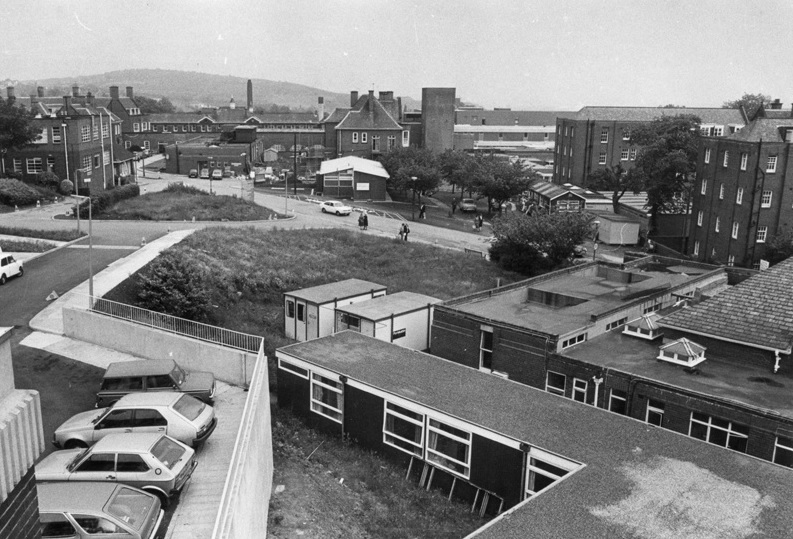
The Northern General Hospital is the largest hospital campus within the Sheffield Teaching Hospitals NHS Foundation Trust, with over 1,100 beds. In fact, it is one of the largest hospitals in the UK and a leading teaching unit with a growing international reputation. It is classed as a major trauma centre and recently opened a helipad close to the Accident and Emergency block.

Thank you to Sheffield City Archives and Local Studies Library for the historical detail.

Photograph by Anderson Green

Did you know that several buildings on the site are named after local families and individuals, particularly in the steel industry?: –

The Huntsman Building is named after Benjamin Huntsman, a manufacturer of cast or crucible steel, consisting of mostly orthopaedics but also contains the A&E, Surgical Assessment Centre (SAC), X-Ray departments, the theatres, one of four outpatients’ departments, a large dining room and the site’s main Medical Records department.

The Firth Wing, is named after Mark Firth, an industrialist, and contains CCU, Vascular surgery and other surgical wards.

The Chesterman Wing, named after James Chesterman, a manufacturer of steel products, contains the regional cardiology centre as well as extensive inpatient and outpatient facilities.
Photograph by Picture Sheffield

The Vickers Corridor, reputed to be haunted, takes its name from Edward Vickers, an industrialist, and deals primarily with renal and endocrine diseases, but also contains departments of Sheffield Medical School and the Sheffield Kidney Institute.

The Sorby Wing is named after Henry Clifton Sorby, a microscopist and geologist, and contains the renal outpatients unit and the Metabolic Bone Centre.

Samuel Osborn, a steelmaker, is remembered in the Osborn Building and contains the spinal unit.

The Brearley Wing celebrates Harry Brearley, a metallurgist, containing the respiratory and rehabilitation wards and a dining area, as well as an outpatient department and a specialised Patient Discharge Lounge which allows patients to move into a comfortable waiting area before leaving the hospital.

The Bev Stokes Day-Surgery Unit recognises Harold Beverley Stokes, a former Chairman of the Northern General Hospital Trust.

Finally, the Hadfield Wing is named after Sir Robert Hadfield, another metallurgist, and holds departments displaced from older wings of the hospital.

Photograph by Sheffield Star
Categories
People

Frank Saltfleet

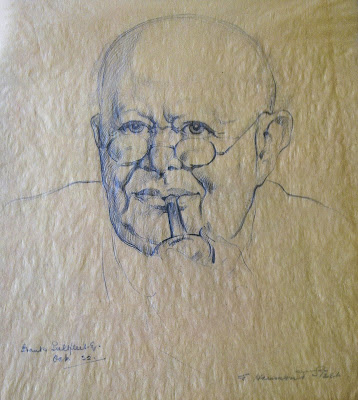
A self portrait in old age. Photograph by View from the Hill

Frank Saltfleet was one of Sheffield’s best-known artists, yet today his work is largely overshadowed by that of his wife, Jean Mitchell.

He was a specialist in watercolour painting, and about 18 months before his death an exhibition of his works was held at the Graves Art Gallery.

Alderman J.G. Graves also presented a group of Frank’s pictures to the city, and in the 1930s were on view at the Mappin Art Gallery.

He was, by profession, a landscape painter, but also keenly interested in music, literature, and drama.

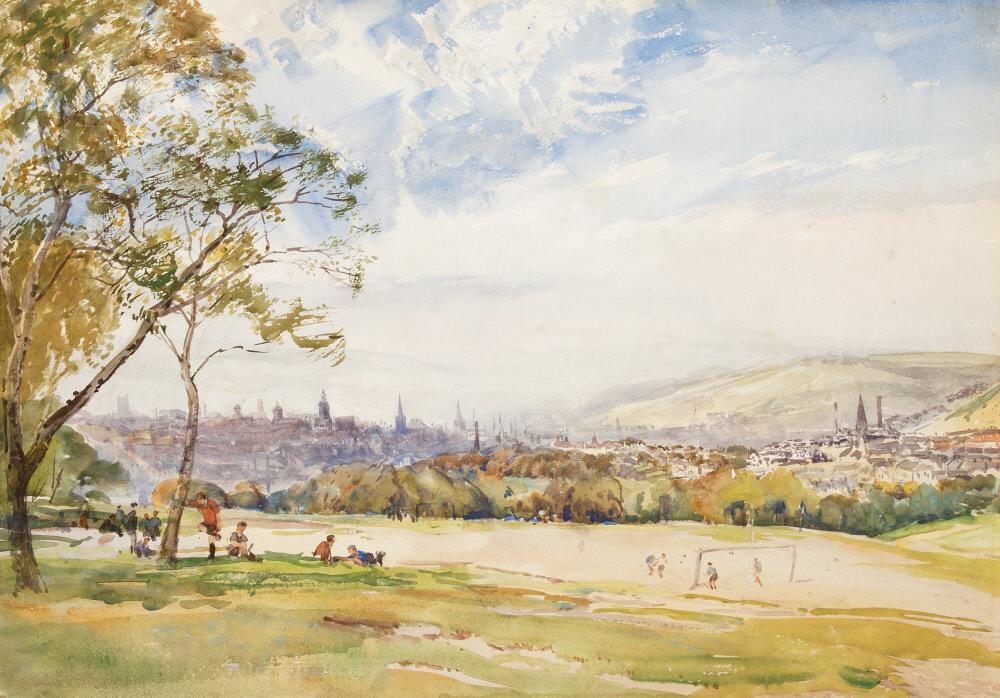
Sheffield During the Coal Strike from Norfolk Park by Frank Saltfleet. Photograph by Museums Sheffield.

Born in Sheffield in 1860, he was sent to St George’s National School, and when he was about 12-years-old, entered the silver trade to learn the art of close plating, later being apprenticed to a cabinet maker.

Frank attended the Mechanics’ Institute in Surrey Street, where his teacher was Mr Read Turner, a well-known Sheffield artist. Some time later he accepted an offer to advance the necessary funds for six months’ study in art at Antwerp, and with several other young Sheffield artists he went to the Academy of Arts there.

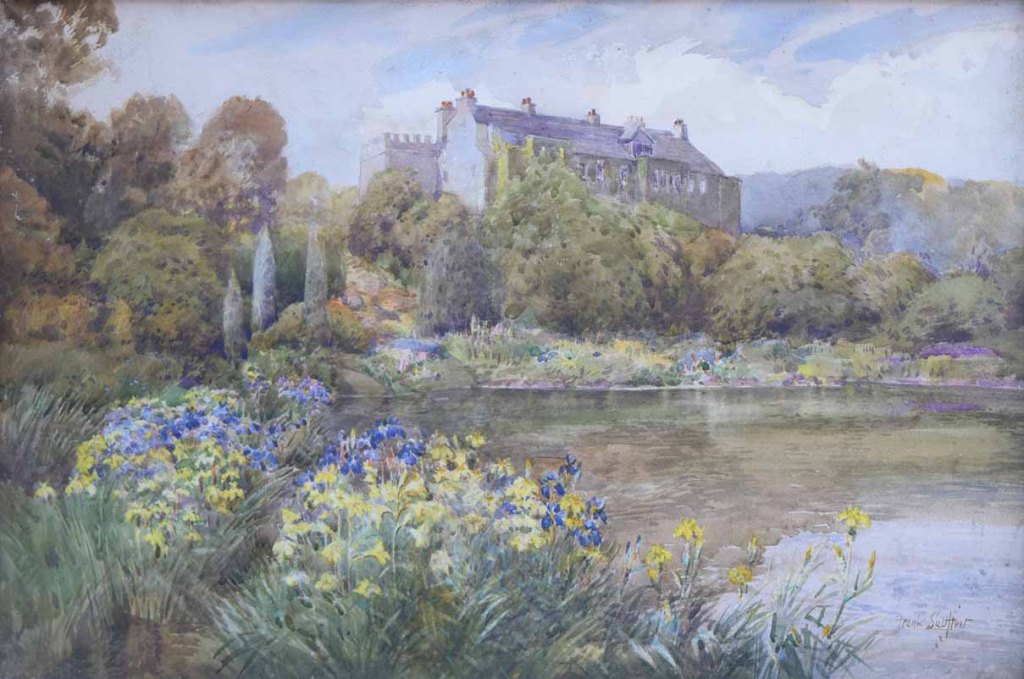
Whirlow Brook Hall by Frank Saltfleet. Photograph by Peter Wilson Fine Art Auctioneers.

His travels included tours of Italy, the Adriatic, and several visits to Venice.

Frank was quite out of sympathy with the works of ultra-modernists in any art, and his favourite composers were Mozart and Beethoven. The works of Shakespeare, Ben Johnson, Marlowe and Greene had an appeal to him.

He had several pictures accepted at the Royal Academy, but they were never hung and on many occasions his work was to be found in local exhibitions. Once or twice he exhibited watercolours at the Cutlers’ Hall.

His tastes lay chiefly in the direction of landscapes and seascapes, and woodland and moorland pictures.

“A land and riverscape artist with more than a local reputation. Some of his best pictures have the atmospheric charm of the not too hazy impressionist school. In social circles Mr Saltfleet sings drolly. He is that strange thing – an artist without the professional pose. He has less ambition than many of his inferiors,” said the Sheffield Independent in 1902.

Frank was well known in Sheffield as an enthusiastic amateur actor, taking part in several local productions.

For many years he was a Freemason, attaining a few honours, the chief of them being that of Past Master of St. Leonard’s Chapter at Tapton Hall.

Frank married twice, and after his death in 1937 was survived by his second wife, who was Miss Jean Mitchell, daughter of Young Mitchell, who was the first Principal at the Sheffield School of Art.

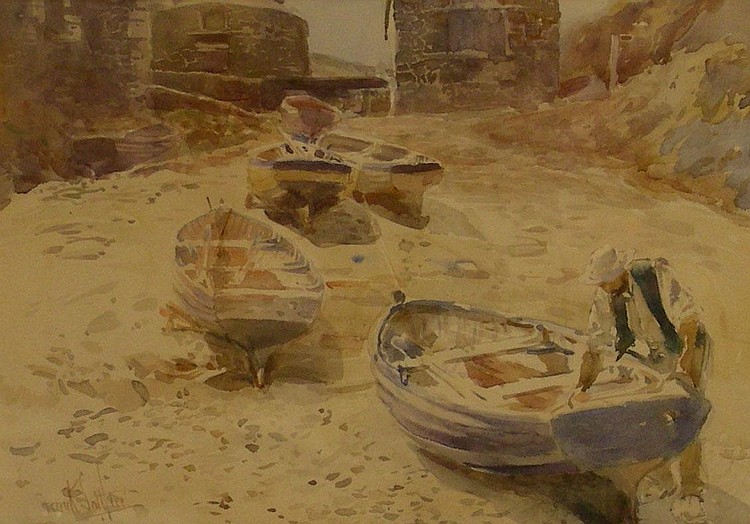
Rowing Boats on a Cobble Landing by Frank Saltfleet. Photograph by Invaluable.


Categories
People

Jean Mitchell

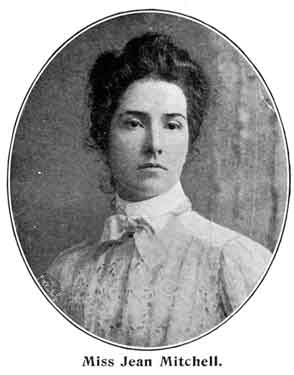
Photograph by Picture Sheffield

Celebrating the life this morning, of Jean Mitchell (1861-1941), a Sheffield artist whose work is largely forgotten, but which deserves mention.

She was born in Sheffield, daughter of artist Young Mitchell, a former pupil of Ingres in Paris, later Headmaster at the Sheffield School of Art, and Mary Elizabeth Smith.

Educated in Sheffield, she spent some time in London and Paris, but her artistic talents were encouraged at the School of Art, where she obtained two silver medals for life drawings.

Her work was sent to Paris for exhibition, and she was represented for three consecutive years at the Royal Academy, the first year her works finding a purchaser.

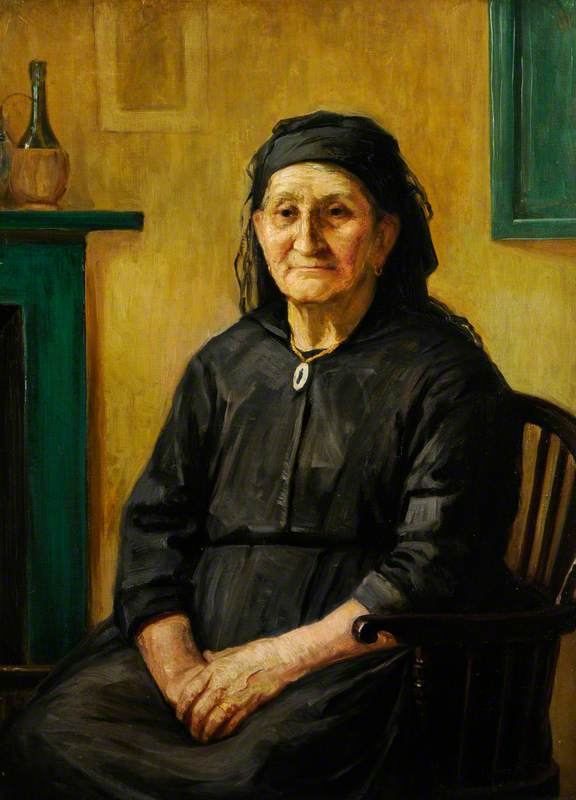
An Old Italian by Jean Mitchell. Photograph by Art UK.

Mitchell painted many portraits of Sheffield’s prominent citizens, amongst them Dr Joseph Law, which hung in the Sheffield Medical School and a duplicate at the Sheffield Royal Infirmary. But she wasn’t confined to portraits, also creating watercolours and miniatures on ivory, her best work coming between 1897 and 1936.

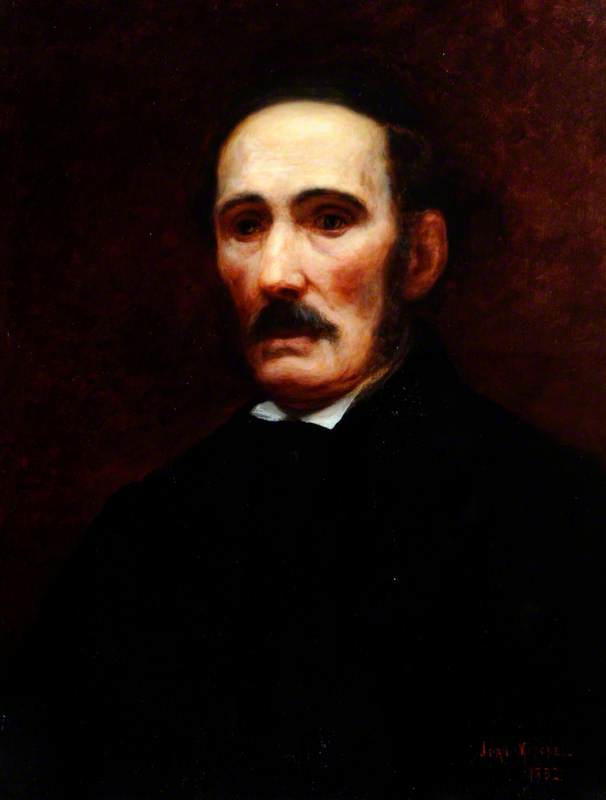
Joseph Law (1897), MD, Honorary Secretary to Sheffield Medical Society (1842-1852). Photograph by Art UK.
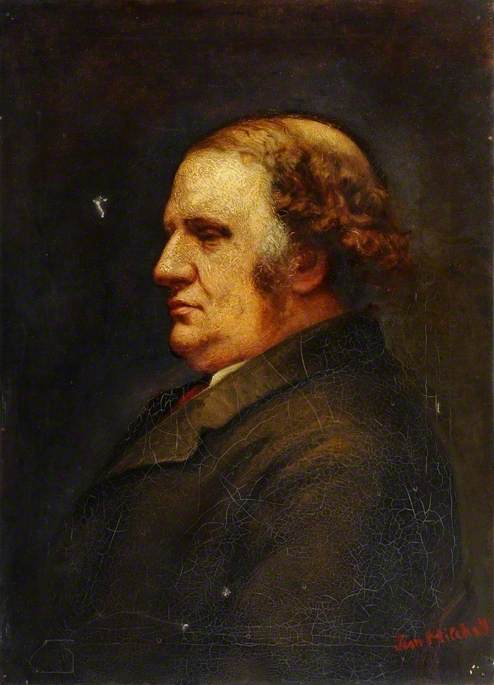
Dr Arthur Jackson by Jean Mitchell c.1890. Photograph by Art UK.

In 1905, she married Sheffield painter, Frank Saltfleet, whose reputation was enhanced with watercolours of landscapes, rivers and marine subjects. He was a protégé of Frank Ruskin and exhibited at the Fine Art Society and the Royal Institute of Painters in Watercolours. Mitchell was his second wife, and together they lived on Psalter Lane.

For about twenty years, Jean taught at the Sheffield School of Arts (by now called the Technical School of Arts) as a teacher for figure painting. She resigned in 1924 and opened her own studio on North Church Street, where she carried on teaching, and specialised in portraits, miniatures, and flower studies.

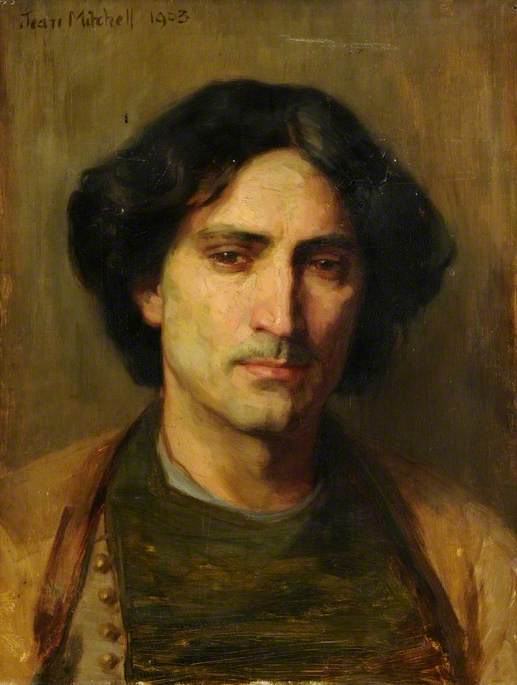
Portrait of a Man (1903) by Jean Mitchell. Photograph by Art UK.

In later life, her portraits of children were popular, and being fond of animals, she gave special attention to painting dogs and horses.

Frank Saltfleet became President of the Sheffield Society of Artists and died at home in 1937. Jean Mitchell died four years later, leaving £2,124 in her will.

Saltfleet was considered a minor artist and today his pictures sell for a few hundred pounds. Mitchell’s work has fared much better and several of her pictures survive in her home city at Museums Sheffield and Sheffield Archives, while Dr Law’s portrait hangs at the Royal Hallamshire Hospital.

British Newspaper Archive

NOTE: The Sheffield School of Art opened in 1843, lessons being given in a rented room above the Bath Hotel (still surviving) on Victoria Street, off Glossop Road. Young Mitchell was appointed Headmaster in 1846, and held the post until 1863, when ill-health forced him to resign. It transferred to Sheffield Corporation in 1901 and placed under the control of the Education Committee in 1903. In 1926, it was recognised as the College of Arts and Crafts, subsequently becoming Sheffield Polytechnic School of Art and Design and is now a department within Sheffield Hallam University.

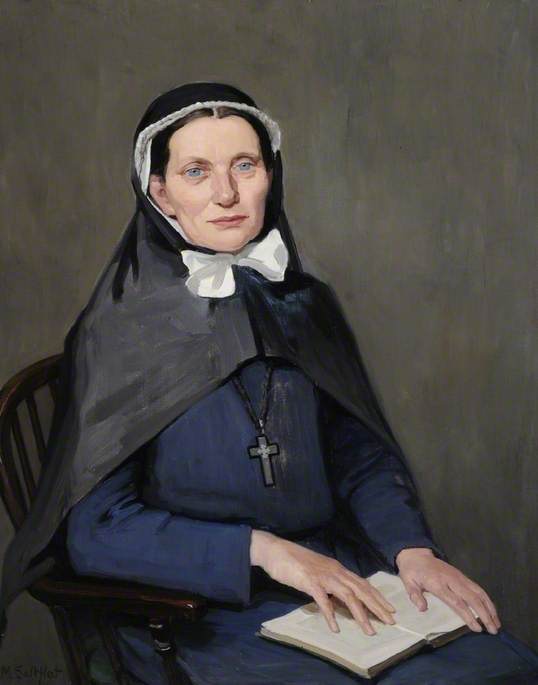
The Deaconess by Jean Mitchell. Photograph by Art UK.
Categories
Other

April Fools’ Day (1)

It’s April Fools’ Day. No pranks here, but an attempt to determine why we stage hoaxes and play practical jokes on 1 April. It appears that nobody knows the exact meaning of the day although several historians have put forward suggestions.

It has been celebrated for centuries by different cultures and by embracing it, the media has ensured the unofficial holiday’s long life.

The earliest concrete records are from France and Holland in the 1500s and, because of this, people believe it must have been a northern European tradition that spread to Britain.

It is known as April Fish Day in some areas of Europe, believed to be because there are a lot of fish in streams and rivers around 1 April, and they are easy to catch – foolish fish!

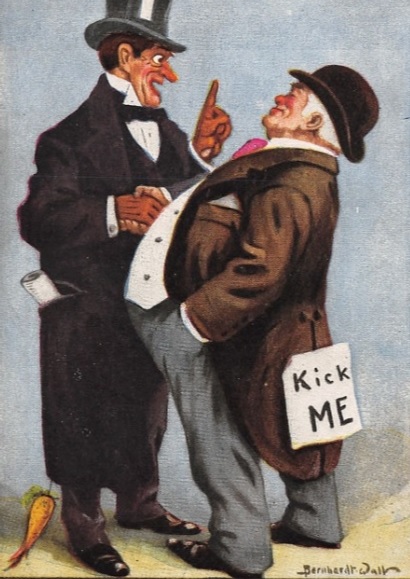
In France, it is a common trick to attach a paper fish on somebody’s back on April Fools’ Day and give chocolate fish as gifts.

April Fools’ Day spread throughout Britain during the 18th century, some arguing that a story told by English poet Geoffrey Chaucer in the 14th century – where a fox plays a prank on a rooster (who is almost eaten because of it) – is the first reference to pranks taking place on this day.

Chaucer doesn’t refer to 1 April though. In the poem, he says 32 “syn March began,” translated as “32 days since March began” which would be today.

On a wider scale, some historians speculate that April Fools’ Day dates to 1582, when France switched from the Julian calendar to the Gregorian one. In the Julian calendar the new year began with the spring equinox on 1 April.

People who were slow to get the news, or failed to recognise that the start of the new year had moved to 1 January, and continued to celebrate it during the last week of March through 1 April, became the butt of jokes and hoaxes and were called April fools. These pranks included having the so-said paper fish placed on their backs and being referred to as “poisson d’avril” (April fish), said to symbolise a young, easily caught fish and a gullible person.

Historians have also linked April Fools’ Day to festivals such as Hilaria (Latin for joyful), which was celebrated in ancient Rome at the end of March by followers of the cult of Cybele. It involved people dressing up in disguises and mocking fellow citizens, and even magistrates, and was said to be inspired by the Egyptian legend of Isis, Osiris and Seth.

There’s also speculation that April Fools’ Day was tied to the vernal equinox, or first day of spring in the Northern Hemisphere, when Mother Nature fooled people with changing, unpredictable weather.

Categories
Other

April Fools’ Day (2)

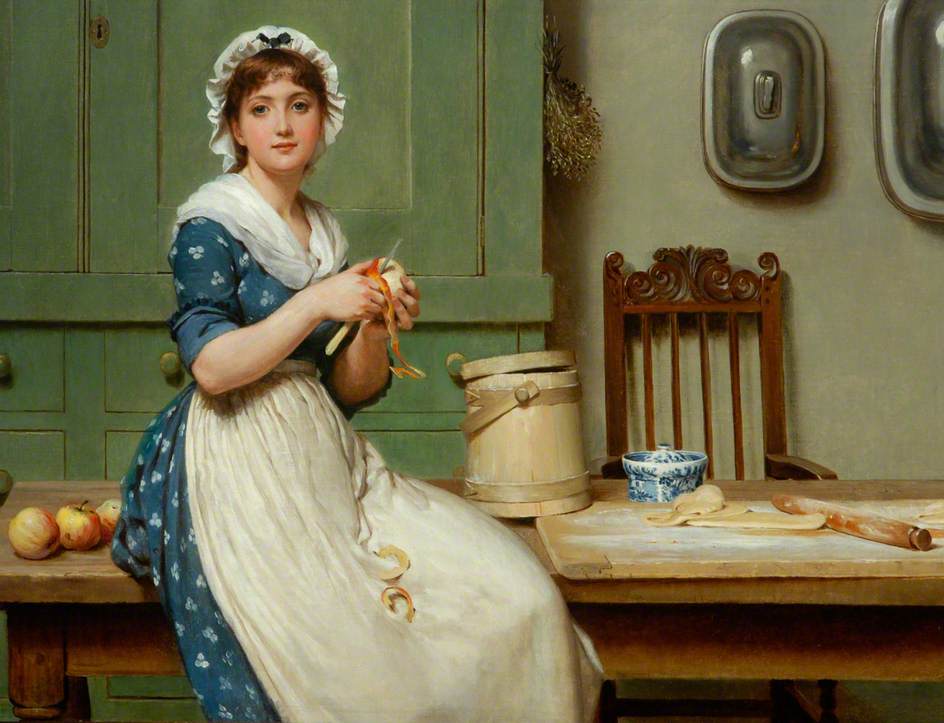
This story dates from 1 April 1898 when the manager of a shop in Sheffield, along with his assistants, decided to play a prank on Mary, the cook of the establishment, who was unable to read or write.

They wrote on a paper ‘April Fools’ Day’ and gave it to Mary, together with sixpence, and told her to go across to the chemist and get “sixpennyworth.”

The chemist’s assistant told her they were out of it, but she would get it at the shop higher up the street.

The second chemist asked her if she could read, and on being told no, told her what was written on the paper.

She took back the money and told the manager she could not get the stuff anywhere but gave them no idea that she had discovered the trick.

All went well during the day, the fellows enjoying the lark they had with Mary.

About half an hour before closing time, she came down to the manager, told him that supper was ready and the table laid, but begged to be excused as she had a headache, and allowed to go to bed.

In due course the men sat down to supper, and the cover was taken off the dish; but there was nothing but the paper they had given her in the morning with the words on it, ‘April Fools’ Day.’

Categories
Other

April Fools’ Day (3)

A final April Fools’ Day story from 1908.

A certain local businessman was both ridiculed and humbled. He had a lot of friends, all of whom liked him but for a fatal weakness of his. This weakness took the form of patronage.

He was always talking about “his friend, the Earl of Wharncliffe,” and no matter upon which point conversation turned, he would drag in a reference to the Earl.

Tired at last of his lofty talk, and fully confident that he was not even on nodding terms with the aristocrat, his friends decided to play a prank.

The businessman received a letter on the morning of April Fools’ Day, and the contents of it caused his heart to palpitate.

“It has come to the knowledge of the Earl of Wharncliffe that you have been publicly claiming his friendship, and spreading vague rumours about concerning his affairs, and he has instructed me to write to you demanding an instant apology. The Earl will be at home between the hours of ten and one tomorrow and will be ready to listen to an explanation.”

Never doubting the genuineness of the demand, the businessman rushed to Wortley Hall the next day, and with a great deal of difficulty obtained an interview with the bemused Earl.

What took place at that meeting was never divulged, but afterwards the businessman never again mentioned “his friend the Earl.”

Categories
People

Joe Ashton

Photograph by the Worksop Guardian

We can’t let the passing of former Labour MP, Joe Ashton, that ‘bloke in the street,’ go unmentioned despite trying to keep this page clear from politics.

Whatever your allegiance, and whatever you might have thought about Joe Ashton, he was a Sheffield lad.

Born in 1933, he grew up in the slums of Attercliffe. Despite his modest beginnings, he passed the 11-plus and went to High Storrs Grammar School. He did National Service with the RAF and then became an engineer at Davy United.

He became involved in trade unionism and progressed into politics as a Sheffield city councillor. In 1968, he won a tough three-cornered by-election fight for the ‘Alamo of Bassetlaw,’ and held his seat until 2001.

Photograph by Picture Sheffield

Joe once wrote a weekly column for the Sheffield Star, went on to the Daily Star as the ‘Voice of the People’ and briefly wrote for the Sunday People. He was also a published novelist – Grass Roots charting the rude awakening of a young MP just elected to be the Mother of Parliament – and a staged playwright.

A Majority of One whipped across the Nottingham Playhouse auditorium in 1986, and astounded audiences and other Honourable Members with its no-dirty-tricks-censored account of how a government with a thin majority won votes on controversial issues.

Issues he took up as an MP included the delicacies or otherwise of Ministers calling MPs by their first names, the toll bridge on the A57, the use of tobacco sponsorship in sport (in 1972), paraffin prices, East Midlands rail cuts, conditions in a Worksop primary school, advertisements for the BBC (again in 1972) and fish fatalities in Clumber Park Lake.

He once accused Prime Minister Ted Heath of doing nothing about rising prices because he was a bachelor, complained that beer was getting so weak you’d soon be able to sell it to children and slammed the police for making bingo fans pay for a whole session before the first game started.

He followed his novel up with a memoir, Red Rose Blues (2000), and was awarded an OBE seven years later.

And, of course, he was a lifelong Sheffield Wednesday fan and director for nine years, often publicly criticising his colleagues and history proving he was quite correct with his comments.

Joe was married to his late wife Maggie for 57 years and leaves behind one daughter.

Photograph by the Worksop Guardian

Categories
People Places

Mel Smith

There was a time during the 1970s when a young man spent a few years at Sheffield’s Crucible Theatre, developing his talents before moving on to bigger things.

This review appeared in The Stage in October 1975: –

“There is no doubt about the entertainment value of Rex Doyle’s musical documentary The Great Sheffield Flood, given its premiere at the Crucible Studio. The songs by Rodney Natkiel cover a wide range of styles – from a pastiche patter song to romantic ballads to a more contemporary folk sound – and there is a bit of comedy, a bit of drama, and in Mel Smith’s production a great deal of pace to keep the pot boiling throughout.”

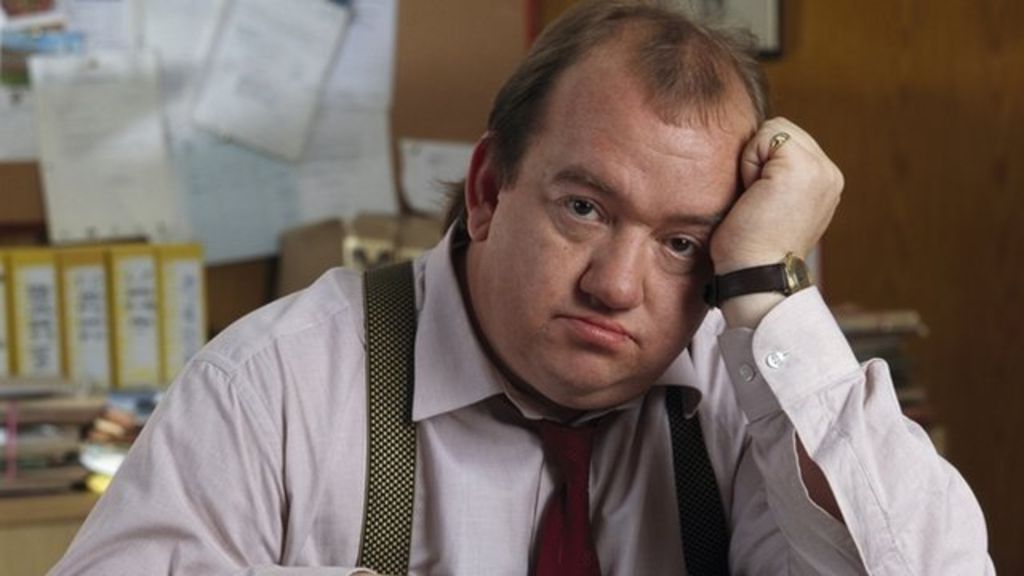
The Mel Smith in question was THE comedian Mel Smith (1952-2013), who, is now largely forgotten for his role as an associate director at the Crucible during the seventies.

The son of a Chiswick bookie, Smith was already directing plays at six years old, when he staged Little Plays for Little People with his friends. He read experimental psychology at New College, Oxford, choosing the university because he wanted to be involved with its Dramatic Society.

As a member of the Oxford University Dramatic Society, Smith honed his theatrical and comedy prowess with a production of The Tempest in Oxford and shows at the Edinburgh fringe. After graduation he worked in 1973 at the Royal Court theatre in London, as assistant director, and at the Bristol Old Vic, before arriving at the Sheffield Crucible in 1975.

And it seems he had some expertise with pantomime, contributing to Cinderella in 1976, and writing and directing Jack and the Beanstalk in 1977.

“This new version is without doubt the most original and witty pantomime I have seen this year,” wrote Paul Allen in The Stage. “This Jack is a would-be pop singer with a group that desperately needs new equipment; the good fairy, a New York Jew who turns herself into an agent to help him get the necessary cash; the villainous demon a punk rocker who was never really understood as a child.”

In 1979, he tackled musical theatre with Salad Days, written in 1954 by Julian Slade and Dorothy Reynolds.

“The audience has a collective sigh of relief they appear to be having at being confronted with a piece of theatre their rose-tinted memories tell them the way it used to be 25 years ago,” wrote The Stage, “Mel Smith’s production doesn’t quite send it up, but I doubt if anyone would have noticed if it did.”

And Salad Days was perhaps a sign of things to come.

“The production has toy props; doll’s house sets and the kind of costumes which look as though someone has stumbled on a fifties theatrical skip. The choreography is all jolly-hockey-sticks prancing, the music is sweet and decorative, and it is stuffed with gags.”

In September 1979, Paul Allen’s review of Alan Bennett’s Habeas Corpus, directed by Smith, was described as funny if not entirely successful.

“There is perhaps more weight and drive to Habeas Corpus than the production is prepared to allow; a readiness to slip into an over-jokey revue style doesn’t help Bennett’s acute verbal dexterity and it often obstructs the play’s speed of thought and action.”

I suspect Mel Smith’s kind of humour was ahead of its time, and he had other projects in mind.

Having performed with the Oxford Footlights at the Edinburgh fringe festival, he met John Lloyd who invited him to join Not the Nine O’Clock News with Rowan Atkinson, Pamela Stephenson, and Griff Rhys Jones, as well as Chris Langham in the first series. It ran from 1979 to 1982 and was conceived originally as a topical news-based satire, broadcast at 9pm weekly on BBC2 against the actual nine o’clock news over on BBC1.

Smith and Griff Rhys Jones continued from that TV sketch show to create Alas Smith and Jones. The pair later formed Talkback Productions which was responsible for dozens of comedies shows, including Da Ali G Show and I’m Alan Partridge. The company was sold to Pearson for £62million in 2000.

As an actor, Smith was most memorable on screen in The Princess Bride (1987) and Brain Donors (1992), and was ideally cast as Sir Toby Belch in Trevor Nunn’s 1996 film of Twelfth Night. On TV, he starred in Colin’s Sandwich (1988-1990), a sitcom about a British Rail worker with writing aspirations; Hustle (2006); and John Sullivan’s prequel to Only Fools and Horses, Rock and Chips (2010-2011).

Mel Smith died in 2013 of a heart attack, aged 60.

Categories
People

Emily Maitlis

Photograph by Alex lake/The Observer.

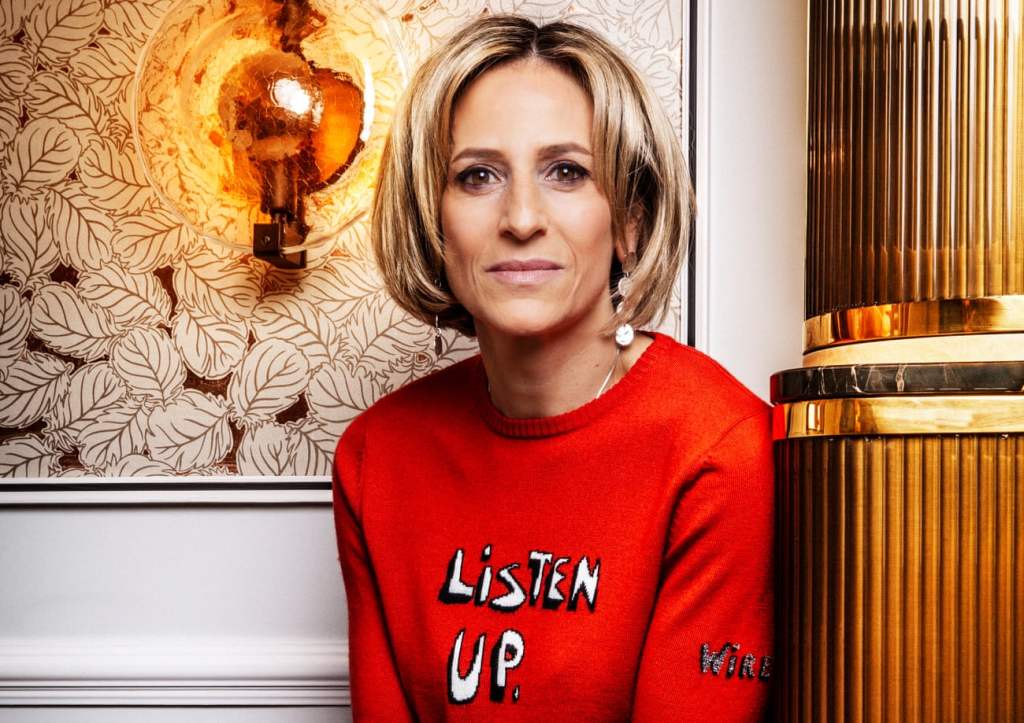
Continuing our series about people with Sheffield connections. Yet another product of King Edward VII School, Emily Maitlis, British-Canadian journalist, documentary maker and main presenter of BBC’s Newsnight alongside Kirsty Wark.

She was born in Hamilton, Ontario in 1970, but brought up in Sheffield after her father became a Professor of Inorganic Chemistry at the University of Sheffield. “Home in Sheffield was a place full of books where you talked about things, but where you were always shushed when the headlines came on.”

Her first Saturday job was at Ross & Foster hairdressers where she was paid £6 a week. The salon offered her a full time job, but her parents insisted she stay at school and went to read English at Queen’s College, Cambridge.

She worked for NBC Asia in Hong Kong before moving to Sky News as Business Correspondent and then to the BBC in 2001. She appeared regularly on BBC News and hosted the 2012 US Election Coverage alongside David Dimbleby.

Since presenting Newsnight she won Interview of the Year and Scoop of the Year at the 2020 RTS Television Awards for her interview with the Prince Andrew, Duke of York, and his ill-fated friendship with American sex offender Jeffrey Epstein.

In 2012 she was given an Honorary Doctorate at the University of Sheffield. “What made it even more special is the fact that it was my home-town – my parents were thrilled.”

Maitlis published a book ‘Airhead: The Imperfect Art of Making News’ in 2019, describing how television news is produced.

Categories
Other

The first aeroplane in Sheffield

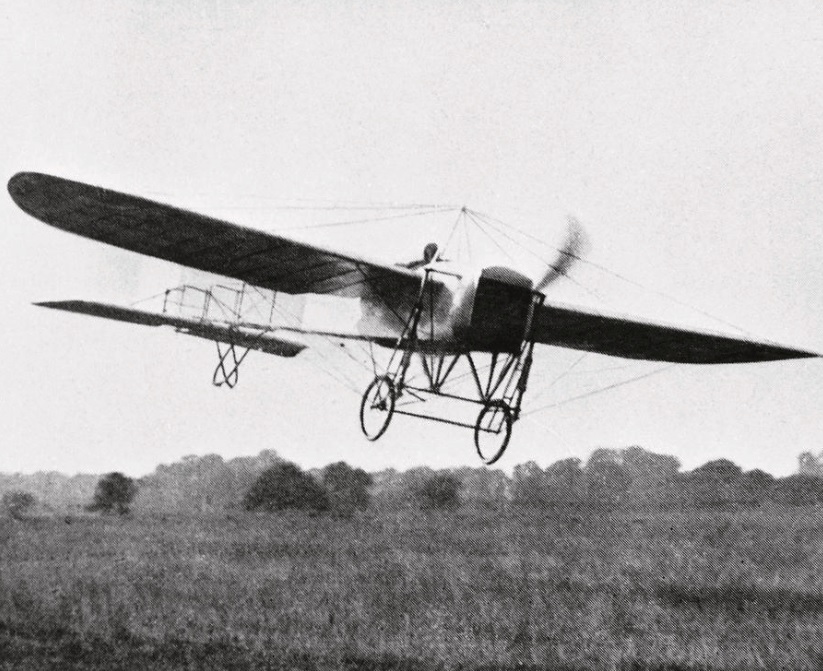
Photograph by Getty Images

Sheffield has never been an aviation city, one of the biggest urban areas in Britain that failed to grasp the importance (or intrusion) of an airport.

However, within a decade of the first flight by the Wright Brothers in 1903, the first aeroplane arrived in Sheffield.

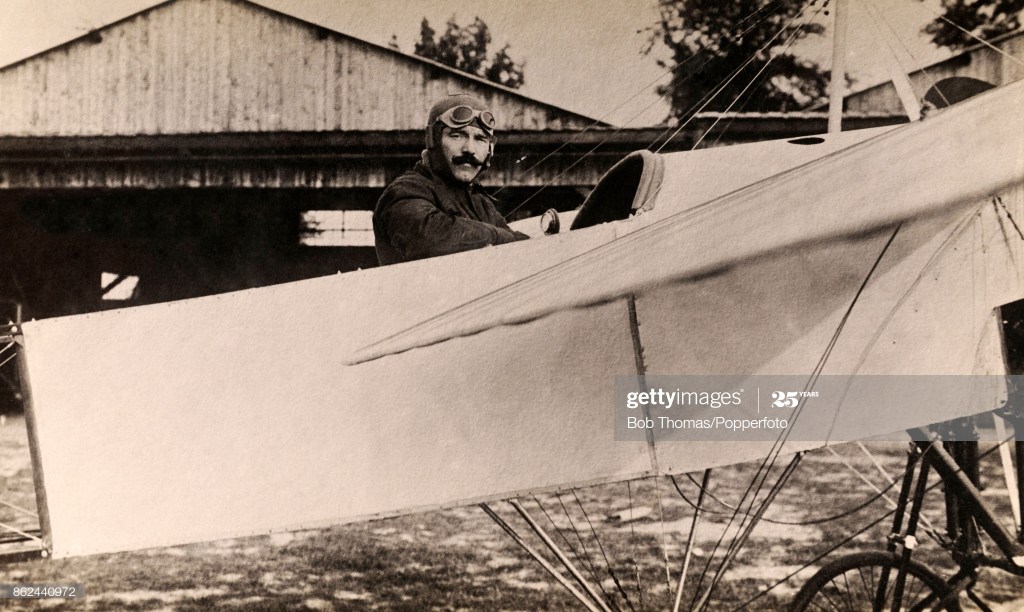
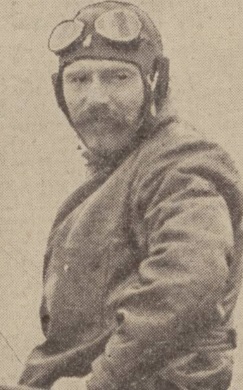
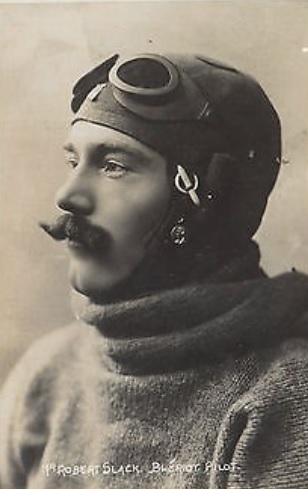
The pioneering aviator was Robert Bertram Slack (1886-1913), a native of Nottingham, who had previously worked in the cycle and motor trade.

He was the 157th person to be granted an aviator’s certificate by the Royal Aero Club in 1911, qualifying at the Bleriot School at Hendon Aerodrome.

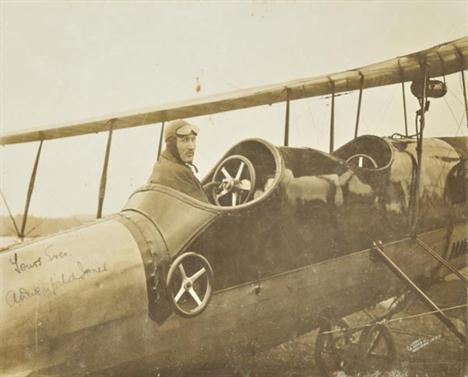
In 1912, he competed in the Irish Aero Club’s Dublin-Belfast Race and shortly afterwards was commissioned by the International Correspondence Schools (ICS) to tour around the country giving exhibition flights. The Bleriot monoplane was capable of speeds of 60m.p.h., its pilot’s seat presented to Slack by the aviator Henri Salmet as a mascot, the one in which Salmet sat while making a record high-flight of 9,500ft. Afterwards, the plane was to be bought for £850 by the ICS and presented to the War Office.

This was the reason for Slack’s visit to Sheffield in August 1912, although matters weren’t as simple as might have been expected and tells us that the weather played an important part in early aviation.

Slack started his 1,100 mile tour from Hendon Aerodrome seven weeks before, and had already visited Leicester, Nottingham, Birmingham, Manchester, Carlisle, Edinburgh , Newcastle and Harrogate.

It was from Harrogate that Slack was due to fly on Friday 2nd August 1912 eventually arriving at a makeshift aerodrome at the former Redmires Racecourse, the weekend camping ground of the Sheffield Artillery, and generously donated by Colonel Charles Clifford. (More about Redmires Racecourse in a future post).

Due to arrive at seven o’clock in the evening, a small crowd waited for over an hour anxious to see this new and exciting mode of transport. By 8.30pm, the crowd was getting restless and it was only after a telephone call that it was discovered a strong wind had made it impossible to take off from Harrogate.

Robert Slack at Redmires by The British Newspaper Archive

Instead, Slack took off at 5.20am the following day, running into a succession of fog-banks, and, unable to see his way, was several times in imminent peril. After some exciting adventures amongst factory chimneys, trees, and hill sides in the neighbourhoods of Leeds, he wisely decided to land. Later, he had a touch of air-sickness, and again descended and landed at Norton Priory between Pontefract and Doncaster.

When he was airborne again, Slack flew over Doncaster, before eventually arriving at Redmires about five o’clock. Broad white sheets had been stretched across the grass as a guide to him in his descent.

“The shrill cry of a lynx-eyed small boy announced the approach of the overdue flying man. There was just a little speck in the sky above the range of hills overlooking the Rivelin Valley. It was travelling at terrific speed, and soon became distinguishable from the crows. It was at least three thousand feet up, but gradually descended a thousand feet or so. As he neared the landing-place, Mr Slack took a wide sweep round to face the wind for his descent. Then suddenly the machine seemed to rest a moment in the air, and in a graceful vol-plane came hovering down to earth. The aviator had cut off his petrol at two thousand feet. He alighted on the ground as gently as a bird.”

Slack had been in close touch with his mechanics, who followed a set course in a motor-car, so that at each descent he was able to summon them by telephone.

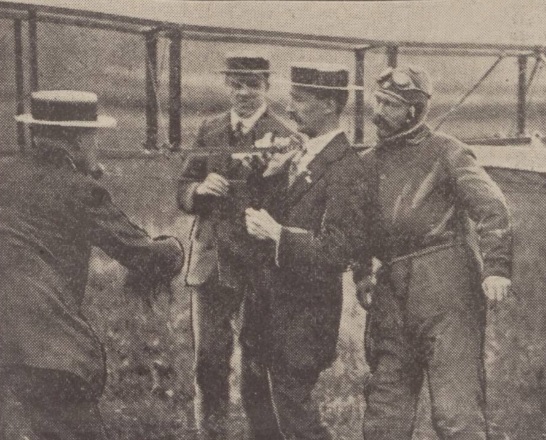
He had an enthusiastic reception from a large crowd who had gathered on the racecourse and in the roadway and had been awaiting the delayed aviator with remarkable patience for several hours. The crowd came swarming into the ground and loudly cheered the descent, which was admirably neat and precise.

“Mr Slack, a well-set, broad-shouldered man, with a bronzed, good-humoured face, took the plaudits of the enthusiastic crowd who pressed round him with smiling ease, and genially obeyed the behests of the members of the photographic clan. After seeing to the housing of his monoplane, he went by motor-car to the city, being again warmly cheered as he left the ground.”

Slack described his adventurous flight in a chat with a Sheffield Telegraph reporter: –

“It was a beautiful morning when I left Harrogate,” he said, “although somewhat misty. Just after passing Leeds, however, I entered one of the thickest fogs I have ever experienced. I could see nothing; the ground was quite invisible at 300  feet. Hoping it would clear, I went on for five or six miles, steering entirely by compass, for it was impossible to follow my map, as I could not see the landmarks. Instead of clearing, however, the fog got worse, so I was determined to come down to look for landmarks.

“But you do know what you strike in a fog like that, and I had several narrow escapes. It was the fright of my life. I just missed some factory chimneys and some trees, and then right in front of me rose a steep hill. I had to point my machine upwards very smartly in order to get over it. I thought it best to turn around, so I made my way northwards and succeeded in alighting without damage at Seacroft, although I did not find a very good landing place.

“I soon got in touch with my mechanic and stayed at Seacroft till half-past eleven. My mechanic advised me to go more east if I encountered any more fog, and I followed his advice, for I had no sooner got away than I ran into a lot more very thick fog. By turning in an easterly direction, however, I soon got out of it. I was feeling very rocky, however, for my breakfast was not agreeing with me, and the air was bad; there was scarcely a breath of wind, and the machine was doing all sorts of things. The engine, however, was running well.

“I thought it best to come down again and found a very good landing place at Norton Priory, between Doncaster and Pontefract. I left Norton at 4.26, so the run thence to Sheffield took me 21 minutes, a rate of about 70 miles an hour. I travelled from Norton to Sheffield at an altitude of 3,000 feet. It was alright until I got to the hills, when it became very foggy again. However, I got through alright.

Fog,” added Slack, “is the worst thing the aviator has to meet, although rain is bad enough.”

There was to be no exhibition flying, but people could see the strange flying-machine at a small charge. The aeroplane was overhauled and set to rest in a tent organised by Colonel Clifford, while Slack headed to London to plan for a trip to the south-west.

Back in Sheffield, Slack and his Bleriot was due for an early morning take-off on Wednesday 7th August, but this was prevented due to heavy rain.

He had hoped to take off for Rugby on Thursday at 4am but Slack suffered a bilious attack, missing his opportunity, and a slight mist and strong wind meant he had to wait all day, even indulging  in a game of skittles.

A large crowd gathered at Redmires but at about five o’clock when conditions were favourable a message was received that there was a thunderstorm at Rugby.

On Friday, the weather was once again hindered by strong winds, and just when it was thought that the flight would have to be cancelled again, the wind dropped, and Slack quickly jumped into the Bleriot and made a sudden take-off.

He quickly reached an altitude of 600ft and flew due west for half a mile before turning towards Dore and flying onwards to Chesterfield. With this, Slack disappeared into the distance and the crowds quickly dispersed.

The drama didn’t end here though, Slack got lost in a storm near Coventry and his onward flight to Rugby was interrupted when he was forced to land at Nuneaton.

Robert Slack finally ended his tour at Hendon Aerodrome, but he went on to grab victory in an air race with French aviator Eugene Gilbert from Paris to London, as well as being a competitor in an ‘Aerial Derby’ round London in September 1913.

Considering the dangers that Slack faced every time he flew his aeroplane; it was tragic that he met an untimely death in a car accident on Watling Street between St. Albans and London in December 1913.