Categories
Sculpture

City War Memorial

In 2009, when Philip Laing, a university student, got drunk and urinated on Sheffield’s War Memorial in Barker’s Pool, he didn’t realise he’d suffer the wrath of the city, as well as the rest of the country. He was spared jail and ended up quitting his university course.

Enthusiasm is still felt for the City War Memorial, erected in 1925, “to create a sacred centre where the people of Sheffield may meet on Armistice Day, and where the bereaved can lay their wreaths, and see the flag hoisted half-mast to honour their dead.”

In 1923, the Lord Mayor, F.C. Fenton, launched an appeal, aimed at ratepayers, to fund a memorial already designed by architect Emanuel Vincent Harris, an 80-foot high obelisk, to be sited at the junction of Townhead Street and Church Street.

The plan was abandoned due to being “unsuitable in design and location.”

However, the War Memorial Subcommittee was persuaded to consider a new design in front of the proposed City Hall. It launched a competition to select a more suitable design, restricted to artists working, or with practices, in the city. The contest attracted 34 entries; the winning design chosen by E. Vincent Harris.

The final design was by Charles Canus-Wilson, the architect, with George Alexander responsible for the sculptured designs of the figures.

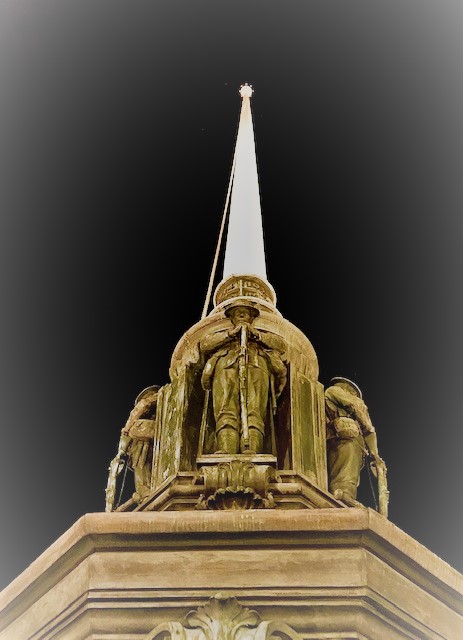
The Grade II-listed City War Memorial is set on a bronze case, with the sculptures on a granite plinth, into which is set a flagpole, over 100 feet in length and weighing nine tons, with a bronze crown.

The panels on the base, near the Sheffield coat-of-arms, shows emblems of the Royal Navy, the Merchant Navy, the Army and the Royal Flying Corps.

Below these, are insignias to commemorate the Yorkshire Dragoons (Queen’s Own) South Africa 1900-1902, the Royal Engineers, the Tanks Corps, the Yorkshire and Lancashire Regiment, the Royal Army Service Corps and the Army Medical Corps.

There are also four figures of four ordinary soldiers, heads bowed, and rifles reversed, standing on a ledge above an octagonal pedestal. It was originally to have had four females standing between the soldiers, but these were lost to save money.

The cost of the memorial was £5,345, funds coming from the Lord Mayor’s Appeal, fund-raising performances at Sheffield’s 44 theatres, music halls and cinemas, collection boxes in shops, the university and schools, a “Flag day” and a contribution from the British War Graves Association.

The bronze was cast by Conrad Parlanty Castings Ltd of Herne Bay, while the flagpole was made by Earle’s Shipbuilders and Engineers, Hull.

The flagpole arrived at The Wicker by rail, occupying six trucks, and was manoeuvred through the streets using steam-tractors during the early hours of the morning. It was designed to be the same height as the City Hall (opened in 1932) and was set 20-feet into the ground for stability.

The City War Memorial was unveiled on 28 October 1925, by Lieutenant-Colonel Sir Charles H. Harington, GBE, KCB, DSO.

During the December Blitz of 1940, a bomb exploded near its base, causing the six-ton bronze base to shift five inches out of position. It was repaired in 1949, parts of the memorial dismantled and taken to Herne Bay at a cost of £680.

In 2005, the memorial was assessed, and a £60,000 programme of essential repairs carried out by Rupert Harris Conservation. The mast was treated for corrosion and repainted, and the crown and ball at the top of the mast re-gilded using 24-carat gold leaf.

Interestingly, the 1940 shrapnel damage remains, kept as a reminder of the memorial’s history and purpose.
Categories
Buildings Companies

Cole Brothers

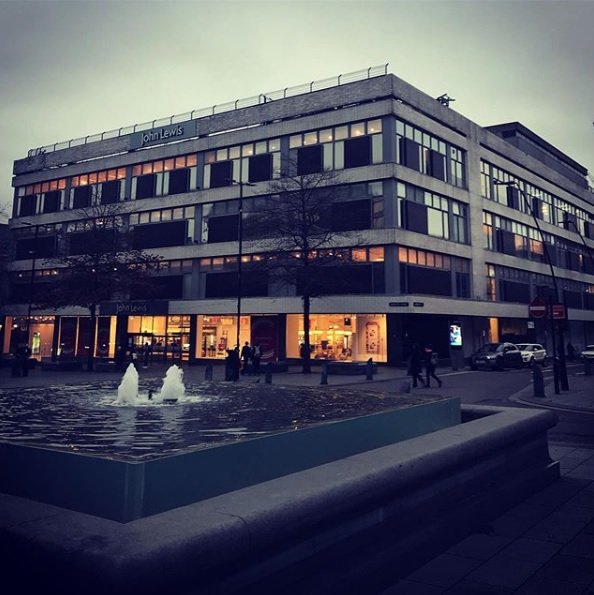
There was a time, not that long ago, when this department store at Barker’s Pool was scheduled for demolition.

The ill-fated Sevenstone retail project earmarked shiny new premises for John Lewis on the site of the old fire station on Wellington Street. When that scheme stumbled, replaced with the more sympathetic Heart of the City II development, John Lewis said they were staying put.

For the modernists amongst us, it was a welcome reprieve for a building that was constructed between 1961-1965 for Cole Brothers, renamed John Lewis in 2002.

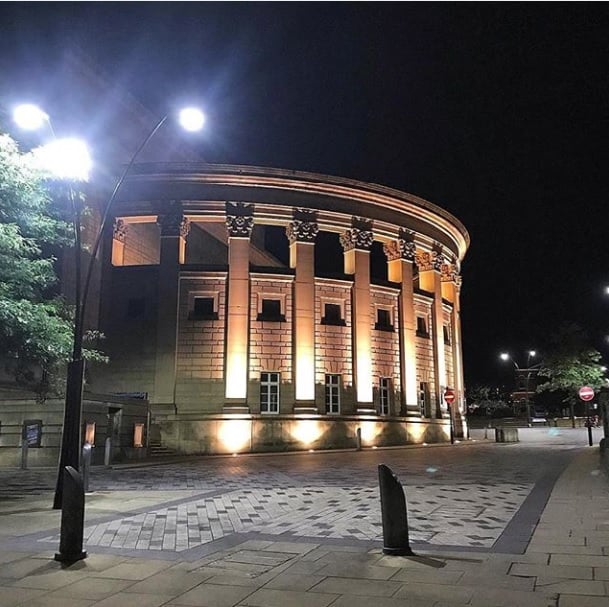
The land on which it stands was once site of the Albert Hall, destroyed by fire in 1937. There was talk of a new Gaumont Cinema in its place, but it never materialised. After World War Two, Sheffield Corporation bought the plot for proposed new law courts, but again these never happened, the land subsequently acquired by Cole Brothers.

The design was conceived by Yorke, Rosenberg & Mardall, an architectural company set up in 1944 by Francis Reginald Stevens Yorke (1906-1962), an Englishman, Eugene Rosenberg (1907-1990), born in Slovakia, practising in Prague before World War Two, and Finnish-born Cyril Mardall (1909-1994).

The practice attracted talent from around the world, including David Allford (1927-1997), Sheffield-born, a graduate of the University of Sheffield and lifelong Sheffield Wednesday supporter.

Allford, who went on to become chairman, had a hand in Gatwick Airport, several large hospitals including St. Thomas’ in London and Hull Royal Infirmary, numerous comprehensive schools and offices, Warwick University, and Cole Brothers department store in his home city.

Built by Trollope & Colls (later Trafalgar House Construction), the store is clad in the architects’ hallmark white tiles with panels of brown mosaic to the window bays. The surface was inspired by Le Corbusier’s use of tiles on the entrance drum of the Armée de Salut (1929) in Paris, and the General Pensions Institute (1929-1934) in Prague, designed by Havlicek and Karel Honzik, and worked on by Eugene Rosenberg.

Rectangular in design, it was the replacement for Cole Brothers’ old premises on the corner of Fargate and Church Street (celebrated in Richard Hawley’s song ‘Coles Corner’), outdated and sold for £1million in 1962.

Spread across five floors, the new Cole Brothers store contained sixty departments, with access to each level from a multi-ramp carpark, accommodating 400 cars.

Innovative as the design may have been, the carpark became notorious for suicides, many people jumping from the building’s top deck, up until the time wire fencing was erected.

These days, the department store is looking rather tired, the white tiles in need of a deep-clean and counting the days to its restoration.

Categories
Buildings

Sheffield City Hall

Once upon a time, back in 1932, a war of words existed between Sheffield City Council and the local ex-servicemen’s Association (embracing 20,000 members) concerning the name to be attached to the new Civic Hall.

The councillors wanted it to become Sheffield City Hall, the ex-servicemen preferred Sheffield Memorial Hall.

Such was the level of feeling that the ex-servicemen wrote to King George V hoping to bring the matter to his attention.

The reply when it came offered no solution. “I am directed by the Secretary of State to inform you that the matter has been laid before the King, but the Secretary of State regrets he was unable to advise His Majesty to issue any commands thereon.”

When it opened in September 1932, the canvas covers above the front doors were removed to reveal it would be called Sheffield City Hall, its crowning glory being the large Oval Hall inside.

However, by means of compromise, the smaller half-moon hall at the back was called the Memorial Hall, more famous now as being weekend home to the Last Laugh Comedy Club.

Categories
Buildings

Sheffield Water Works Company

We’ve never mastered the art of saying, “Let’s go for a pint at the Sheffield Water Works Company.”

The chiefs at J.D. Wetherspoon will cringe as we insist on calling it by its previous name, Lloyds No. 1. One of the few occasions where you can hop, skip and jump between two ‘Spoons’ pubs.

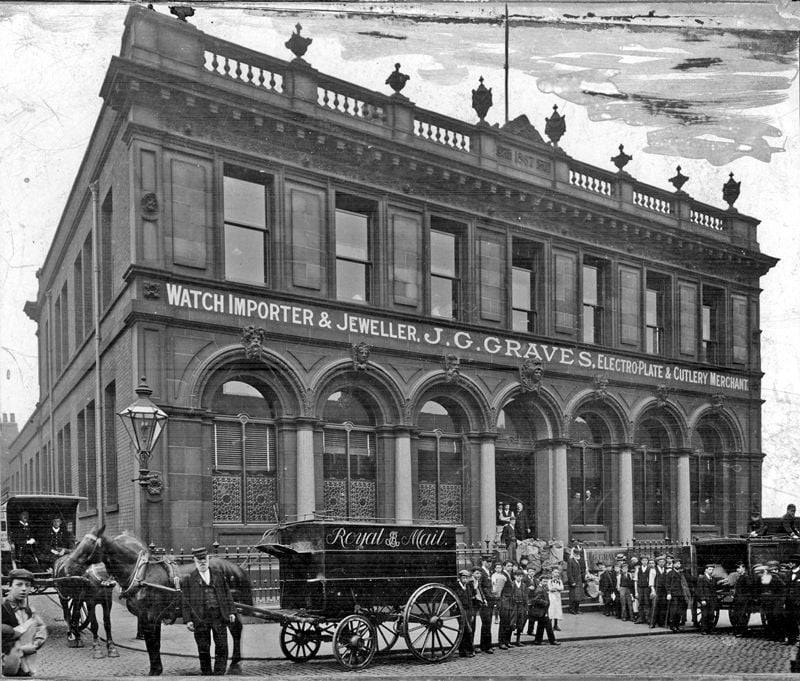
A lot of history behind this building. Palazzo-style, a rarity in Sheffield, designed by Flockton and Abbott in 1867 for the Sheffield Waterworks Company.

The sculptured heads of Greek and Roman water gods are above the ground-floor windows.

The Grade II listed building was later the home of the hugely successful Graves Mail Order Empire… the Amazon of the Edwardian period. It was founded by John George Graves, whose many gifts to the city included Graves Park and Graves Art Gallery.

Categories
Buildings

Sheffield City Hall

Arguably Sheffield’s most impressive building. English Renaissance with Corinthian colonnades. But to us locals there has always been a second-class air about Sheffield City Hall.

Sadly, like many of my generation, I can count on one hand the number of concerts I’ve seen here. My biggest memory is of sitting on its chunky front steps as a kid, and later falling down them as a drunken teenager.

But it’s not that old.

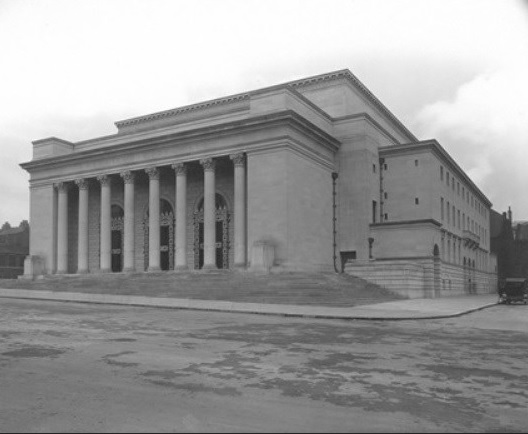
Designed in 1920 by Emanuel Vincent Harris (he also designed the Board of Trade Buildings in Whitehall), construction was delayed eight years because of the economic climate.

Built of Hopton Wood stone, from Wirksworth, laid in alternate courses of white and grey shades. The walls at the front were pierced by three archways of black-veined marble from Ashburton, near Dartmoor.

It cost £500,000 and opened in 1932 when this photograph by Edward Bale Stewart was taken.