Categories
Buildings

The night that Sheffield lost its paintings

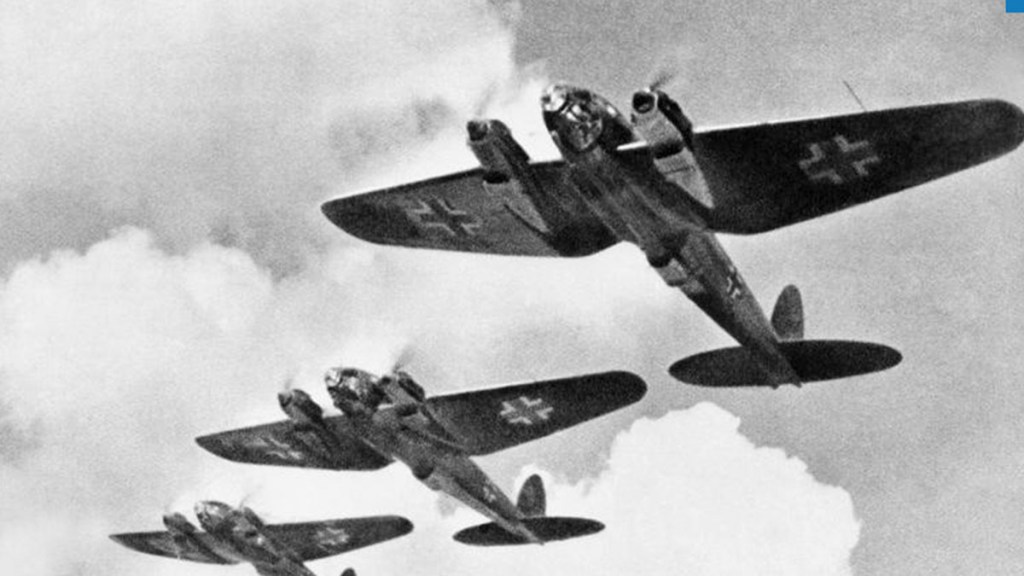
Heinkel HE111 bombers in formation. The HE111 was the mainstay of the German Luftwaffe bomber force and bombed Sheffield in 1940. 

It was a cold and clear Thursday night in December 1940. The skies were vibrating with the noise of German Luftwaffe Heinkel HE111 and Junkers 88 aircraft that had crossed over the sea from France. When they reached Sheffield, they dropped parachute bombs that descended at 40mph and exploded when they reached the level of the rooftops sending shockwaves over a wide area. They screeched as they fell, closely followed by thunderous explosions that could be heard right across the city. The streets were scenes of panic, fires raged, and the air was thick with smoke. Sheffield had experienced its first encounter with Hitler’s blitzkrieg, the psychological shock and resultant disorganisation through which the employment of surprise, speed, and firepower, was designed to weaken the city’s resolve.

One of the bombs dropped through the glass roof at the back of the Mappin Art Gallery, near Mushroom Lane. It obliterated three of the Mappin’s six galleries, and the shockwave caused major damage throughout the rest of the building, shattering almost every pane of glass, and destroying artefacts. The damage was inconceivable and when daylight came, only the facade, the front two galleries and the Graves Museum extension had survived; the rest of the building was deemed unsafe. Two days later, rain fell and added to the bleakness.

Afterwards, the remainder of the art collection was moved to two premises on the Duke of Devonshire’s estates in Derbyshire, outhouses of Edensor Vicarage and a pub in Pilsley. Meanwhile the shell of the two surviving Mappin galleries was used as a makeshift store, its gutted roof sheeted over. 

A year later, the Illustrated London News reported that the Graves Art Gallery, above Sheffield’s Central Library, had opened an unusual exhibition. It consisted of pictures – paintings, watercolours and drawings – damaged in the air raid on Sheffield when they were hung at the Mappin Art Gallery. Some were in the condition in which they were found after the raid, some were restored completely and others only partly.
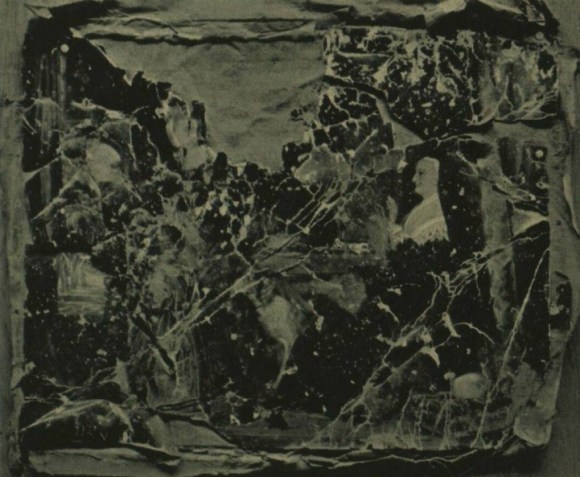
Grandmother’s Birthday Present by John Calcott Horsley. Damage to this picture was extensive and the linen backing can be seen where the original canvas had been stripped. Believed to have been destroyed. Image: British Newspaper Archive

Approximately 250 pictures were damaged by flying glass, bomb blast, or the rain which followed the raid before they could be collected and safely housed. The blast made crazy patterns on the varnish, flying glass caused cuts, some large, in the canvas, and the rain caused those pictures that had been re-lined to separate. But for all this it was hoped to restore between 80 and 90 percent of them. 

A lot of the work in the Mappin Art Gallery had been bequeathed to the city by John Newton Mappin and later by Sir Frederick Mappin, and amongst the twenty-three works from the original collection which were totally destroyed were key works from like Dorothy Tennant’s The Emigrants and Darnby’s The Vale of Tempe; four of the most important donations made to the gallery, T.C. Gotch’s The Mother Enthroned, H.C. Selous’ The Crucifixion, Noel Paton’s Lux in Tenebris and G.F. Watt’s portrait of J.A. Roebuck; while some important works were so badly damaged that they weren’t repaired until the late 1980s, like Val Prinsemp’s To Versailles, and W.C. Horsley’s The French in Cairo. Among other damaged pictures were works by John Pettie, David Cox, John Phillip, Sir William Rothenstein, G.F. Watts, Dame Laura Knight, Wilson Steer, Orchardson, Sir John Gilbert, and Eric Gill. The total value of damage and loss was estimated at £6,300 by Professor John Wheatley, who had been appointed director of Sheffield Art Galleries in 1938.
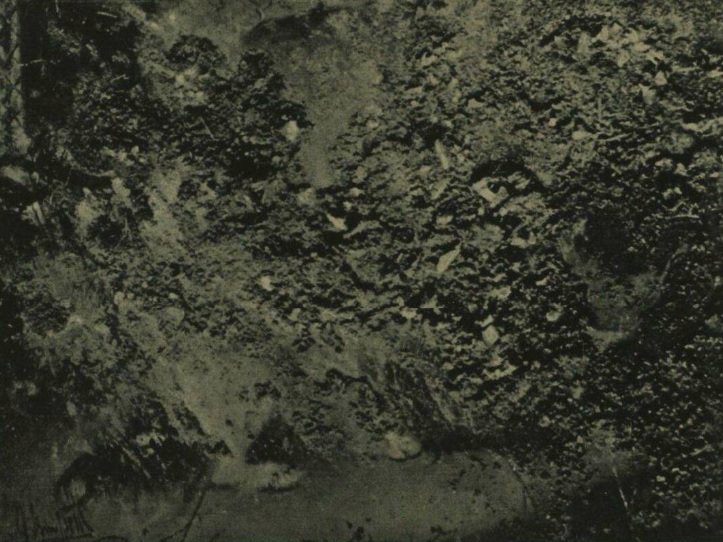
Dogs by George Armfield. Showing the picture before restoration, covered with plaster and other debris. Shown at the Graves Art Gallery in 1941 and now believed to be lost. Image: British Newspaper Archive
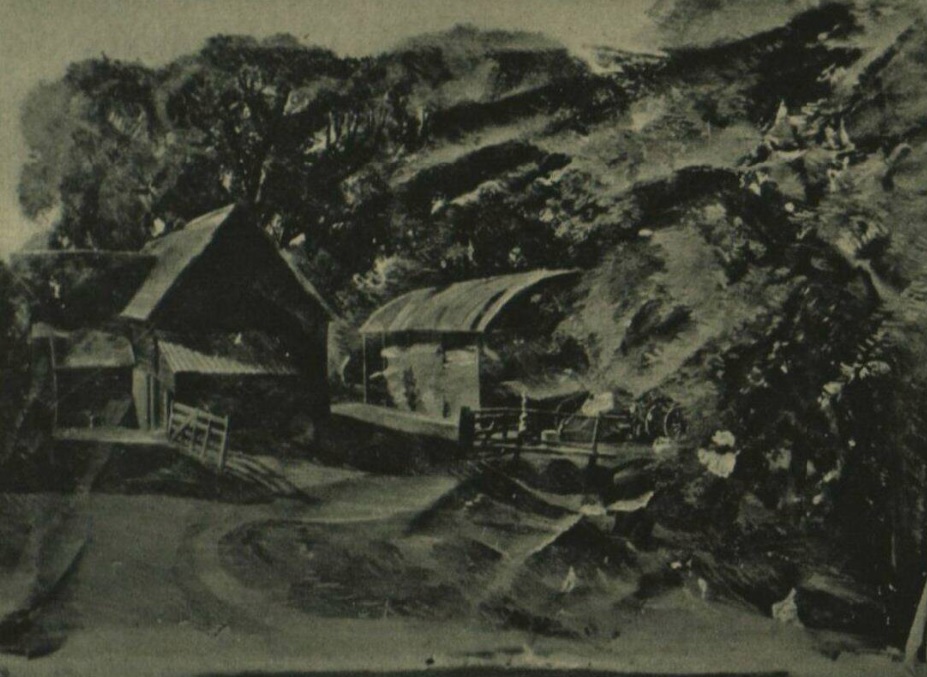
The Farmyard by Barnet Freedman. An example of an oil painting showing damage by blast and glass splinters. This painting was later restored and remains in the Sheffield collection. Image: British Newspaper Archive.

War damage payments for the actual works of art destroyed or damaged turned out to be low, reflecting the low value placed on Mappin’s collection.

At the time of the 1941 exhibition between 60 and 70 raid-damaged pictures had already been restored, but it was estimated that the work of restoration would take two or three years to complete. Wheatley explained that Sheffield was reaping the benefit of having appointed in peacetime a practical assistant on the staff.

That person was Harry Frank Constantine (1919-2014), painter, restorer and curator, who had studied at Sheffield and Southampton Colleges of Art and at the Courtauld Institute. He was assisted by his daughter and was only then finding damage that hadn’t been apparent immediately after the raid. Paint loosened by the blast was beginning to flake off, and the greatest difficulty was with the large cuts in canvases, that were carefully drawn together, given a new backing, the cuts filled in with a composition, and the surrounding paint carefully matched. 
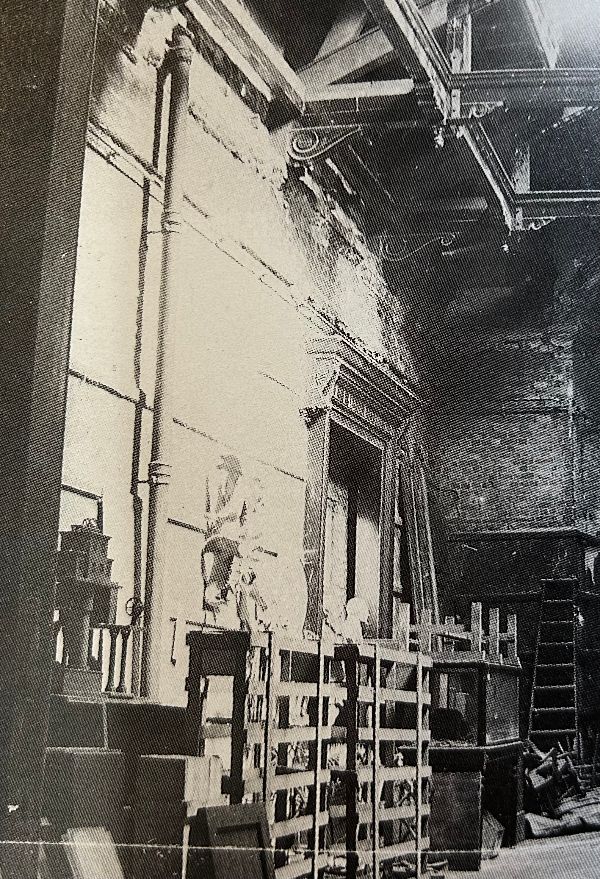
Gallery One as it was from 1940 – 1962. Photograph taken in 1962

Constantine took over as director of Sheffield City Art Galleries in 1964 when only the Graves Art Gallery was open. Sheffield had received a major war damage reparation payment, but the ruins of the Mappin Art Gallery hadn’t been touched after the war ended. In 1960, auditors had investigated why the sum for war damage reparation hadn’t been spent, and questions were being asked by the Mappin family.  Sheffield Corporation deemed that the rebuilding of the Mappin Art Gallery was low on the list of rebuilding projects, but reconstruction was finally approved in February 1963 and the gallery fully reopened in June 1965.

The Mappin’s Victorian painting collection had been substantially reduced when the building was bombed, and Constantine spent the rest of his career spotting acquisitions in salerooms and in deserted corners of commercial galleries that others had missed. When he retired in 1982, he’d built a reputable collection for the city, curated numerous exhibitions and ensured that the city’s galleries were accessible to everyone.
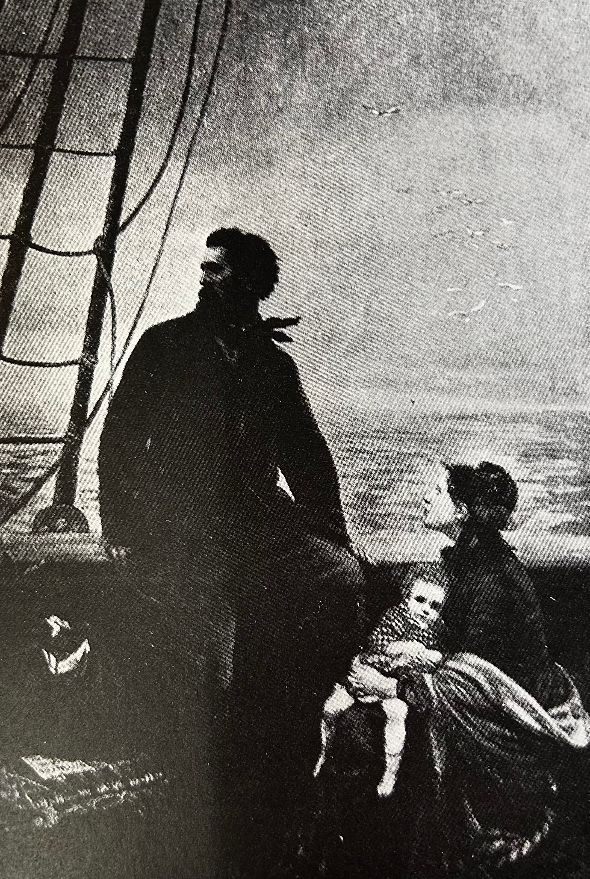
The Emigrants – 1886 – Dorothy Tennant (now destroyed)

Many thanks to Professor Michael Tooby and James Hamilton for invaluable information in collating this post.

© 2024 David Poole. All Rights Reserved
Categories
Buildings

“I think a lot at night.”

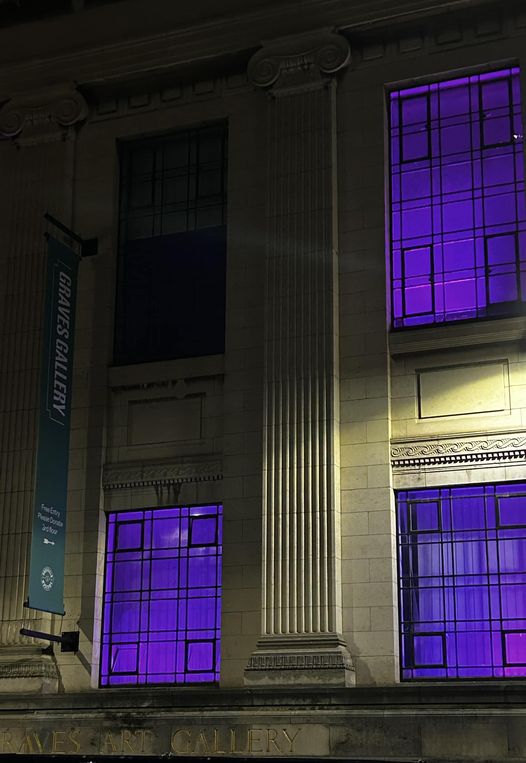
The ghost of J.G. Graves walked the corridors and sighed. He looked at his reflection through the window and thought, “If you can’t give a damn, give it to somebody who does. Give it to them for nothing if need be. Tell them to move the books somewhere else and turn the whole building into an art gallery that will be the envy of every city. But make them restore it… and look after it.” He smiled to himself. “Then I might be able to rest.”

©2024 David Poole. All Rights Reserved.

Categories
Buildings

Banner Cross Hall and the Bagshawe artworks

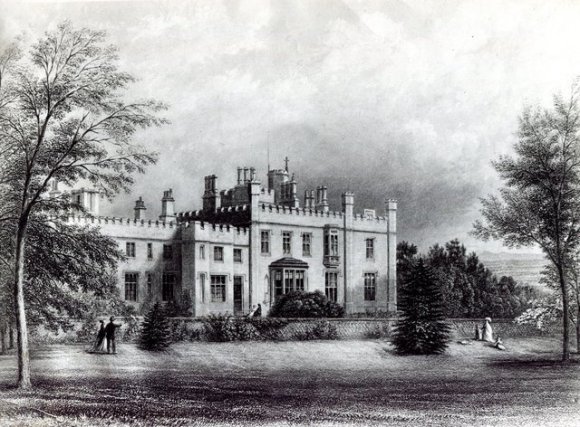
Somewhere, displayed on a sideboard, or lost in a miserable attic, I would like to believe that an old model of Banner Cross Hall survives.

This was the creation of Jeffry Wyatt (1766-1840), architect of Banner Cross Hall, and used to highlight his magnificent new mansion in 1817-1821.

Shortly afterwards, in 1824, King George IV allowed him to change his surname to Wyatville and knighted him in 1828.

The existence of the model emerged in the 1930s when it was owned by Major Francis Ernest Gisborne Bagshawe, of Ford Hall, Chapel-en-le-Frith, a descendant of the family which once owned Banner Cross Hall.

In 1937, Bagshawe loaned the model to the Graves Art Gallery in Sheffield, which it displayed for three weeks, alongside valuable works of art that once adorned the walls of Banner Cross Hall. By this time, the old mansion was the company headquarters of builders Henry Boot and Son.

A portrait by George Romney was Mary Murray, grand-daughter and heiress of John Bright. Another portrait, of James II, had been painted by Peter Lely. Other paintings included Prince Charles Edward (Bonnie Prince Charlie), Prince Rupert, Queen Elizabeth of Bohemia and George III.

Amongst historic furniture loaned was a Sedan chair used to carry Mrs Murray to Ecclesall Church as late as the 19th century and a needlework picture showing the beauty of an Elizabethan Banner Cross Hall. Several Georgian silver exhibits had the Bagshawe and Murray Arms along with a pair of silver-mounted pistols containing the Murray Coat of Arms.

Major Bagshawe sold Ford Hall in 1957 and lived at Snitterton Hall (Matlock). He died in 1985 and the hall was sold the following year. Where did those cherished artworks go? The art detectives amongst you might have a better idea what happened to them!

© 2022 David Poole. All Rights Reserved
Categories
People

J.G. Graves

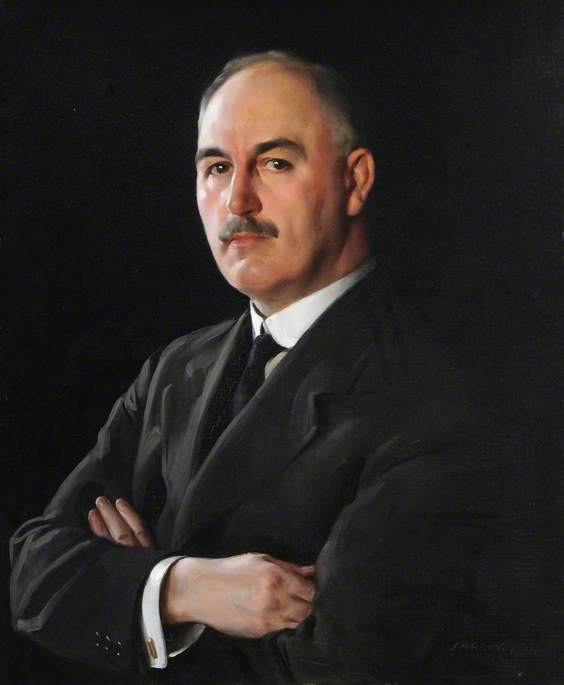
John George Graves (1866-1945) packed a lot into his 79 years. He was a hard-working businessman, councillor, and cared a lot about his adopted city. A much-travelled man, he knew Europe intimately, and visited America, Egypt, South Africa, India, and Palestine, and spoke fluent French, German and Italian.

Seventy-five years after his death, his name still echoes across Sheffield, and yet, we are guilty of under-estimating the influence he had on the city.

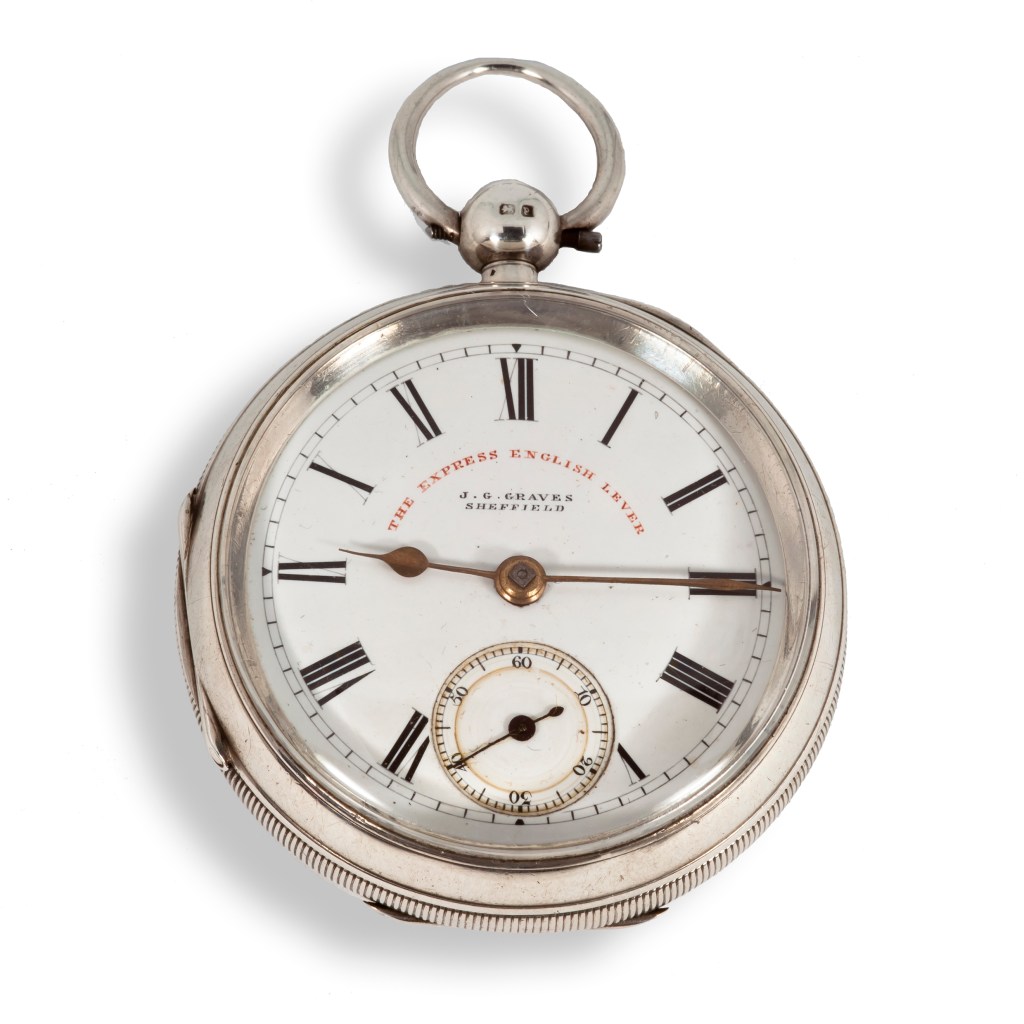
J.G. Graves was born in Lincolnshire, grew up in Heckmondwike, West Yorkshire, and was educated at Batley Grammar School. When he was 15, he moved to Sheffield to take up apprenticeship with a German watchmaker in Gibraltar Street, and at the age of 20, he started his own watch-making business in town.

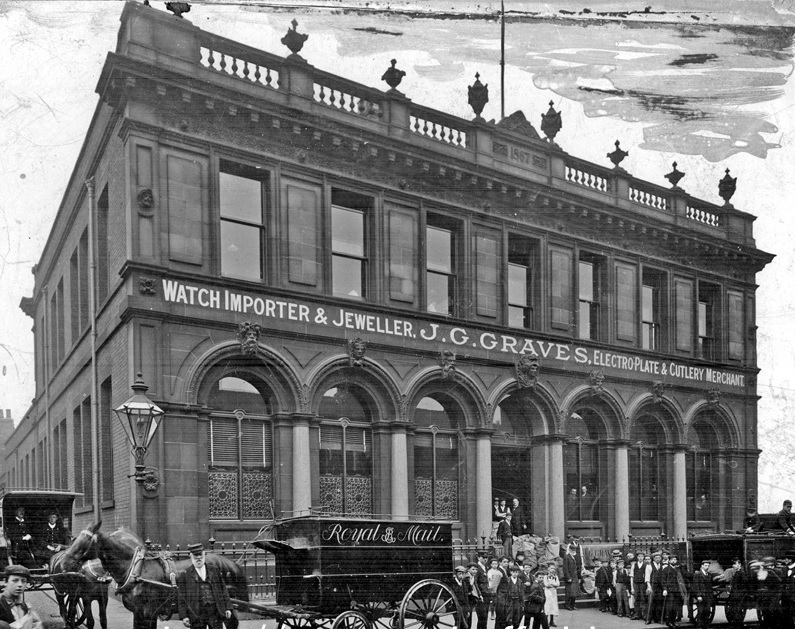
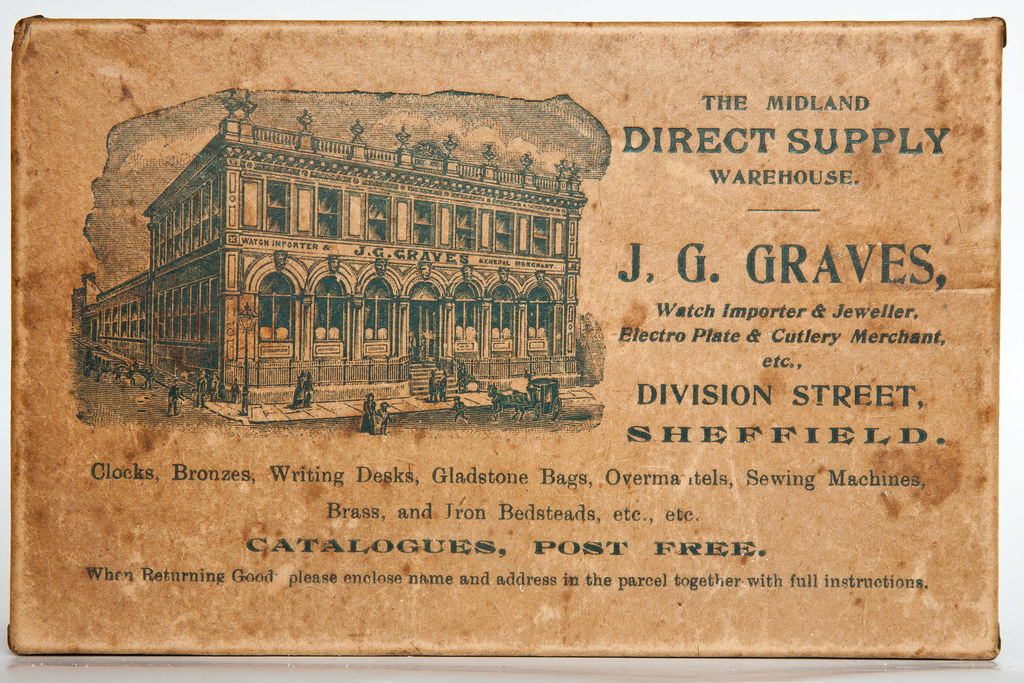
He moved to larger premises in Surrey Street where he expanded his business to include jewellery, cutlery and silverware. His decision to sell goods by mail order was pivotal and, through advertising on the back pages of the national press, became incredibly successful.

Graves was one of the first to embrace the idea of selling goods, notably watches, on ‘monthly’ terms, and by 1903 employed 3,000 people with products sold through extensive catalogues.

Graves was first elected to the city council in 1896 as a Liberal member for the old Nether Hallam Ward and retained his seat for six years. In 1905, he was returned to the Council as a member for the Walkley Ward but did not seek re-election in 1908. His third entry to the Council, again for Walkley, was as an Independent councillor in 1916.

Graves went on to serve as Lord Mayor in 1926 and was granted Freedom of the City in 1929.

“Alderman Graves brings to his work unusual gifts of business acumen and a kindly spirit towards the general welfare of the people,” reported the Sheffield Daily Telegraph in 1930. “A fluent, dignified speaker, with originality of thought, he can marshal facts well and present a case strikingly. He always impresses his hearers by his transparent earnestness and sincerity in whatever cause he is pleading. Truly, he is one of the big men of the Council – big in stature and big in vision.”

However, J.G. Graves should be remembered for being Sheffield’s “Fairy Godfather”, probably the city’s most generous benefactor in its history.

When he died at his home, Riverdale House, at Ranmoor, in 1945, newspapers calculated that he had gifted more than £1 million to the city, that amounts to more than £44 million at today’s value.

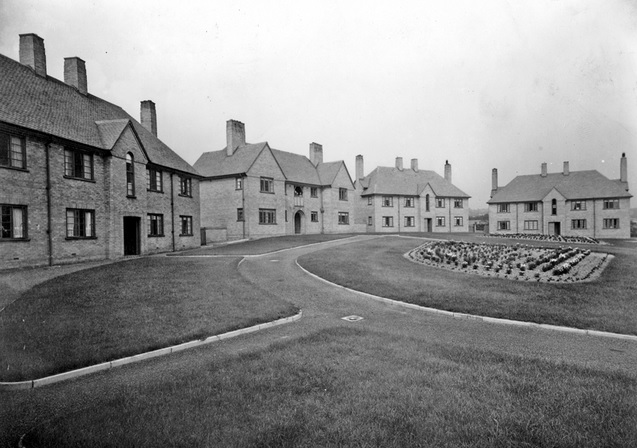
His first gift to Sheffield, probably Pearl Street playground in 1903, was the start of small projects for children, but these grew in significance with gifts that included Abbeydale Industrial Hamlet, Barker’s Pool Garden, Concord Park, Graves Art Gallery, Graves Park, Graves Trust Homes, Blacka Moor, and playing fields. He was a generous benefactor to Sheffield University and the Children’s Hospital, gave much of the land forming the green belt around Sheffield, made gifts of land to the National Trust, and at the outbreak of World War Two, made an unconditional gift of £250,000 to the nation.

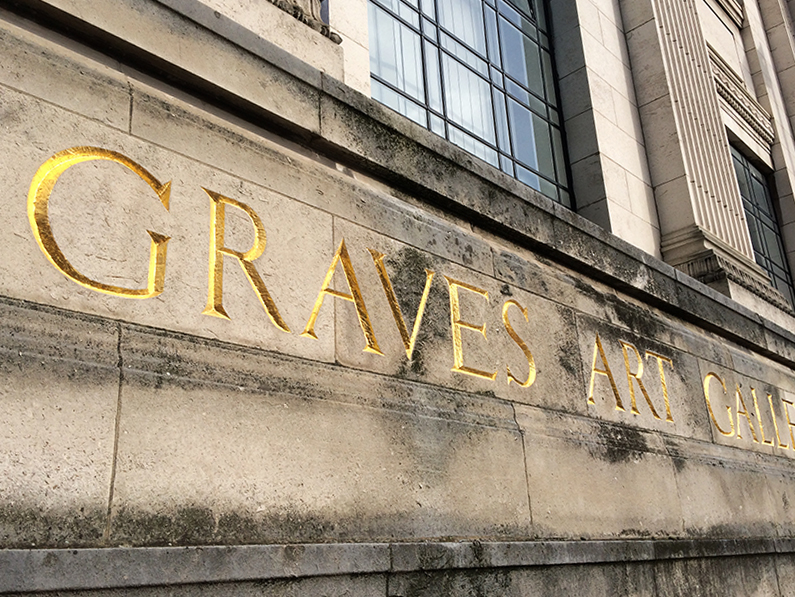
Graves Art Gallery cost him £20,000 as well as a further £10,000 towards the cost of the Central Library. He had started collecting art in 1899 and throughout his life collected over 3,000 pictures, 700 of which he gave to Sheffield to be displayed in the Graves Gallery.

“It has seemed to me the most natural thing that I should engage in effort and outlay which has for its object the betterment of the city in which my own lot has been cast, and which I love and understand so well.”

Graves had loved the countryside and was a keen cyclist, with one of his ambitions being to provide Sheffield with beautiful open spaces. As well as Concord Park and Graves Park, he provided £10,000 towards the acquisition of Ecclesall Wood and gave much of the land forming the Green Belt around Sheffield.

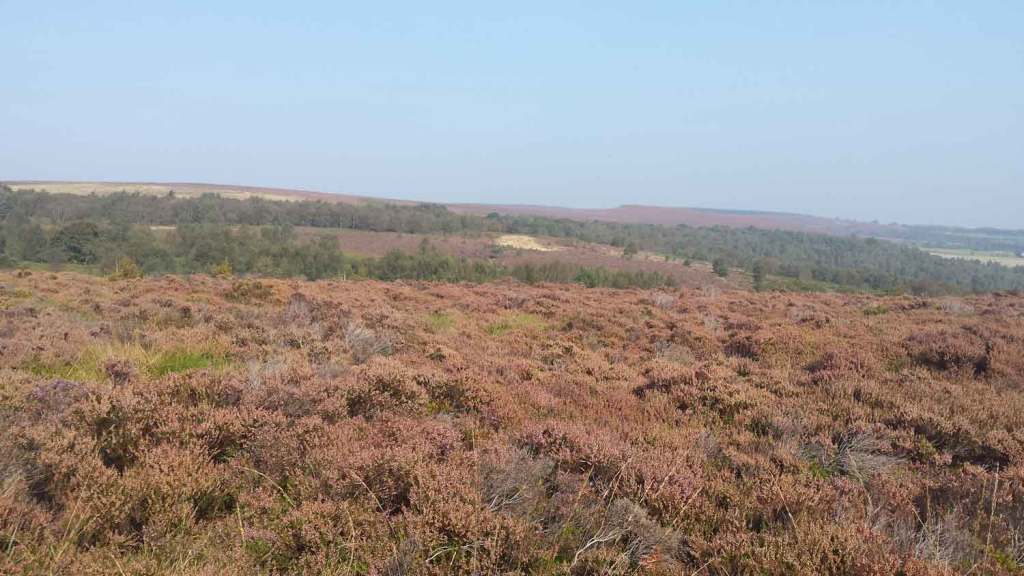
One such place was Blacka Moor that had been owned by Norton Rural District Council since 1929. The small council was poor and unable to fight off advances from developers and so, in 1933, had approached J.G. Graves as a last resort. He bought the land and duly presented it to the city.

Ethel Haythornthwaite, a prominent environmental campaigner, recalled a conversation she had with Graves at the official opening in 1933.

“Now, after we’ve done all this for you (by ‘we’ he meant the Graves Trust) will you promise to never trouble us again?” I took a deep breath, thought I had better be truthful and said, “Whenever the countryside around Sheffield is in danger, I shall appeal to you.” He looked at me, severely but not unkindly. “Well,” he said, “Now we know.”

After his death, the mail order company was absorbed into Great Universal Stores, but his legacy lives on through The J.G. Graves Charitable Trust, a grant-making body established in 1930 derived from £400,000 of shares of his company.

Today, the Trust is managed by nine trustees, including Adrian Graves, the fourth generation of the family to serve on it, and continues to support projects that relate to the charitable interests of its founder.

These include parks, open spaces, recreation grounds, art galleries and libraries for public use, promotion of education and community projects, and medical, recreational and sporting facilities.

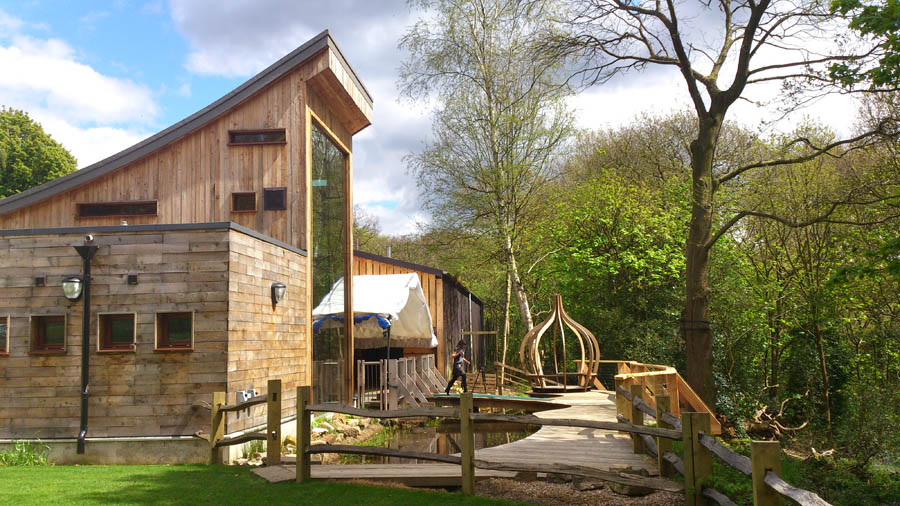
Periodically, the Trust is in a position to make significant contributions including the J.G. Graves of Sheffield Lifeboat (1958), the redesign of Tudor Square (1990), the J.G. Graves Tennis Centre (1991), the J.G. Graves Woodland Discovery Centre (2007) and the purchase of ‘Comfort Blanket’ by Grayson Perry for the City’s art collection in 2016.