Categories
People

The Crucible Theatre at 50: Samuel West

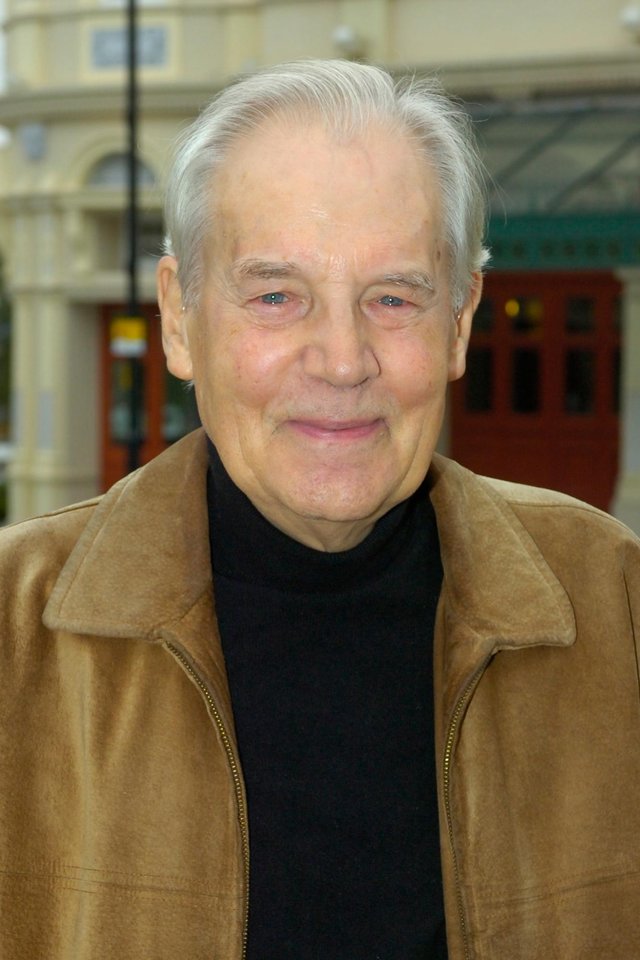
Following Michael Grandage’s departure, the Artistic Director’s role at Sheffield Theatres was one of the most sought after jobs. The role went to Samuel West, son of Timothy West and Prunella Scales, and born into the acting business.

At prep school, the boy Samuel made his debut playing Claudius in Tom Stoppard’s Rosencrantz and Guildenstern Are Dead. It was seeing his dad play Shakespeare’s Claudius to Derek Jacobi’s Hamlet at the Old Vic a few years later that settled his choice of career.

“People clapped loudly,” he said recently, “and I thought ‘I’d like to do this’.”

He read English at Oxford and moved into a career that combined classical theatre with British movies (Howard’s End, Iris, Carrington, Reunion, Jane Eyre, Notting Hill, and Van Helsing), TV and radio. His London stage debut was in 1989 in Les Parents Terrible and was a success in Tom Stoppard’s Arcadia at the National Theatre in 1993. He later spent two years with the Royal Shakespeare Company.

West made his directorial debut with The Lady’s Not for Burning at the Minerva Theatre, Chichester in 2002 and succeeded Grandage at Sheffield Theatres in 2005, reviving the controversial The Romans In Britain and As You Like It as part of the RSC’s Complete Works Festival.

Several of his acclaimed productions perhaps proved a little too controversial for the people who held the financial purse strings, and there might have been conflict as he battled the dramatic “powers that be.”

When the Crucible closed for its massive refurbishment in 2007, he had hoped that the Crucible might continue with touring productions, but relinquished his role when the theatre fell silent.

“Two years is never long enough to spend at a great theatre like this and my plans being turned down was the only reason I decided to leave.

“When the building is closed, I believed, and still believe, we should make attempts to produce outside the theatre, with co-productions, found spaces, bringing back old shows that had served us well and doing West End seasons – all those sort of things – partly because it’s important to keep audiences alive in a city where you’re the only theatre.”

West said he did not believe board members were against his aims but that their financial plans prevented them from making “promises which they couldn’t later fulfil.”

He rekindled his association with the Crucible in 2017 when he returned to play Brutus in Julius Caesar.

“I’ve missed it. I think Sheffield is a great city and it’s really nice to see some friendly faces who seem quite pleased to see me.”

We know West for his TV roles – Midsomer Murders, Waking the Dead, Poirot, Any Human Heart – and big roles in Mr Selfridge and Jonathan Strange and Mr Norrell.

However, his biggest role is playing Siegfried Farnon in the two series of Channel Five’s recent revival of All Creatures Great and Small.
Categories
People

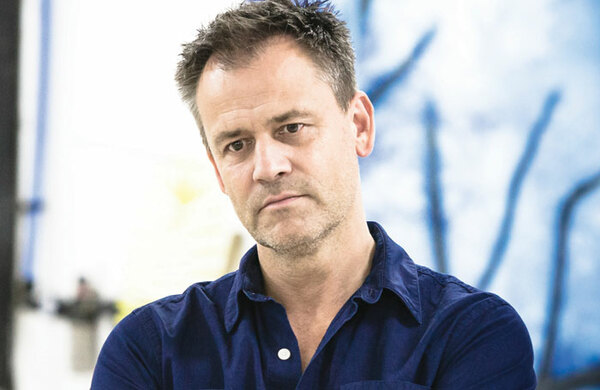
The Crucible Theatre at 50: Michael Grandage

In 2000, as Deborah Paige left, having directed fourteen productions in her five-year tenure, Michael Grandage took up the reigns as Artistic Director. His predecessor had laid the “foundations for the Crucible Theatre’s renaissance” and with the securing of extra funding, he arrived at an opportune moment.

Grandage was no stranger to Sheffield, having worked at the Crucible Theatre several times and joining as Associate Director in 1999.

“My first show was in 1997. In 2000, when Deborah Paige left, Grahame Morris, who was the executive director, asked me to step up.

It was a very bold thing of the board and him to do. Normally you require quite a lot more experience – I convinced them I was 100 per cent dedicated to the city and the productions. We put on two Joe Orton plays and two Shakespeares straightaway. I moved out of London, and I made a commitment to it.”

Yorkshire—born Grandage trained as an actor at the Royal Central School of Speech & Drama and spent twelve years working as an actor for companies such as the Royal Exchange and Royal Shakespeare Company before turning to directing. His directorial debut was in 1966 with a production of Arthur Miller’s The Last Yankee at the Mercury Theatre in Colchester while his first Shakespeare production was in 1998 in the Crucible’s production of Twelfth Night.

Within a few years of his stay, the Crucible had attracted a succession of stage and screen stars such as Derek Jacobi, Joseph Fiennes, Diana Rigg, Ian McDiarmid, Amanda Donahoe and Kenneth Branagh. Grandage produced over forty plays with predominantly young directors and designers. He is credited with delivering consistently high quality work as well as bringing in new audiences and in 2001, Sheffield Theatres won the Barclays TMA Theatre of the Year.

In 2003, Grandage unveiled a £15m expansion scheme for the Crucible.

“We are generously told by audiences, critics and awards juries that Sheffield is now at the forefront of British Theatre, but we want and need to go further.”

Grandage left in 2005, Sheffield Theatres hailed as ‘the National Theatre of the north,’ and concentrated on his other role as Artistic Director at the Donmar Warehouse, London, where he’d succeeded Sam Mendes three years earlier.

He left in 2012 and now heads the Michael Grandage Company producing theatre, film, and TV work, and recently returned to the Crucible to direct the world premiere of Ian McDiarmid’s one-man show, The Lemon Table, which was based on two Julian Barnes short stories.

Categories
People

The Crucible Theatre at 50: Deborah Paige

The mid-nineties brought change to Sheffield Theatres. Together with reductions in funding, this was a critical time for Deborah Paige, who succeeded Michael Rudman as Artistic Director in 1995. Critics pointed out that the Lyceum Theatre had fared much better with its touring productions and that the Crucible Theatre was the less commercial venue.

While previous directors like Colin George and Peter James fought to get the Crucible established, the tenure of Deborah Paige was more a battle of survival. However, she managed to turn its fortunes around with several successful shows, including My Fair Lady, The Little Mermaid in 1997, and Brassed Off in 1998.

At the end of the decade the Sheffield Telegraph remarked that it was “a remarkable turnaround in fortunes… at the same time that it (had) been earning critical acclaim.”

Deborah Paige started her directing career at the Bristol Old Vic. She went on to work at Theatre Centre London, the Wolsey Theatre, Ipswich, and the Soho Theatre, and was then appointed Artistic Director of Salisbury Playhouse.

She left Sheffield Theatres in 2000 to pursue a freelance directing career in opera, theatre, TV, and radio. For her own company, Paigeworks, she produced and directed the premieres of Afterbirth by Dave Flores and Into the Blue by Beverley Hancock at The Arcola Theatre in London.

Paige’s television work includes EastEnders, Casualty, Judge John Deed and Holby City, and for radio she has directed several productions for BBC R4’s Woman’s Hour.

She regularly works in London drama schools and was Head of Recorded Drama at LAMDA between 2009-2011, and Interim Director of Performance at Mountview in 2012.

At RADA, where she is an Associate Teacher, Paige has taught and directed projects and productions for stage and screen.

Categories
People

The Crucible Theatre at 50: Michael Rudman

In 1990, Stephen Barry was appointed to run the newly-formed Sheffield Theatres, comprising the Crucible and Lyceum Theatres, and Mark Brickman, perhaps best known for his dynamic productions of classical texts, was new in his role of Artistic Director of the Crucible.

However, the early 1990s were marked with “recession, gloomy figures and disappointingly low attendances.” Mark Brickman left in 1991 and was replaced by American-born Michael Rudman, an Artistic Director who had previously directed at the old Sheffield Playhouse, and returned with a wealth of directing experience including the West End and Broadway.

Rudman graduated from Oberlin College in 1960, and four years later received an MA in English Language and Literature at St Edmund Hall, Oxford.

His career as a director began at the Nottingham Playhouse, where he was Assistant Director and Associate Producer to John Neville from 1964-1968. He went on to become Director of the Traverse Theatre in Edinburgh from 1970-1973, after which he took up the post of Artistic Director at Hampstead Theatre until 1978. Rudman was invited to join the National Theatre by Sir Peter Hall, and was Director of the Lyttelton Theatre from 1979-82. He continued there as an Associate until 1988, after which he went to the Chichester Festival Theatre before arriving at Sheffield Theatres in 1991.

His stay at the Crucible might have been short, but he masterminded seven out of the eleven shows staged during his reign, credited as having turned around the artistic fortunes of the theatre and increasing audience figures by the time he left in 1994.

“I spent most of my time on the train between London and Sheffield and the train was always late.”

Perhaps he is best-known for his adaptation of A Midsummer Night’s Dream with Alex Kingston and Anthony Brown in 1992.

Following his departure from Sheffield, Michael spent most of the nineties out of the limelight, occasionally returning to Texas to help run the family business, but has notched up a credible roster of productions in New York and on the West End.

Rudman was married to Felicity Kendal for seven years until their divorce in 1990, and reunited as a couple eight years later.

Categories
People

The Crucible Theatre at 50: Clare Venables

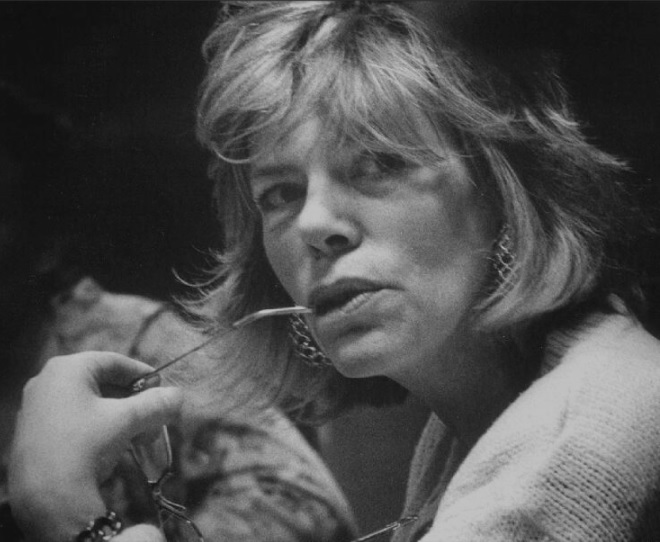
She might have been little more than five feet tall, but Clare Venables (1943-2003) was described by Michael Boyd as an “infectiously energetic theatre director.”

She came to the Crucible Theatre in 1981 and will be remembered for hugely successful productions that travelled from Sheffield to Broadway.

Her father was Sir Peter Venables, one of the founders of the Open University, and she studied at Manchester University where she became a member of staff in the drama department. She did repertory training at the Leicester Phoenix and began directing in 1968 at the Lincoln Theatre Royal.

She took over Lincoln in 1970, with Howard Lloyd-Lewis as her associate, and she took him with her when she moved to Manchester Library Theatre in 1973. She succeeded Joan Littlewood at the Theatre Royal, Stratford East, in 1977 before moving to the Crucible in 1981.

In Sheffield, she encouraged young directors and designers – now a rollcall of the establishment – such as Michael Boyd, Tom Cairns, Stephen Daldry, Martin Duncan, Deborah Findlay, David Leland and Steven Pimlott.

Venables mixed high-art ambition with showbusiness, her productions ranging from Schiller’s William Tell to Bob Eaton’s Lennon (with Mark McGann), which transferred to London and New York. She also cast Marti Caine in Funny Girl.

According to Sheffield-based art critic, Paul Allen, “She left Sheffield in 1990 after realising that the refurbishment of the Lyceum Theatre would necessitate the appointment of a Chief Executive rather than Artistic Director.”

Subsequently she became head of the BRIT School of Performing Arts and Technology in Croydon, and then, in 1999, Head of Education and Technology at the Royal Shakespeare Company, where she worked under another former associate from Sheffield, Michael Boyd.

“Spending time with Clare Venables was like being at a party. She injected fun and a wicked sense of adventure into everything she did.”

Her dream was to put education at the centre, rather than the periphery, of the RSC. Her work in the US led to ground-breaking educational work as part of the RSC’s residencies with Michigan University, Columbia University, and the Kennedy Center in Washington. She also took the education service on to the internet with the digitisation of the RSC’s archives, online production packs, and the development of interactive projects.

On Clare’s death in 2003, Michael Billington, The Guardian’s art critic, wrote: –

“Clare Venables was one of those pioneering figures to whom a whole generation of directors is indebted. At a time when it was still rare to find women running big theatres, she took over the directorship of the Sheffield Crucible.

“What I really remember is Clare’s unfailing cheerfulness in committee, along with her determination to fight tooth and nail for regional theatre. Clare was always battling for a brighter future, and it seems entirely fitting that, shortly before her death, she received the first Young Vic Award for her work in encouraging a new generation. She was a genuinely inspirational figure.”

Categories
People

The Crucible Theatre at 50: Peter James

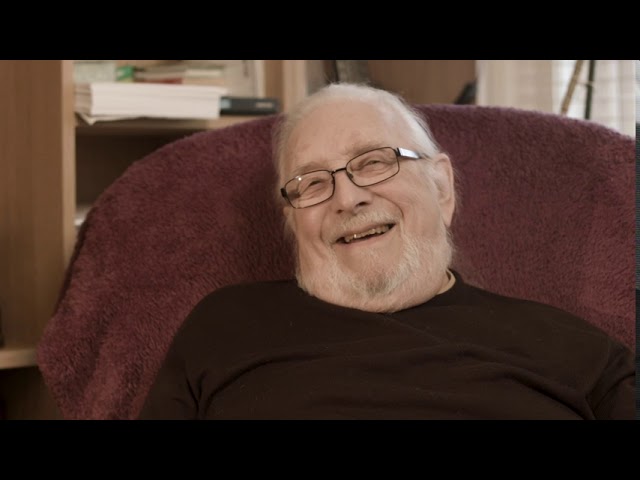
The long-flowing hair might have gone, but at 81, Peter James remains one of the country’s leading theatre directors and teachers.

His early career was shaped in 1964 when he was one of the three founders of Everyman Theatre, Liverpool, and assumed full directorship in 1966.

He went on to the Royal National Theatre in 1971 at the Young Vic, working as Associate Director alongside Laurence Olivier and Peter Hall, and directed for the RSC and the National Theatre’s Mobile Company.

James was strongly associated with the Arts Council Drama Panel, and was chairman of its Young People’s Theatre Committee, as well as president of the International Theatre Institute’s Theatre and Youth Committee, directing in the USA, Australia, and Israel.

During the seventies he directed Twelfth Night at the Sovremennik Theatre, Moscow, becoming the first British person to lead a Russian company since 1905.

He became Artistic Director at the Crucible Theatre in 1974 – “The highlight of my career” – and put it on the map as the place that could do musicals – Chicago, The Wiz, Cabaret – but only after a long fight to get people into the theatre.

This was the happiest time of my life. The trouble was I couldn’t get people through the doors. My answer to that was snooker. I’d tried boxing, but then I was handed a newspaper cutting about an attempt to take the world championships to the Guthrie Theatre in Canada, which was perfect for snooker. I wrote to the organisers and told them, ‘We have a similar theatre here’. The money we made from that first tournament paid for a production.”

He left in 1981 to become Director of Lyric Theatre Hammersmith until 1992, but later admitted that he didn’t enjoy it as much as Sheffield.

He left live theatre and championed young talent, becoming principal of LAMDA between 1994 – 2010, and was awarded a CBE for his contribution to arts in 2011.

James is now Head of Theatre Directing at Mountview Academy of Theatre Arts in London.

Categories
People

The Crucible Theatre at 50: Colin George

Colin George, the actor and theatrical visionary who was the founding Artistic Director of the Crucible Theatre in Sheffield, which opened in 1971 with its radical ‘thrust stage’.

He was one of the post-war generation of British directors who moved theatre on from fortnightly rep in “the provinces” to more adventurous productions that could compete with television drama and the West End stage.

George took over from Geoffrey Ost as Artistic Director of Sheffield Playhouse in 1965, and much to his astonishment, a year later, the city’s Labour council asked George where he wanted his new theatre. His meeting with Tyrone Guthrie, the American director, convinced him to make the Crucible as it is today.

George worked in turn at the State Theatre Company of South Australia and then the Hong Kong Academy for Performing Arts. In Australia, he gave Mel Gibson and Judy Davis their first stage roles as the leads in Romeo and Juliet.

Returning to Britain he devised his own one-man-show in the person of Shakespeare’s father and in 1994 joined the Royal Shakespeare Company. In the company was Daniel Evans, who later became Artistic Director of the Crucible. In 2011, in the theatre’s 40th anniversary production of Othello with Dominic West and Clarke Peters, Evans invited George back to play Desdemona’s aged father.

It was George’s last role, and in the theatre he loved. He died in 2016.

A new book, ‘Stirring Up Sheffield,’ written by Colin George, and his son, Tedd George, is published by Wordville Press this week.

Categories
People

Sheffield Town Trust: our oldest institution

I am certain that most Sheffielders have never heard of Sheffield Town Trust. But it is the oldest institution in the city, and one of the oldest institutions in Britain, dating to 1297, when Thomas de Furnival, Lord of the Manor of Hallam, granted it a charter.

Lord de Furnival, who married a niece of Simon de Montford, held his lands direct from the Crown. In those days it was custom for the body of tenants to have common lands reserved for their use, for which they paid rent in hard-cash.

In return, for this sum Lord de Furnival undertook that the lands should be freehold, that he would provide a court of justice every three weeks, that fines and punishments should be proportionate to the offence, that there should be trial by jury, and that the tenants had the right to move freely without toll or hindrance, throughout the whole of Hallamshire.

The original Charter is still in existence, luckily as it happens. Once it was lent for an exhibition, and, afterwards, when the stalls were being cleared, it got swept away with lots of brown paper. Fortunately, one of the cleaners, feeling something hard in the waste-paper, pulled it out and found that it was the Charter with the Seal attached.

The Town Trust should be recognised as the body that made Sheffield, not incorporated until 1843 (by which time it had a considerable population), so it was evident that somebody must have done something during the centuries from 1297 to develop it and keep it habitable. This work was done principally by the Town Trust, acting first under the Charter of 1297, then under decree of the Commission of Charitable Uses (1681) and finally under the Sheffield Town Trust Act of 1873.

In return for a considerable amount of independence from manorial control, the Sheffield Town Trust was given responsibility for maintaining the town’s water supply and the roads and bridges. The early accounts of the Trust reveal regular payments for repairs to the town’s wells and bridges, particularly the large well known as Barker’s Pool and to the Lady’s Bridge. They also paid for a ‘scavenger’ to keep the roads clear of manure and other rubbish.

As the town grew, the Town Trust invested in companies that piped water in from the surrounding countryside; that built and maintained the major roads in and out of the town, including the Snake Pass; and in the company that made the River Don navigable so that goods could be brought in and out of the town by river.

The first Town Hall was built by the Trust, and so was the second in 1808, and when the present Town Hall was built it became known as the Court House, let to the city by the Trust, and now famous for its dilapidated state.

Many of the streets in Sheffield, West Bar Green, for example, were given to the city by the Trust, which also helped in the building and widening of many other thoroughfares, such as Leopold Street. The Trust also paid for the lighting of Sheffield streets by oil lamps in 1734, when most of the streets of the towns of Britain were still unlit.

Naturally, when Sheffield was incorporated, the Corporation took over the main activities of the Trust, and this enabled the funds to be used for other purposes. The decree of 1681 laid down as one of the objects of the Trust as being ‘charitable and public uses for the benefit of Sheffield as a whole and its inhabitants.’ It is on this that the Trust now concentrates.

In 1898, the Trust purchased the Botanical Gardens saving them from closure (the Gardens are now leased to Sheffield City Council) and, in 1927, they contributed to the purchase of Ecclesall Woods by the Council.

In the twentieth century it gave vast amounts of money to Sheffield University, local hospitals, and many thousands of pounds to boys’ and girls’ clubs. Many scholarships and fellowships were founded, a large contribution was made to the cost of the City Hall, and many famous pictures were bought and loaned to Sheffield’s art galleries.

Sheffield Town Trust started with an income of less than £10 a year. The value of the original land, assisted by wise road development, increased enormously, and there was capital appreciation in other ways, due to far-seeing and wise management. The Trust also received many generous legacies and properties from Sheffielders. Yet none of this could have amounted for much had it not been for the wisdom of its Trustees over the centuries.

It has been fortunate in having many benefactors and now uses the income from a portfolio of property and investments to support on average 140 local charities, groups, and organisations each year, either on an annual basis or with a one-off grant. 

We know the names of every Town Trustee since 1681, and they include lawyers, merchants, doctors, bankers, shop keepers, inn keepers, accountants, and, unsurprisingly, silversmiths, cutlers and tool and steel manufacturers. Today, it has thirteen Trustees headed by the Town Collector, the historical name for its Chairman, with the administration being overseen by the Law Clerk. 

Over seven centuries, the Town Trust has, of course, evolved – if it had not done so, it would not have survived. But from a body whose principal responsibility was the maintenance of the town’s water supply and roads to one that now distributes charitable donations in excess of £250,000 a year, it has always striven to improve the lives of the people of Sheffield – and it will continue to do so for centuries to come.

Categories
People

The Devil Man: Edgar Wallace and The Life and Death of Charles Peace

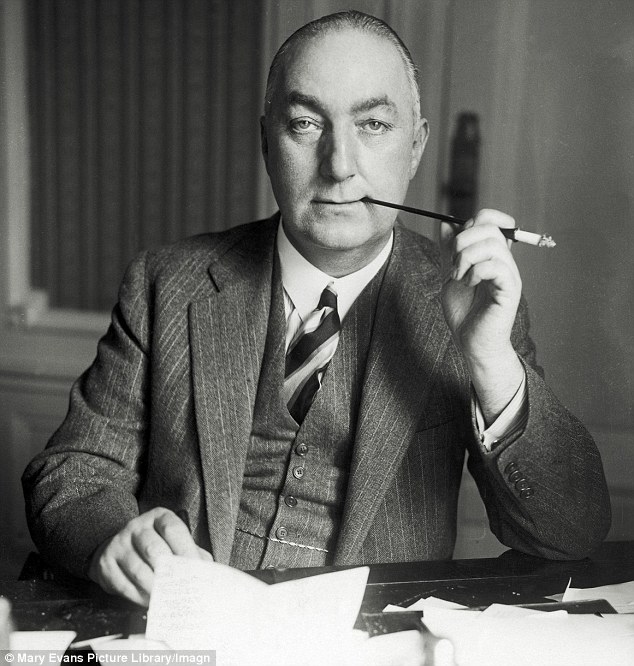
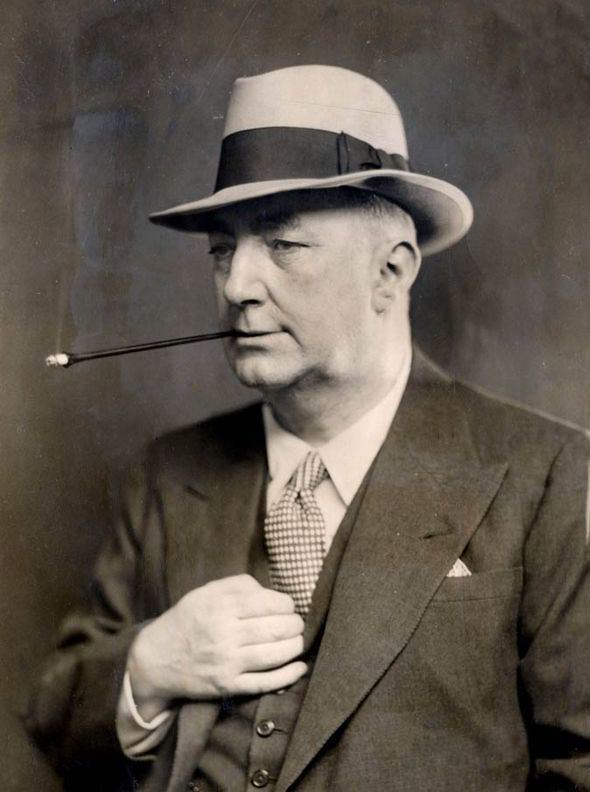
Edgar Wallace (1875 – 1932)

Reading a biography of Edgar Wallace is an exhausting experience. He was the author of over 170 books, translated into more than thirty languages. More films were made from his books than any other twentieth-century writer, and in the 1920s a quarter of all books read in England were written by him.

He was said to sleep just a few hours every night. The rest of the time was spent dictating novels, plays (many of which were performed at Sheffield’s Theatre Royal and Lyceum), newspaper articles, and racing tips. His secretaries typed out finished copy and sent them off to publishers.

Edgar Wallace, the illegitimate son of a travelling actress, rose from poverty in Victorian England to become the most popular author in the world and a global celebrity of his age. He scooped the signing of the Boer War peace treaty when working as a war correspondent, before achieving success as a film director and playwright. At the height of his success, he was earning a vast fortune, but the money went out as fast as it came in. Famous for his thrillers, with their fantastic plots, in many ways Wallace did not write his most exciting story: he lived it.

Edgar Wallace. “He knew wealth & poverty, yet had walked with kings and kept his bearing. Of his talents he gave lavishly to authorship – but to Fleet Street he gave his heart.”

In the 1930s, Joseph P. Lamb, the Sheffield city librarian, analysed borrowing trends and decided that people wanted the same type of books – they ‘read along mass lines,’ he once said, and people were irritated when ‘their’ books were out on loan. As a result of this, books by populist authors like Edgar Wallace were purchased in fifties of each title.

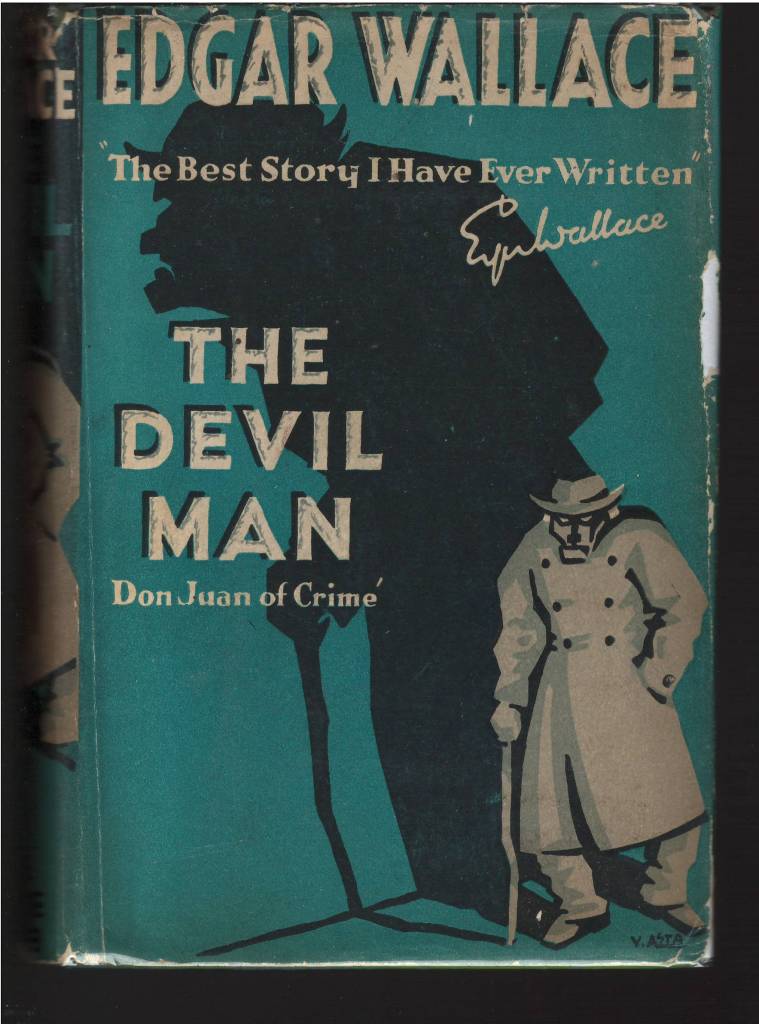
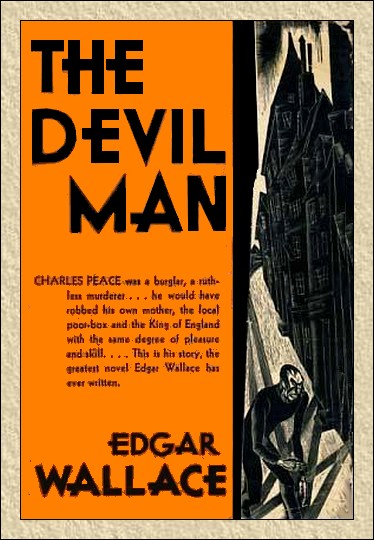
In 1931, Edgar Wallace published ‘The Devil Man,’ with definitive links to Sheffield.

The book focused on Sheffield’s favourite criminal Charles Peace. According to the Sheffield Daily Independent it held the reader throughout. ‘The bad little man is as fascinating in Mr Wallace’s pages as he was supposed to be to women during his lifetime.’

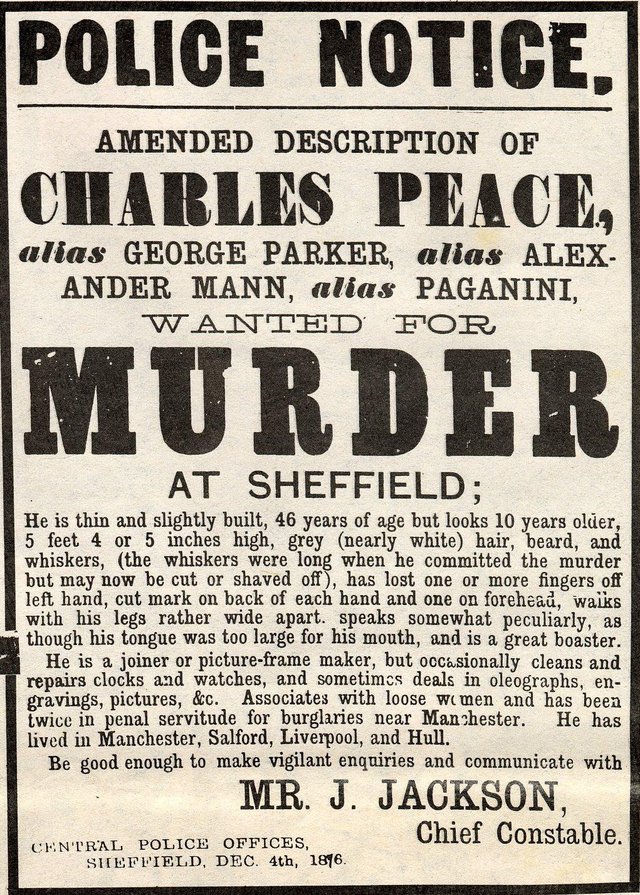
“He was a queer, incongruous figure of a man. His height could not have been more than five feet; the big, dark, deep-set eyes were the one pleasant feature in a face which was utterly repulsive. They were the eyes of an intelligent animal. The forehead was grotesquely high, running in furrows almost to where at the crown of his head, a mop of grey hair rolled back. The unshaven cheeks were cadaverous, deeply lined and hollow. He wore home-knitted mittens, and in one hand clutched an ancient violin case.”

The Devil Man: The Life and Death of Charles Peace (1931)

Wallace did not mix fiction with fact, ‘he rather built an additional storey of fiction on the solid house of fact.’

Wallace raked Peace’s ugly career as it stood – his friendship with the flashy Mrs Dyson and the subsequent murder of her husband – and superimposed a strange plot regarding the secret of a new steel process – presumably stainless.

Dyson had in his possession a bottle containing some all-important crystals, and Peace is offered a large sum of money by foreigners living in Sheffield if he will steal the bottle.

This, according to Wallace, was his errand on that terrible night in Banner Cross in November 1876 when Peace shot Dyson, a former neighbour at Darnall.

Peace quarrelled with Mrs Dyson, shot her husband, secured the bottle, and then handed it to a confederate, which was the last he ever saw of it. It was in connection with this murder  that, according to Wallace, Peace had previously gone to Manchester to commit a burglary and murdered a policeman.

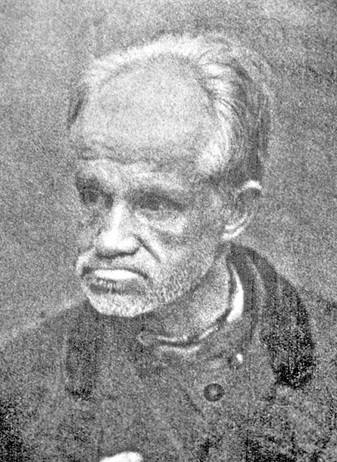
Charles Peace (1832-1879) Photograph: Picture Sheffield

‘The atmosphere of Sheffield in the ‘70s is deftly caught,’ said the Sheffield Daily Independent. ‘And although one feels in this book as one does in other Wallace novels – that toward the end the author has got a little bored with his subject: the story is brilliantly told.’

Wallace stated that it had taken him four years to collect the facts for the story, four months to construct the book, and four days to write it.

According to author Neil Clark, who penned ‘Stranger Than Fiction – The Life of Edgar Wallace’, ‘Sir Patrick Hastings was a guest during the weekend Wallace wrote the 70,000-word novel in just sixty hours. Hastings had difficulty in sleeping on the Friday night, and had gone to Wallace’s study where he found him dictating. He sat and watched him for two hours and was enthralled by the way Wallace worked. By nine o’clock on Monday morning, Wallace had completed his task, which earned him £4,000 in serial rights alone. He then went to bed for two days to make up for the sleep he had missed.’

A year after the novel was published, Edgar Wallace went to Hollywood to work on the RKO ‘gorilla picture’ King Kong, but his gruelling lifestyle finally caught up with him, and he died of diabetes and double pneumonia in February 1932.

In his will it was revealed that he had debts of £140,000 and almost all his possessions had to be sold. However, within two years, the royalties from Wallace’s work had cleared all the debts.

Sources: Stranger Than Fiction – The Life od Edgar Wallace, The Man Who Created King Kong, by Neil Clark (2014) and Val Hewson at The Auden Generation and After conference, Sheffield Hallam University, 17 June 2016.

Categories
People

“War and work, work and war, and it is said it might have been so different.”

On the nights of 11th and 13th December 1940, a German attack on Sheffield lasted for many hours, and cinemas, stores, and shops, were wrecked, and some churches damaged. Two days later, on the 15th and 16th, Sheffield was again attacked with material results, explosions, and a considerable number of fires observed.

“Between 3.30 and 4.00 a.m. on 13th December 1940, from our terrace we watched Sheffield burn. Sheffield is my native city. I felt then that the rest of my life must be devoted to helping to restore and rebuild the fortunes of the city.”

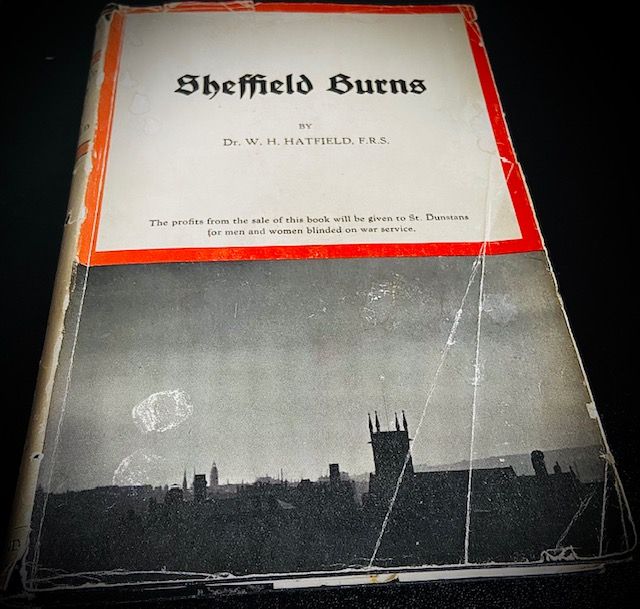
These words were written by Dr W. H. Hatfield in the introduction of his book, Sheffield Burns, published in 1943, in which he idealises and hopes the city will have a brighter future.

“My father desired to rest with his father, and I remember subsequently on a quiet wintry afternoon standing before their tombstone and reading the dates on which my grandfather and my father passed away, and then realising that I could from the inscriptions before me, predict the approximate date upon which I, given good fortune, would also pass away.”

Hatfield gave the final proofs of his book to his publisher on 13th October 1943 and died four days later, much sooner than he had probably anticipated.

He died through strain and overwork in furthering our war effort,” said his wife Edith at the time. “Working unflinchingly at all hours, day and night for four years without rest or holiday, for our armaments and aircraft industry.”

William Herbert Hatfield was born in 1882, and worked in the laboratory of Henry Bessemer and Co, while at the same time studying at University College, Sheffield, where he became Doctor of Metallurgy in 1913. Later he became a metallurgist at John Crowley and Co and was subsequently appointed director of the Brown-Firth Research Laboratories, and later with the board of Thomas Firth and John Brown.

It was Hatfield who discovered 18/8 stainless steel in 1924 which happens to be the most widely used stainless steel in the world today. For all his efforts, he is sadly overlooked by history, except for the Hatfield Memorial Lecture, held every December by the University of Sheffield.

© 2021 David Poole. All Rights Reserved.