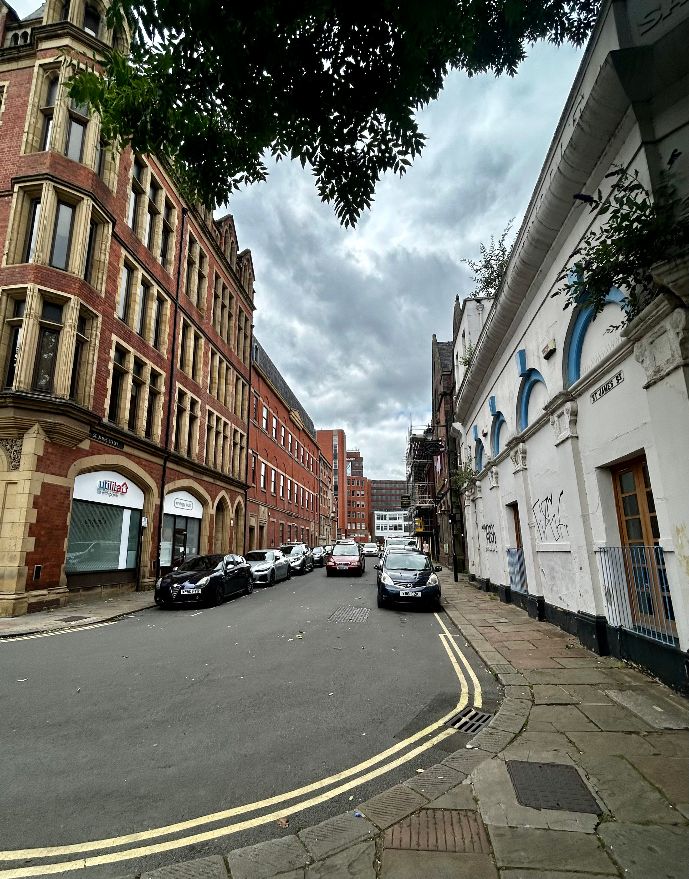
It’s hard to imagine now, but long ago, a huge swathe of land in the city centre, belonged to the Vicarage of the Parish Church (now Sheffield Cathedral).
Up to 1787, the Vicarage stood in solitary dignity, which originally included the large triangle whose base was the western side of the churchyard (the whole length of what is now St James’s Row), and whose sides were Church Lane (now Church Street) and Campo Lane, with the apex at Townhead (Street).
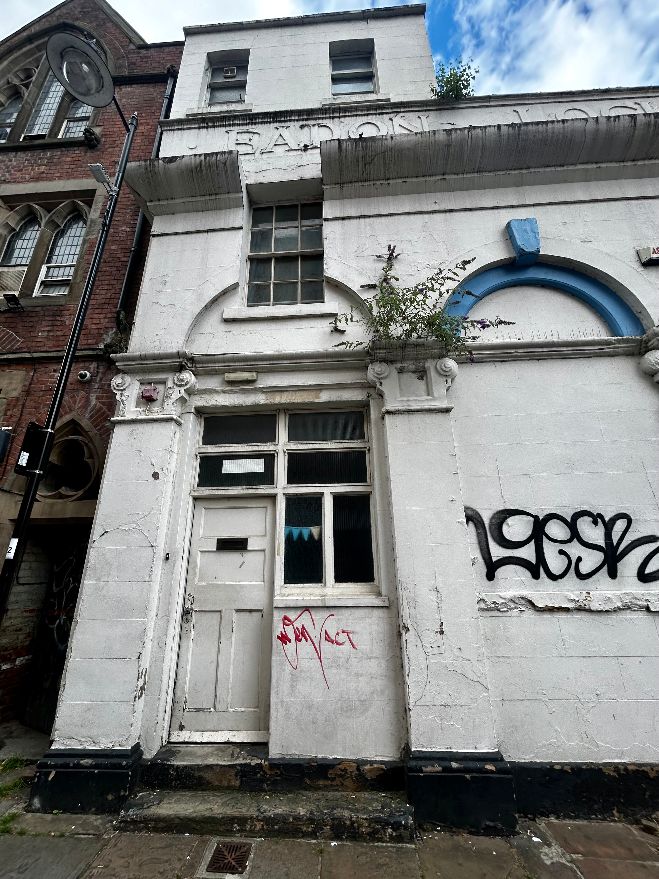
There had been older vicarages, but the last structure was within high walls at what is now the corner of St James’s Row and St James’s Street (the site of the former Blue Moon Café), the entrance being from the latter, through double doors that led into a yard.
The centre of the house, low with no upper storey, was the older part, with a structure of lath, beams, and plaster. The higher wings flanking this on either side were later additions.
The windows were round headed, and according to Robert Leader, the vicarage had no architectural pretensions, with its yellow washed walls, and wasn’t a picturesque building.
A considerable piece of land, in a growing town, had become valuable, and in 1786, Vicar James Wilkinson had applied for and obtained from Parliament, power to set aside a portion of the Vicarage estate for the purpose of erecting another church, or chapel of ease, and for letting off land for building purposes.
As a result, the land was let on building leases, with houses built for surgeons and attorneys. St James Church was built (destroyed in WW2), and a Girl’s Charity School erected. Later additions included the Gladstone Building and Cairn’s Chambers.
In these new circumstances, the Vicarage was doomed and eventually demolished.
There is nothing that shows this was once Vicarage land, but there is a clue in the rising slope of Vicar Lane, and if you look closely, there is a part of the Vicarage that remains.
This is the large stone step of the former St James’s Street entrance to W.H. and J.H. Eadon’s auction room (former Blue Moon Café) and was the mantel shelf of the chief room in the oldest part.
© 2024 David Poole. All Rights Reserved.
 sheffielder.net